
Coyote and Bronca (1980)
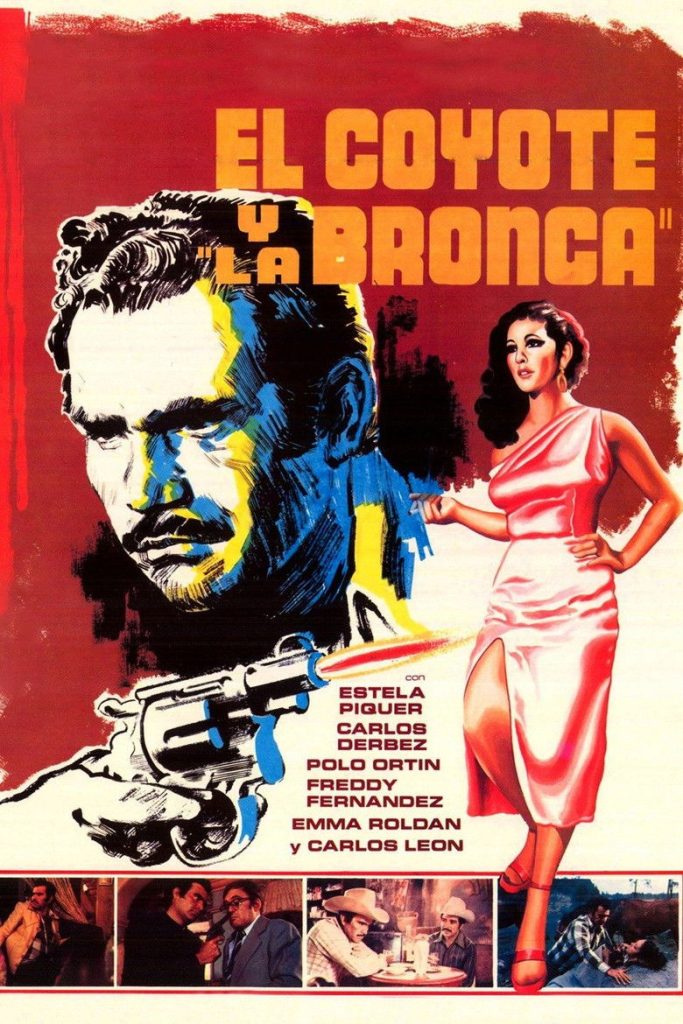
Story overview
In this 1980 Mexican film, Juan 'El Coyote' and Trinidad 'La Bronca' are forced to flee their lives of crime and prostitution after a murder occurs. The story follows their journey as they attempt to leave behind their past and build a genuine relationship together, blending drama, crime, mystery, and comedic elements.
Parent Guide
A Mexican drama-crime film with comedic elements that follows two characters escaping from criminal lifestyles. While rated PG, it deals with mature themes including prostitution and murder that require parental guidance for younger viewers.
Content breakdown
Contains a murder that forces the main characters to flee, though likely not graphically depicted given the PG rating. Some perilous situations related to their escape from criminal life.
The murder premise and criminal lifestyle elements might be unsettling for sensitive younger viewers, but the comedic tone likely softens these aspects.
May include mild language consistent with PG rating, though specifics are unknown. Spanish language film may contain colloquial expressions.
References to prostitution as part of the characters' background, though likely not explicit given the PG rating. Themes of relationships and intimacy are central to the plot.
Possible references to substance use in criminal contexts, but not likely a major focus given the PG rating and 1980s production.
Characters experience fear, danger, and relationship struggles as they transition from criminal life. The murder creates tension, but comedic elements provide relief.
Parent tips
This PG-rated film includes themes of crime, prostitution, and murder that may be too mature for younger children. The comedic elements are balanced with serious dramatic moments. Parents should be prepared to discuss the characters' lifestyle choices and the consequences of violence. The film portrays a transition from criminal activities to a more stable relationship, which could spark conversations about redemption and personal growth.
Parent chat guide
Parent follow-up questions
—
- What did you think about Juan and Trinidad's friendship?
- How did they help each other?
- What was your favorite funny part?
- Why do you think Juan and Trinidad decided to change their lives?
- How does the movie show that crime doesn't pay?
- What does it mean to 'become a real couple' in this story?
- How effectively does the film balance comedy with serious themes of crime and prostitution?
- What commentary might the film be making about Mexican society in 1980?
- How does the murder serve as a catalyst for the characters' transformation?
🎭 Story Kernel
At its core, 'Coyote and Bronca' is a raw exploration of desperation and the transactional nature of survival in a lawless landscape. The film follows Coyote, a weary smuggler, and Bronca, a volatile young woman, as they transport a mysterious package. Their journey isn't driven by grand ideals or redemption, but by pure, base need—money, escape, and a fleeting chance at a different life. The tension arises from their opposing methods: Coyote's calculated, weary pragmatism versus Bronca's impulsive, emotional fury. The movie posits that in such an environment, trust is the ultimate currency and the first thing to be spent, questioning whether self-preservation inevitably erodes one's soul.
🎬 Visual Aesthetics
The film's visual language is one of parched, unforgiving beauty. Cinematographer Diego Martínez employs a desaturated color palette dominated by dust-blown tans and the harsh white of the desert sun, making the rare splashes of color—like Bronca's stolen red scarf—feel violently alive. The camera often adopts a restless, handheld intimacy during dialogues, trapping us in the car's claustrophobic interior, then switches to wide, static shots that dwarf the characters against the immense, indifferent landscape. The action is brutal and efficient, devoid of stylized flair, emphasizing the ugly, exhausting reality of violence. Recurring visual motifs include rearview mirrors framing wary eyes and long stretches of empty road that symbolize both freedom and entrapment.
🔍 Details & Easter Eggs
💡 Behind the Scenes
The film was shot chronologically over 28 days along the actual backroads of the Sonoran Desert, with the lead actors, Gael García Bernal (Coyote) and Natalia Reyes (Bronca), often living in their character's vehicles between scenes to maintain the gritty immersion. Director Santiago Mitre insisted on using minimal CGI; the stunning dust storm sequence was achieved practically with large wind machines and tons of certified biodegradable film sand. Bernal performed nearly all his own driving stunts, drawing on prior racing experience. The minimalist, tension-building score was composed by ambient musician Lucy Railton and recorded using field recordings from the shoot locations.
Where to watch
Choose region:
- Peacock Premium
- Peacock Premium Plus
- NBC