
Crazy, Not Insane (2020)
Story overview
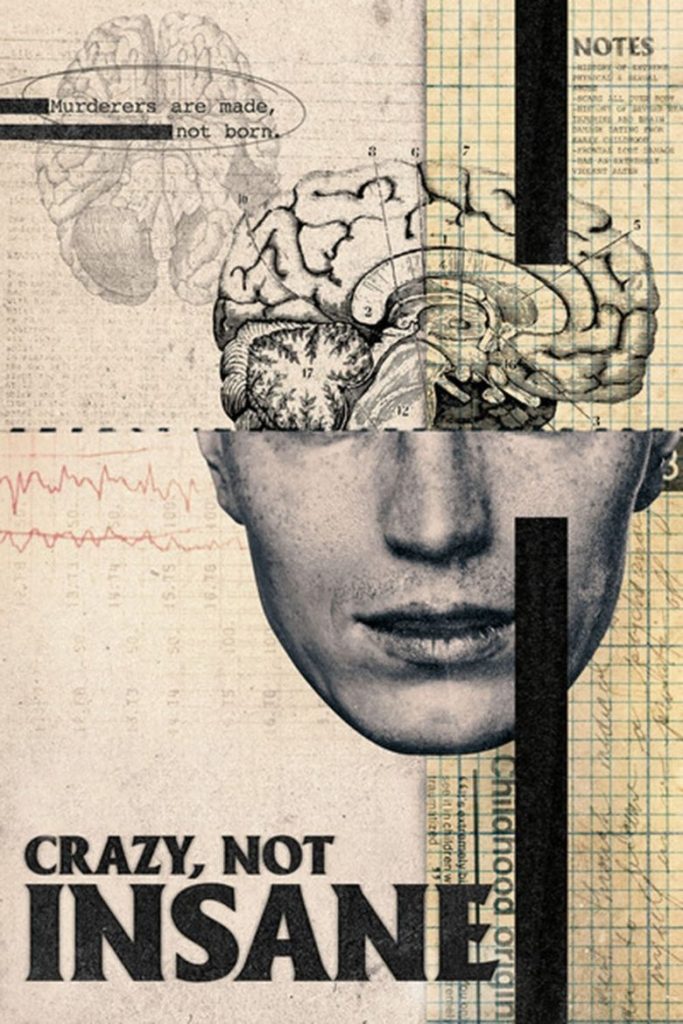
This documentary explores the work of psychiatrist Dr. Dorothy Otnow Lewis, who studies violent individuals to understand what drives them to kill. It delves into psychological concepts like multiple personality disorder and examines real cases, focusing on the complexities of the human mind rather than sensationalizing violence.
Parent Guide
A serious documentary exploring psychological theories of violence through case studies and interviews. Contains mature themes and discussions of violent crimes.
Content breakdown
Discussions of violent crimes including murder, with some descriptions of violent acts. No graphic violence shown, but includes crime scene photos and autopsy reports.
Explores disturbing psychological concepts including multiple personality disorder, childhood trauma, and what drives people to kill. Includes interviews with convicted killers and discussions of violent crimes.
Occasional strong language in interview segments and discussions of crimes.
No sexual content or nudity.
No depiction or discussion of substance use.
High emotional intensity due to serious subject matter including discussions of murder, trauma, and mental illness. May be psychologically disturbing for some viewers.
Parent tips
This documentary deals with mature psychological themes including violence, mental illness, and criminal behavior. It's best suited for older teens and adults who can process complex topics. Parents should preview it to assess appropriateness for their family.
Parent chat guide
Parent follow-up questions
—
—
—
- What did you find most surprising about Dr. Lewis's research?
- How does this documentary change your understanding of why people commit violent acts?
- What ethical questions does the film raise about how we treat people with mental illness?
- How do you think society should balance understanding violent behavior with protecting communities?
🎭 Story Kernel
The film's core theme is the terrifying ambiguity of the human psyche when viewed through the lens of legal and psychiatric systems. It's not a whodunit, but a 'why-dunit' that challenges the very definitions of 'crazy' and 'insane.' The driving force isn't a traditional plot, but the intellectual and ethical pursuit of Dr. Dorothy Otnow Lewis as she profiles notorious killers. The movie expresses the profound conflict between deterministic neuroscience—the idea that brains are wired for violence—and the legal system's requirement for moral culpability. It asks whether understanding the biological and traumatic origins of violence absolves it or simply makes it more tragic.
🎬 Visual Aesthetics
The visual language is a stark, clinical collage. Archival footage and crime scene photos are presented with unflinching, documentary-like clarity, devoid of sensationalism. Intercut interviews use tight, intimate close-ups on subjects' faces, forcing the viewer to search their eyes for answers. Recreations are minimal and desaturated, often focusing on hands, objects, or fragmented body parts rather than full scenes, mirroring the film's dissection of partial truths. The color palette leans into cold blues and sterile whites during analytical segments, contrasting with the warmer, grainier tones of personal archival footage, visually separating clinical observation from lived history.
🔍 Details & Easter Eggs
💡 Behind the Scenes
The documentary is directed by acclaimed filmmaker Alex Gibney, known for his deep-dive investigative style. It is based on the life's work and autobiography of the real Dr. Dorothy Otnow Lewis. A significant portion of the film features original, decades-old interview footage Dr. Lewis conducted with subjects like Ted Bundy and Arthur Shawcross, providing a rare, raw look at these interactions. Gibney's approach was to avoid narration, letting Dr. Lewis's journey and the subjects' own words guide the narrative, which required meticulous archival research and editing to construct the film's argument visually.
Where to watch
Choose region:
- HBO Max
- HBO Max Amazon Channel
- Amazon Video
- Google Play Movies
- YouTube
- Fandango At Home
Trailer
Trailer playback is unavailable in your region.