
Danny Collins (2015)
Story overview
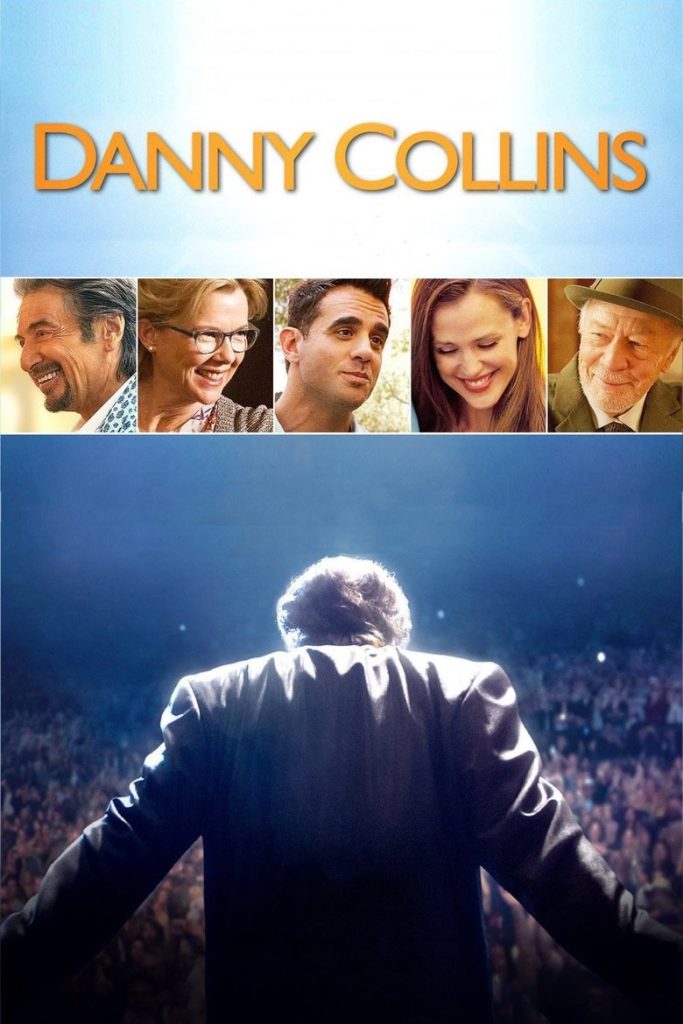
Danny Collins is a 2015 music comedy-drama starring Al Pacino as an aging 1970s rock star who has lived a hard-partying, self-indulgent life for decades. When he discovers a 40-year-old undelivered letter written to him by John Lennon, he experiences a profound awakening and decides to radically change his life. He attempts to reconnect with his estranged adult son (Bobby Cannavale) and family, forms a meaningful relationship with a hotel manager (Annette Bening), and tries to revive his artistic integrity. The film explores themes of redemption, family reconciliation, aging, and the pursuit of authenticity, blending humor with emotional drama against a backdrop of classic rock music.
Parent Guide
Danny Collins is an R-rated film with mature content including strong language, drug use, and adult themes. While it contains positive messages about redemption and family, the content makes it most appropriate for mature teenagers with parental guidance. The film's exploration of aging, addiction recovery, and family reconciliation offers valuable discussion opportunities for parents and older teens.
Content breakdown
No physical violence. Some emotional peril related to family conflicts and a character's serious illness. One scene shows Danny having a mild anxiety attack. Tense arguments between family members but no physical altercations.
Mildly disturbing elements include scenes showing drug use, discussions of addiction, and emotional family conflicts. One subplot involves a character coping with a serious illness, which could be upsetting to sensitive viewers. No horror elements or jump scares.
Frequent strong language throughout including f-words, s-words, and other profanity. The language reflects the rock star lifestyle and emotional intensity of scenes. Approximately 50+ instances of strong profanity.
Brief sexual references and innuendo, mostly in dialogue. Some kissing scenes. References to promiscuous behavior and groupies. No nudity or explicit sexual scenes. One scene shows characters in bed together but nothing explicit shown.
Multiple scenes showing cocaine use and preparation. Characters snort cocaine in social and private settings. References to past drug abuse and addiction. Alcohol consumption throughout in social contexts. Prescription medication shown briefly. The film portrays both the glamorization and consequences of substance use.
Moderate emotional intensity around family reconciliation, aging, and personal transformation. Emotional scenes involving father-son reconciliation, coping with illness, and confronting past mistakes. The film balances serious emotional moments with comedic relief. Could be emotionally affecting for viewers with similar family experiences.
Parent tips
This R-rated film contains strong language, drug references, and mature themes. Best suited for mature teens with parental guidance. Key considerations: 1) Frequent strong profanity throughout 2) Multiple scenes showing cocaine use and references to drug addiction 3) Brief sexual references and innuendo 4) Emotional intensity around family conflict and terminal illness 5) Positive messages about redemption, family reconciliation, and personal growth. Parents should preview or watch with teens to discuss the mature content and positive themes.
Parent chat guide
Parent follow-up questions
—
—
—
- What did you think about how the movie showed Danny trying to reconnect with his son after so many years?
- How did the music in the film help tell the story of Danny's life and changes?
- The movie has characters using drugs - what message do you think it was giving about substance use?
- What did you learn about forgiveness from how different characters responded to Danny's attempts to change?
- How did the John Lennon letter serve as a turning point in the story? Have you ever received advice that changed your perspective?
🎭 Story Kernel
At its core, 'Danny Collins' explores the corrosive nature of unfulfilled potential and the redemptive power of authenticity. The film isn't about a washed-up musician finding fame again, but about a man who traded his artistic soul for commercial success decades earlier finally confronting the hollow man he became. The undelivered John Lennon letter serves as a haunting 'what if' that propels Danny to reconnect with the family he abandoned and the artistic integrity he sacrificed. His journey isn't about career revival but personal reconstruction—learning that being a present father and honest artist matters more than chart positions or luxury hotels.
🎬 Visual Aesthetics
The film employs a deliberate visual dichotomy between sterile luxury and lived-in authenticity. Danny's initial world is captured in wide shots of empty, opulent spaces—his mansion, hotel suites—emphasizing his isolation. The camera feels distant, observational. When he reconnects with his son's family, the framing becomes tighter, more intimate, with warmer color palettes in their modest home. The concert sequences evolve visually too: early performances are slick but empty spectacles, while his final, raw performance uses handheld camerawork and close-ups, stripping away the spectacle to focus on genuine emotional connection.
🔍 Details & Easter Eggs
💡 Behind the Scenes
The film is loosely inspired by the true story of British folk singer Steve Tilston, who discovered in 2005 that John Lennon had written him an encouraging letter in 1971 that never reached him. Al Pacino, who rarely sings in films, performed his own vocals for Danny's musical numbers. The Hilton Woodcliff Lake in New Jersey served as the primary hotel location, with production designing suites to reflect both luxury and gradual personalization as Danny's stay extends.
Where to watch
Choose region:
- Netflix
- Netflix Standard with Ads
- Fandango at Home Free
- Tubi TV
- Amazon Video
- Apple TV Store
- Google Play Movies
- YouTube
- Fandango At Home
Trailer
Trailer playback is unavailable in your region.