
Darkest Hour (2017)
Story overview
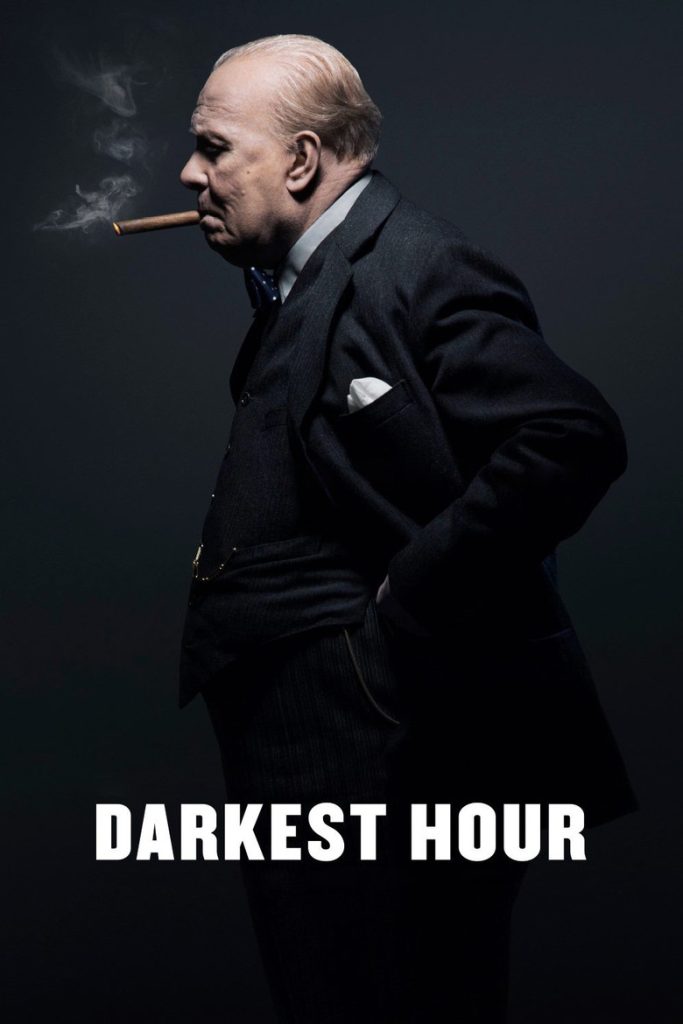
Darkest Hour is a historical drama set in 1940 during World War II, focusing on Winston Churchill's early days as British Prime Minister. The film depicts the intense political pressure he faced as Nazi Germany advanced across Europe and Britain debated whether to negotiate for peace or fight on. It portrays Churchill's leadership during a critical moment when the fate of Britain and the free world hung in the balance.
Parent Guide
Historical drama about wartime leadership with mature themes suitable for older children and teens.
Content breakdown
References to war and military conflict, but no combat scenes shown. Tension from wartime peril and political crisis.
Atmospheric tension from wartime setting and high-stakes political decisions. No jump scares or horror elements.
Period-appropriate dialogue with occasional mild historical language. No modern profanity.
No sexual content or nudity present.
Historical depiction of social drinking and smoking typical of the era.
High-stakes political drama with tension from wartime decisions and leadership pressure.
Parent tips
This film is appropriate for mature children who can handle historical drama and political tension. While there's no graphic violence, the film deals with wartime peril and high-stakes decision-making that may be intense for younger viewers. The PG-13 rating reflects the mature themes and historical context rather than explicit content. Parents should be prepared to discuss World War II history and the concept of leadership under pressure.
Parent chat guide
Parent follow-up questions
- What did you notice about how people talked to each other in the movie?
- How did the music make you feel during different parts?
- What colors did you see most in the movie?
- What was the biggest problem Winston Churchill had to solve?
- How do you think people felt when they heard about the war?
- What does it mean to be brave when you're scared?
- Why was it so hard for Churchill to decide what to do about the war?
- How did different characters show leadership in the movie?
- What historical facts from this time period do you already know?
- How does the film portray the weight of leadership decisions?
- What contemporary parallels can you draw to the political challenges shown?
- How does the film balance historical accuracy with dramatic storytelling?
🎭 Story Kernel
The film's core is not about military strategy, but about the psychological and moral burden of leadership. It explores the terrifying loneliness of decision-making when all conventional wisdom points toward surrender. Churchill's struggle isn't against the Nazis alone, but against his own party, his king's skepticism, and the paralyzing weight of potential catastrophic failure. The driving force is his unwavering, almost mystical, belief in the British spirit—a belief he must first convince himself of before he can galvanize a nation. The narrative tension comes from watching a man, flawed and prone to despair in private, forge his public resolve in the crucible of absolute crisis.
🎬 Visual Aesthetics
Director Joe Wright employs a claustrophobic visual language, mirroring Churchill's trapped state. The War Rooms and Downing Street are bathed in oppressive shadows and sickly greenish light, with low ceilings and tight corridors. The camera often lingers in extreme close-up on Oldman's face, trapping the viewer in Churchill's anxiety. In stark contrast, the brief, sun-drenched sequence where he consults the public on the Underground is a visual gasp of air and hope, using natural light and wider shots to symbolize the clarity he finds outside the political bubble. The color palette is deliberately drab—muted browns, grays, and dark wood—accentuated only by the vivid red of war maps.
🔍 Details & Easter Eggs
💡 Behind the Scenes
Gary Oldman's transformative performance required over 200 hours in the makeup chair, with prosthetics applied so meticulously that he could only work in 3-hour bursts. The iconic 'We shall fight on the beaches' speech was filmed in one continuous, breathtaking take inside a replica of the House of Commons. Director Joe Wright deliberately avoided using any actual wartime footage, wanting the entire story to feel immediate and lived-in through the film's own aesthetic.
Where to watch
Choose region:
- Netflix
- Netflix Standard with Ads
- Amazon Video
- Apple TV
- Google Play Movies
- YouTube
- Fandango At Home
Trailer
Trailer playback is unavailable in your region.