
Das Boot (1981)
Story overview
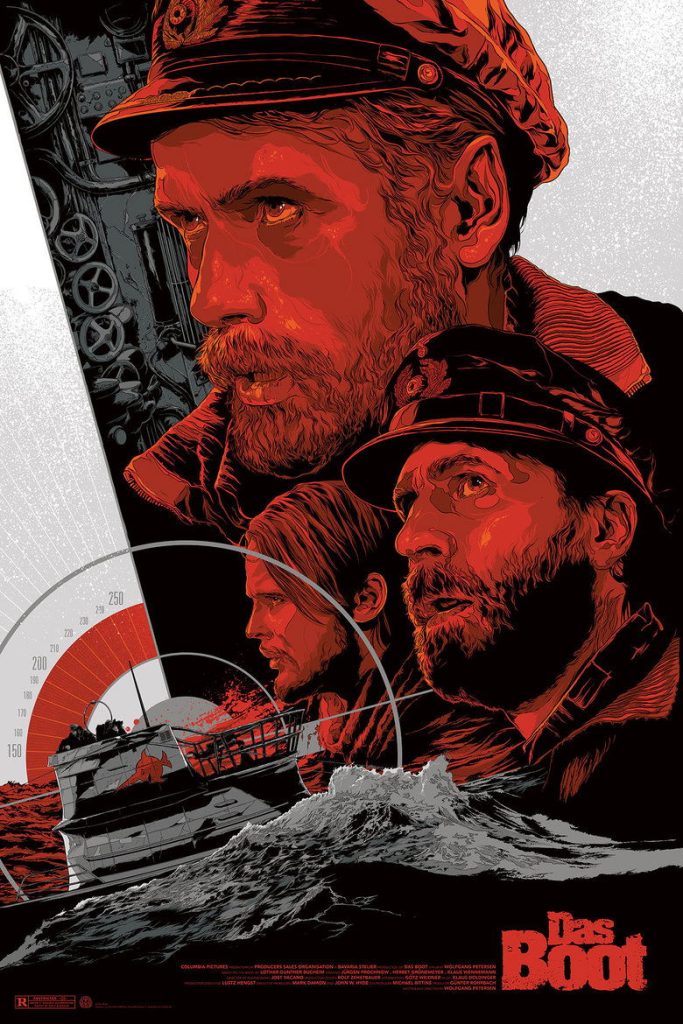
Das Boot is a tense war drama set during World War II that follows a German U-boat crew on a dangerous mission. The film depicts the claustrophobic conditions inside the submarine as the crew faces constant threats from enemy forces. It explores themes of survival, camaraderie, and the psychological strain of warfare through realistic portrayals of naval combat and life aboard the vessel.
Parent Guide
A tense war drama with intense combat violence and mature themes, most suitable for older teens due to realistic depictions of submarine warfare and psychological stress.
Content breakdown
Realistic war violence including depth charge attacks, explosions, gunfire, and scenes of ships sinking. Sustained peril as the submarine is hunted. Some injuries and implied deaths shown.
Intense sequences of submarine warfare create claustrophobic tension. Sudden explosions and attacks may startle. Psychological stress of characters facing imminent danger.
Some strong language in German (with English subtitles) including wartime expletives and military terminology. Occasional crude references.
Brief suggestive dialogue and references. No explicit sexual content or nudity shown.
Characters occasionally drink alcohol (schnapps) in social situations. Some smoking shown as period-appropriate behavior.
High emotional intensity due to constant danger and psychological strain. Themes of mortality, fear, and survival create sustained tension throughout.
Parent tips
This film is rated R primarily for intense war violence, peril, and strong language. It contains realistic depictions of submarine warfare including depth charge attacks, explosions, and combat scenes that may be disturbing. The confined setting creates sustained tension and psychological pressure that could be overwhelming for younger viewers.
Parents should note the film's historical context involves World War II from the German perspective, which may require discussion about the war's complexities. The 150-minute runtime and subtitled dialogue (for non-German speakers) demand significant attention that may challenge younger audiences. The film's mature themes of mortality, duty, and the horrors of war make it most suitable for older teens.
Parent chat guide
During viewing, pause if needed to check in about the intense scenes or to explain historical elements. The film's slow-building tension and sudden violent moments may benefit from brief breaks. Note that the characters speak German with subtitles, which requires focused attention.
After viewing, discuss how the film portrays the psychological effects of war on soldiers. Talk about the historical accuracy versus dramatic elements, and explore themes of survival, leadership, and moral dilemmas in wartime. Address any questions about the violence or disturbing content that emerged during viewing.
Parent follow-up questions
- What did you notice about the submarine?
- How did the people in the movie work together?
- What sounds did you hear in the movie?
- How do you think the characters felt living in the submarine?
- What challenges did the crew face during their mission?
- Why do you think the movie showed the war from this perspective?
- What does the film show about the realities of submarine warfare?
- How does the confined space affect the characters' relationships?
- What historical aspects of World War II does this film help you understand?
- How does the film portray the psychological effects of prolonged combat?
- What commentary does the film make about war and military service?
- How does the German perspective challenge typical war movie narratives?
🎭 Story Kernel
At its core, 'Das Boot' isn't about war but about the psychological compression of humanity under extreme pressure. The U-boat becomes a microcosm of society where rank dissolves into shared survival. What drives these men isn't Nazi ideology but the primal instinct to endure another hour, another minute. Their enemy isn't the Allies but the crushing weight of the ocean itself. The film masterfully shows how prolonged terror transforms camaraderie into something deeper than brotherhood—a collective organism fighting to exist. The real tragedy isn't their eventual failure, but that these men become more alive in their metal tomb than they ever were on land.
🎬 Visual Aesthetics
The film's visual language creates claustrophobia through oppressive close-ups and Dutch angles that make the submarine feel perpetually off-balance. Director Wolfgang Petersen uses the 2.35:1 aspect ratio ironically—the wide frame emphasizes how little horizontal space exists. The color palette shifts from warm, nostalgic browns in land scenes to sickly greens and metallic blues underwater, visually separating two incompatible worlds. Camera movements mimic the submarine's rocking, making viewers physically feel the environment. Most powerfully, the camera often sits at eye level with the crew, forcing us into their perspective—we see only what they see, know only what they know.
🔍 Details & Easter Eggs
💡 Behind the Scenes
The submarine sets were built to exact 1:1 scale, with the interior constructed inside a Munich brewery. Actors underwent weeks of real submarine training and were deliberately kept sleep-deprived during filming to authentically replicate crew fatigue. Jürgen Prochnow (the Captain) actually lost significant weight during production as the shooting schedule mirrored the story's timeline. Most underwater exterior shots used detailed miniatures—the full-sized exterior submarine only appears in dock scenes. The film's sound design was revolutionary, with every creak and groan recorded from actual preserved U-boats.
Where to watch
Choose region:
- fuboTV
- Amazon Video
- Apple TV
- Google Play Movies
- YouTube
- Fandango At Home
Trailer
Trailer playback is unavailable in your region.