
Daughter (2015)
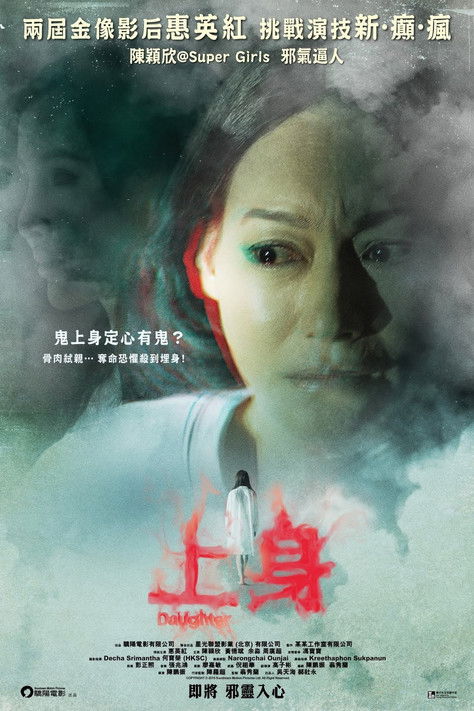
Story overview
This 2015 thriller-horror film blends family drama with mystery elements. The story follows a family facing unsettling events that challenge their relationships and safety. It explores themes of fear, trust, and protection within a domestic setting.
Parent Guide
A family-oriented thriller with horror elements that may be intense for younger children. The combination of family drama with suspenseful mystery creates emotional complexity.
Content breakdown
Contains suspenseful situations and potential danger typical of thriller-horror genres
Includes tense moments and unsettling themes that could frighten sensitive viewers
May contain minimal strong language appropriate to thriller genre
No sexual content or nudity expected based on family genre inclusion
No substance use depicted
Family drama combined with thriller elements creates emotional tension
Parent tips
This film combines thriller and horror elements with family themes, which may create tension for younger viewers. The mystery aspects could lead to suspenseful moments that might be intense for children. Consider the emotional maturity of your child, as the blend of family drama with horror could be confusing or frightening.
Parent chat guide
Parent follow-up questions
- What was your favorite part of the movie?
- How did the family help each other?
- What made you feel safe in the story?
- Can you draw a picture of the family?
- What would you do if you felt scared like the characters?
- How did the family work together to solve problems?
- What clues helped the characters understand what was happening?
- How did the characters show bravery?
- What would you do differently if you were in the story?
- How can families support each other during scary times?
- What themes about family did you notice in the movie?
- How did the mystery elements affect the family dynamics?
- What strategies did characters use to cope with fear?
- How realistic do you think the family's reactions were?
- What lessons about trust can we learn from this story?
- How does the film blend horror elements with family drama effectively?
- What commentary does the movie make about family relationships under stress?
- How do the thriller aspects enhance the emotional impact?
- What cinematic techniques created suspense in the film?
- How does this compare to other family-oriented horror films you've seen?
🎭 Story Kernel
At its core, 'Daughter' is a psychological horror film about the suffocating nature of obsessive parental love and the trauma of inherited guilt. The film isn't about a literal haunting, but about how the protagonist's psyche becomes haunted by her father's desperate, controlling affection. The driving force isn't supernatural evil, but the devastating psychological aftermath of a parent who cannot let go, who treats his child as both a possession and a replacement for lost happiness. The daughter's journey becomes one of breaking free from this emotional prison, where every act of 'care' is actually a chain.
🎬 Visual Aesthetics
The film's visual language masterfully uses confinement. Tight, claustrophobic shots within the house's narrow hallways and doorframes mirror the protagonist's trapped mental state. A muted, desaturated color palette—dominated by cold blues and sterile whites—creates an atmosphere of emotional frost and clinical detachment. The camera often lingers on the father's hands—resting on her shoulder, adjusting her hair—turning mundane gestures into acts of subtle control. The few moments of warmth use a soft, golden light, but these are always brief, quickly swallowed by the prevailing chill, visually reinforcing the fleeting nature of her autonomy.
🔍 Details & Easter Eggs
💡 Behind the Scenes
The lead actress reportedly spent weeks in isolation prior to filming to authentically capture the character's profound loneliness and social detachment. The oppressive family home was not a set but an actual, rarely-occupied historic property chosen for its authentically cramped and echoing architecture. Director and cinematographer collaborated on a 'no steady-cam' rule for interior scenes, using only handheld shots to enhance the feeling of instability and unease within the domestic space.
Where to watch
Choose region:
- Peacock Premium
- Midnight Pulp
- Peacock Premium Plus
- Cineverse
- Tubi TV
- Amazon Video
- Fandango At Home
Trailer
Trailer playback is unavailable in your region.