
Dave Chappelle: Killin’ Them Softly (2000)
Story overview
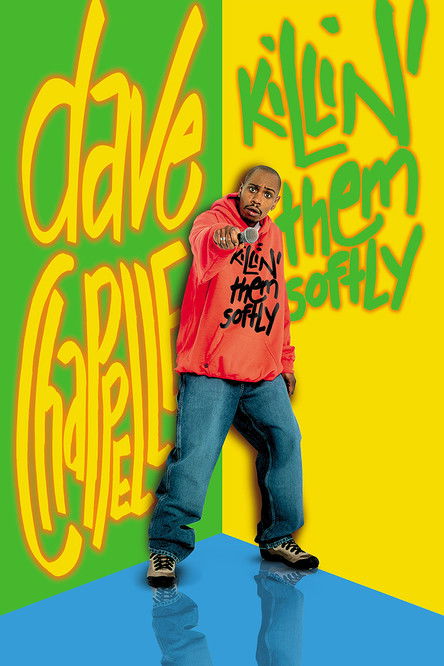
Dave Chappelle: Killin' Them Softly is a stand-up comedy special from 2000 featuring comedian Dave Chappelle performing live. The show consists of Chappelle's observational humor and social commentary delivered through his unique comedic style. It captures his early career material that established him as a prominent voice in comedy.
Parent Guide
This TV-MA rated comedy special contains mature content intended for adult audiences only.
Content breakdown
Stand-up comedy performance without violent content
May contain mature themes or social commentary that could be unsettling for younger viewers
Expected strong language typical of adult stand-up comedy
Likely contains sexual references and adult humor common in mature comedy
May include references to substance use in comedic context
Comedic delivery with potential for strong opinions on social issues
Parent tips
This comedy special is rated TV-MA, indicating it's intended for mature audiences only. Parents should be aware that stand-up comedy often contains adult themes, strong language, and mature subject matter that may not be appropriate for children or teenagers. Consider previewing the content or checking detailed reviews before allowing younger viewers to watch.
Parent chat guide
Parent follow-up questions
- What was your favorite funny part?
- Did you understand what the man was talking about?
- How did the audience react to the jokes?
- What made you laugh the most?
- Was there anything that confused you?
- What topics did the comedian discuss in his show?
- How did he use humor to talk about serious things?
- What did you notice about the audience's reactions?
- Were there any jokes you didn't understand?
- How is this different from comedy shows made for kids?
- What social issues did the comedian address through humor?
- How does stand-up comedy differ from scripted TV comedy?
- What makes certain comedy appropriate for adults versus children?
- How did the comedian use language and timing to create humor?
- What did you learn about different types of comedy from this special?
- How does Dave Chappelle use satire and social commentary in his comedy?
- What cultural observations did he make that still resonate today?
- How does adult-oriented comedy handle sensitive topics differently than family comedy?
- What responsibilities do comedians have when discussing serious issues through humor?
- How has stand-up comedy evolved since this 2000 special?
🎭 Story Kernel
The film isn't a narrative with plot but a document of cultural confrontation. Chappelle positions himself as both prosecutor and defendant, using stand-up as a vehicle to dissect racial dynamics, class divides, and the hypocrisy of American social contracts. His material—from police brutality to drug culture—serves as evidence in a case against systemic absurdity. The driving force is Chappelle's urgent need to expose uncomfortable truths while maintaining comedic precision, creating tension between entertainment and social commentary that defines the special's lasting impact.
🎬 Visual Aesthetics
The visual language is deliberately stripped-down and intimate, shot primarily in medium and close-up shots that trap the audience in Chappelle's gravitational pull. The warm, low-contrast lighting and simple black backdrop focus attention entirely on his physicality—the subtle shifts in posture, the controlled pacing across the stage. Camera movements are minimal, creating a documentary-like authenticity that contrasts with the explosive content. This visual restraint makes the performance feel like a confidential conversation, amplifying the impact of his most provocative material.
🔍 Details & Easter Eggs
💡 Behind the Scenes
Filmed at Washington D.C.'s historic Lincoln Theatre in 2000, this was Chappelle's first HBO special and established his signature style. The theater's intimate 1,200-seat capacity was chosen deliberately to maintain the club feel despite television production. Director Stan Lathan, who worked with Chappelle on 'Chappelle's Show,' used minimal crew to avoid disrupting the performance's organic energy. The special was shot over two nights, with editing selecting the sharpest takes while preserving the raw, conversational flow that became Chappelle's trademark.
Where to watch
Choose region:
- HBO Max
- HBO Max Amazon Channel
- Amazon Video
- Apple TV