
David Attenborough: A Life on Our Planet (2020)
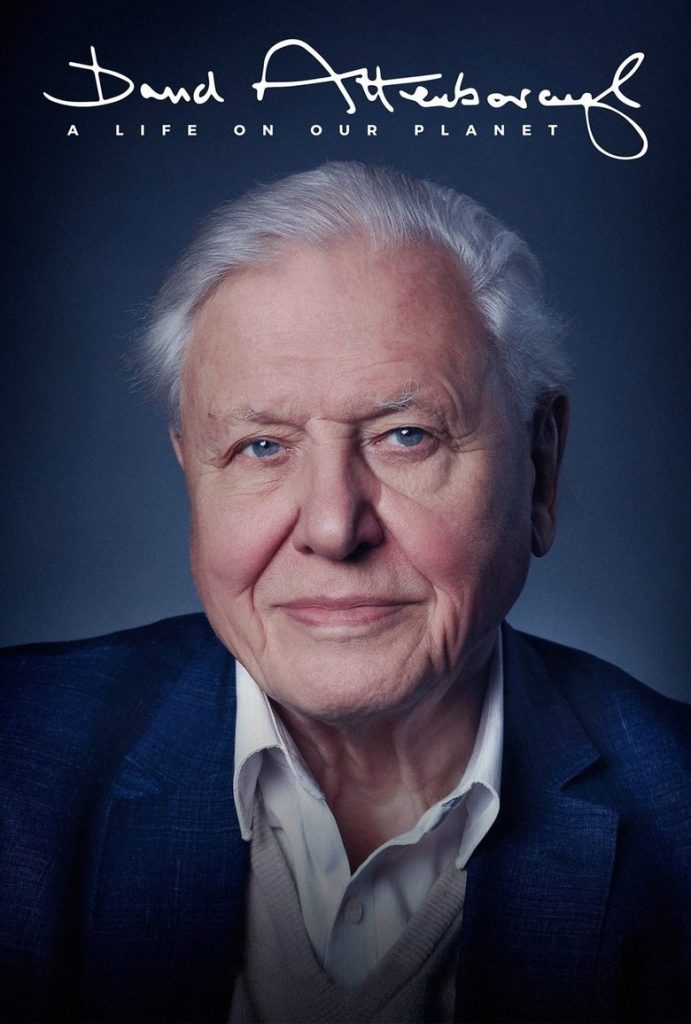
Story overview
This documentary narrated by David Attenborough reflects on his lifetime of observing nature and the dramatic changes to our planet's biodiversity. It presents a powerful witness statement about environmental decline and offers a hopeful vision for restoration through sustainable practices. The film combines breathtaking natural footage with sobering data to illustrate humanity's impact on Earth.
Parent Guide
An educational documentary about environmental changes with some concerning content about planetary decline.
Content breakdown
Discussion of animal extinction and habitat destruction, but no graphic violence shown.
Some children may find discussions of environmental decline and species extinction concerning or sad.
No offensive language present.
No sexual content or nudity.
No substance use depicted.
The documentary presents serious environmental challenges that may evoke concern or sadness about planetary changes.
Parent tips
This documentary deals with serious environmental themes that may be concerning for sensitive viewers, especially younger children. Parents should be prepared to discuss topics like species extinction, climate change, and human responsibility. The PG rating suggests some material may not be suitable for all children, so consider your child's emotional maturity before viewing.
Parent chat guide
Parent follow-up questions
- What animals did you see that you liked?
- What colors did you notice in nature?
- How can we help take care of plants and animals?
- What changes did David Attenborough notice in nature over his lifetime?
- Why is it important to protect different kinds of animals and plants?
- What are some ways we can use less energy at home?
- How do human activities affect ecosystems around the world?
- What does 'biodiversity' mean and why is it important?
- What are some sustainable practices that could help restore nature?
- What evidence does the film present about humanity's impact on the planet?
- How might different countries balance development with environmental protection?
- What role can individuals play in addressing large-scale environmental challenges?
🎭 Story Kernel
The film is not a biography but a personal witness statement and a last will and testament. It frames Attenborough's 94-year life as a living timeline against which we can measure planetary decline. The driving force is his transformation from a curious young naturalist documenting a pristine world into a grieving elder delivering a eulogy for lost biodiversity. The narrative is propelled by the stark contrast between his early career footage of abundance and the present-day visuals of scarcity, creating a profound sense of personal and planetary loss. It's ultimately about bearing witness and the moral responsibility that comes with having seen what has been lost.
🎬 Visual Aesthetics
The visual language masterfully employs a triptych structure: archival footage in vibrant, rich colors represents the past; contemporary shots of environmental degradation use desaturated, bleak palettes; and hopeful restoration scenes are bathed in warm, golden-hour light. The camera often holds on Attenborough's face in extreme close-up, making his expressions—wonder, sorrow, resolve—the emotional landscape of the film. The most powerful visual motif is the juxtaposition of identical locations decades apart, using split-screen or sequential editing to show forests replaced by monocultures and ice shelves vanished into open ocean.
🔍 Details & Easter Eggs
💡 Behind the Scenes
The film was shot across 12 countries over four years. The poignant scene where Attenborough returns to the island of Borneo, where he first filmed orangutans decades earlier, required special permission and a medically supervised journey due to his age. Much of the devastating 'before and after' footage of deforestation and glacial retreat was compiled from the BBC's vast natural history archives, some of which Attenborough himself originally filmed, making the comparison uniquely personal. The production partnered with the World Database on Protected Areas to accurately map the film's central graph of wilderness loss.
Where to watch
Choose region:
- Netflix
- Netflix Standard with Ads
Trailer
Trailer playback is unavailable in your region.