
Days of Being Wild (1990)
Story overview
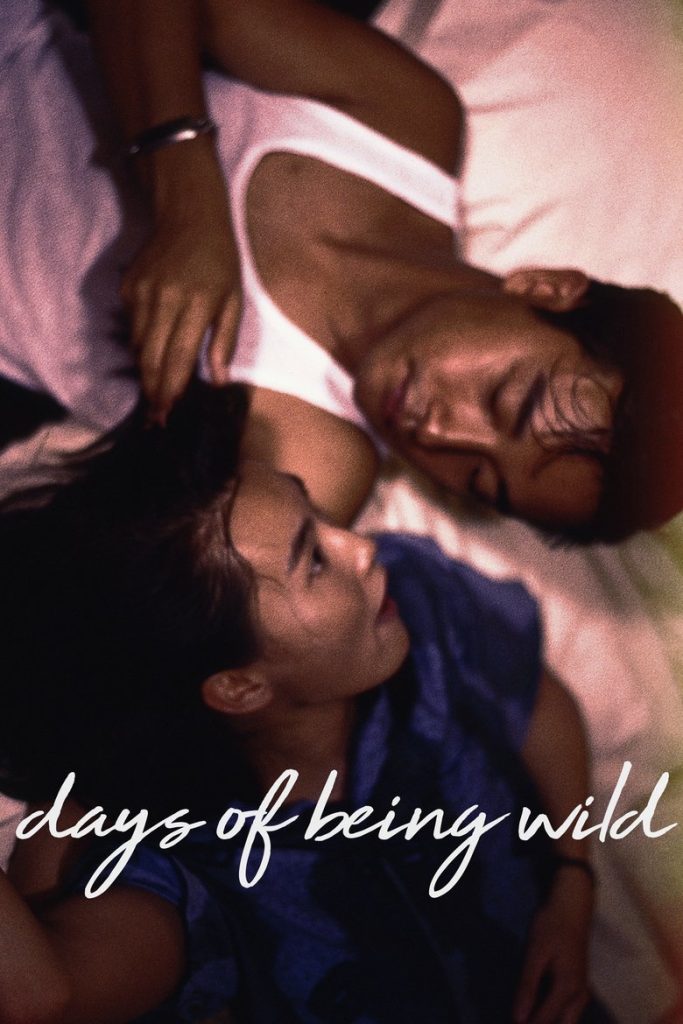
Days of Being Wild is a 1990 crime drama romance film set in 1960s Hong Kong. The story follows a young man's aimless life as he navigates complex relationships with several women while dealing with his own emotional detachment. The film explores themes of loneliness, unrequited love, and the search for identity through its atmospheric storytelling and character-driven narrative.
Parent Guide
A character-driven drama with mature themes about relationships and identity, best suited for older teens and adults.
Content breakdown
Some criminal activity and tense situations are depicted, though not graphically violent.
Emotional intensity and relationship conflicts may be unsettling for sensitive viewers.
Occasional mild language may be present in emotional exchanges.
Implied sexual relationships and romantic situations are central to the plot.
Some social drinking and smoking may be shown in period-appropriate settings.
Strong focus on complex emotions, relationship conflicts, and psychological themes.
Parent tips
This film contains mature themes including complex romantic relationships, emotional manipulation, and criminal elements that may be difficult for younger viewers to understand. The slow-paced, atmospheric storytelling focuses more on character psychology than action, which may not hold the attention of children. Parents should be aware that the film deals with adult relationships and emotional turmoil that requires some life experience to fully comprehend.
Parent chat guide
Parent follow-up questions
- What colors did you see in the movie?
- Did you see any people talking to each other?
- How did the music make you feel?
- How do you think the characters felt when they were alone?
- What makes someone a good friend in the movie?
- Why do you think people sometimes have trouble understanding each other?
- How do the characters show their feelings without saying them?
- What do you think the movie is saying about how people connect with each other?
- How do the characters' choices affect their relationships?
- How does the film explore the theme of emotional isolation?
- What commentary does the movie make about romantic relationships and expectations?
- How does the setting influence the characters' actions and decisions?
🎭 Story Kernel
The film is less a traditional narrative and more a study of existential displacement and the search for identity through the lens of unrequited love. Every character is driven by a profound absence: Yuddy by the mother who abandoned him, Su Lizhen and Mimi by the love Yuddy cannot give, Tide by his aimless loyalty. Their actions are not propelled by clear goals, but by a desperate need to fill an internal void they can never articulate. The core theme is the impossibility of connection when one's own self is a mystery; they are all 'wild' because they are untethered from any stable sense of belonging or purpose, forever orbiting each other's loneliness without ever truly meeting.
🎬 Visual Aesthetics
Wong Kar-wai and cinematographer Christopher Doyle paint with a palette of saturated greens, sickly yellows, and deep shadows, immersing the viewer in the film's languid, humid atmosphere. The camera is often static, observing characters trapped in frames within frames—doorways, windows, mirrors—emphasizing their isolation. Slow-motion is used not for action but for emotional weight, stretching moments of longing and departure. The recurring motif of clocks and the persistent sound of ticking underscore the characters' anxious awareness of time passing while they remain stuck, their lives reflected in the endless, rain-slicked streets and cramped, neon-lit interiors.
🔍 Details & Easter Eggs
💡 Behind the Scenes
This was the first collaboration between Wong Kar-wai and cinematographer Christopher Doyle, beginning one of cinema's most iconic director-DP partnerships. Leslie Cheung, who plays Yuddy, was reportedly so immersed in the character's melancholy that he remained distant and in character off-camera. The film was a commercial failure in Hong Kong upon release but is now considered a cornerstone of the Second Wave of Hong Kong cinema. Maggie Cheung and Andy Lau reportedly filmed their poignant phone booth scene in one long, emotionally draining take.
Where to watch
Choose region:
- HBO Max
- HBO Max Amazon Channel
- Criterion Channel
Trailer
Trailer playback is unavailable in your region.