
Deadwood: The Movie (2019)
Story overview
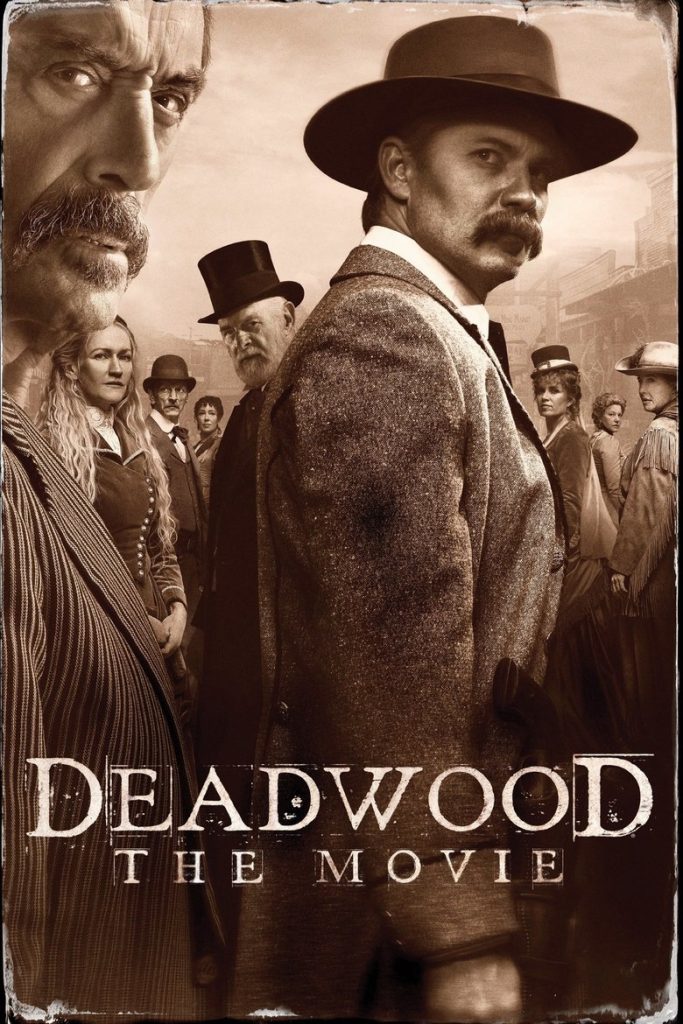
Deadwood: The Movie is a 2019 Western drama that serves as a reunion special for the characters from the original series. Set ten years after the events of the show, it follows the residents of Deadwood as they gather to celebrate South Dakota's statehood. The film explores themes of change, legacy, and unresolved conflicts as former rivals clash, alliances are tested, and old wounds resurface against the backdrop of a rapidly modernizing frontier town.
Parent Guide
Deadwood: The Movie is intended for mature audiences only. It continues the gritty, realistic portrayal of frontier life from the original series with intense violence, strong language, and adult themes. The complex character relationships and historical context make it most appropriate for viewers 17 and older.
Content breakdown
Graphic Western violence including shootings, stabbings, fistfights, and bloody injuries. Characters are shot at close range with visible blood and wounds. Tense standoffs and threats of violence throughout. Some scenes show the aftermath of violent acts with detailed injury depiction.
Intense confrontations and emotional tension between characters. Some disturbing scenes of violence and its consequences. The overall tone is gritty and realistic about frontier life's hardships. No supernatural or horror elements, but the realistic violence and moral ambiguity can be unsettling.
Frequent strong profanity throughout, including multiple uses of f-words, s-words, and other explicit language. The dialogue maintains the colorful, profane style of the original series. Period-appropriate racial slurs and derogatory terms are used in historical context.
References to sexual relationships and brothel activity. Some suggestive dialogue and situations. Brief partial nudity in a brothel setting. Sexual content is not graphic but is present throughout as part of the frontier town setting.
Frequent drinking in saloons and other settings. Characters shown drinking whiskey and other alcohol throughout. Some tobacco use (cigars, pipes) consistent with the time period. Opium use is referenced and shown in context.
High emotional stakes as characters confront past traumas and unresolved conflicts. Themes of loss, regret, and change create intense dramatic moments. Complex character relationships with deep-seated resentments and loyalties. The weight of history and personal baggage drives much of the emotional tension.
Parent tips
This film is rated TV-MA for mature audiences only. It contains strong violence, graphic language, sexual content, and substance use. Not suitable for children or younger teens. Parents should watch first to determine appropriateness for older teens (17+). The complex themes and historical context may require explanation.
Parent chat guide
Parent follow-up questions
—
—
—
- What did you think about how the characters dealt with their past conflicts?
- How does the movie show the tension between progress and tradition?
- Which character's journey did you find most compelling and why?
- What did you notice about how power and justice are portrayed in Deadwood?
🎭 Story Kernel
The movie is less about the plot of South Dakota's statehood and more a profound meditation on the cost of 'progress' and the nature of legacy. It asks what happens when the chaotic, vital, and brutal energy that built a place is systematically erased by the orderly march of law and capital. The characters are driven by a desperate need to reconcile with their pasts before history closes the book on them. Al Swearengen's physical decline mirrors the town's sanitization; his final, silent moments with Trixie are not about love, but about acknowledging a shared, unspeakable history that the new world has no room for. Seth Bullock's rigid morality, once the town's backbone, now feels like a relic, as the real power shifts to George Hearst and his telegraph wires.
🎬 Visual Aesthetics
The cinematography masterfully trades the series' gritty, hand-held immediacy for a more composed, elegiac look. The color palette is muted, dominated by browns, grays, and the cold blue of winter light, visually cementing the end of an era. Camera movements are slower, more deliberate, often holding on characters' faces as they absorb the changes around them—Al staring out his window, Bullock surveying the crowded street. The action, when it comes (like the shootout with Hearst's man), is brutal and abrupt, lacking the chaotic glory of the series, emphasizing that violence is now a messy administrative problem to be solved, not a defining force.
🔍 Details & Easter Eggs
💡 Behind the Scenes
The film reunited the original cast and creative team after a 13-year hiatus. Many of the exterior sets on the Warner Bros. ranch had been dismantled, so the production had to rebuild portions of the main street. Ian McShane reportedly slipped back into Al Swearengen's voice and cadence instantly. Creator David Milch, who was diagnosed with Alzheimer's during production, infused the script with themes of memory and legacy, making the characters' struggles with the past deeply personal. The harsh winter setting was a practical challenge, with freezing temperatures affecting both equipment and period-accurate costumes.
Where to watch
Choose region:
- HBO Max
- HBO Max Amazon Channel
- Amazon Video
Trailer
Trailer playback is unavailable in your region.