
Desert Hearts (1985)
Story overview
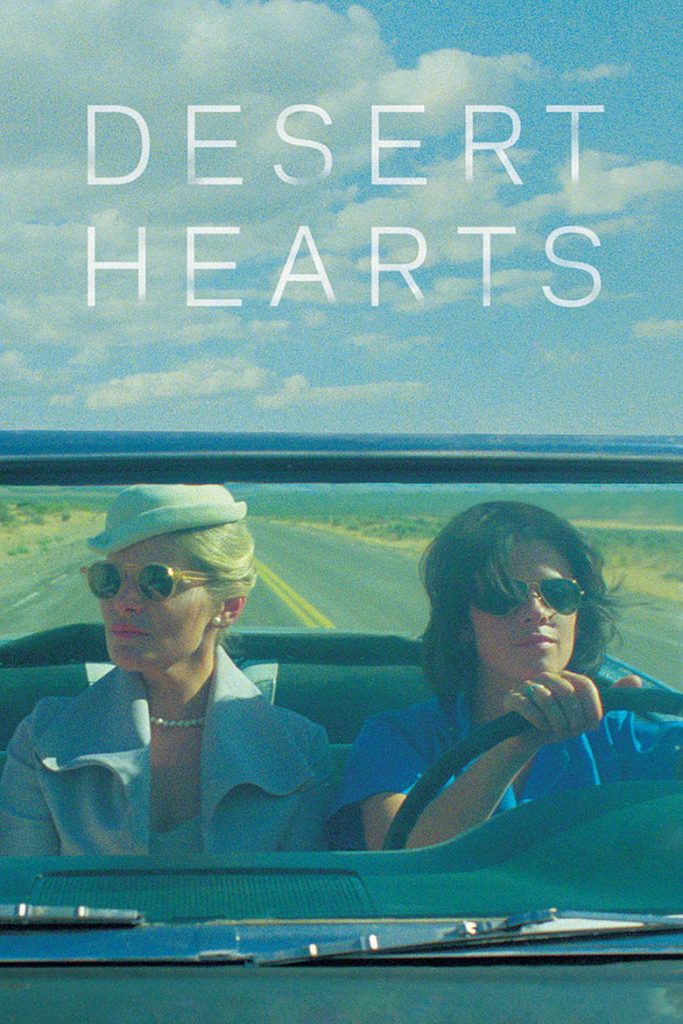
Desert Hearts is a 1985 romantic drama set in 1959 Nevada, where Vivian Bell, a repressed literature professor awaiting her divorce, travels to Reno. There, she meets Cay Rivvers, a free-spirited young sculptor, and experiences an unexpected romantic awakening that challenges her conservative upbringing and societal norms of the era.
Parent Guide
This mature romantic drama explores same-sex relationships in 1950s America with emotional depth and historical context. Contains sexual content, nudity, and adult themes requiring parental guidance for younger viewers.
Content breakdown
No physical violence or perilous situations. Emotional tension arises from relationship conflicts and societal pressure.
Some emotionally intense scenes involving relationship conflicts and personal turmoil. No horror elements or jump scares.
Occasional strong language including 'f--k' and other profanity. Some period-appropriate derogatory terms related to relationships.
Contains same-sex romantic relationships, passionate kissing, implied sexual encounters, and brief female nudity in intimate scenes. Central theme involves sexual awakening and desire.
Social drinking in several scenes (cocktails, wine). Characters smoke cigarettes, reflecting 1950s social norms.
High emotional content dealing with self-discovery, societal rejection, divorce, and romantic awakening. Characters experience significant personal transformation.
Parent tips
This film contains mature themes including same-sex romance, brief nudity, and adult language. It explores complex emotional relationships and societal pressures in a historical context. Parents should preview the film and consider their child's maturity level before viewing together.
Parent chat guide
Parent follow-up questions
—
- What did you notice about how the characters treated each other?
- How did the setting (desert, ranch) make you feel?
- Why do you think Vivian was hesitant about her feelings at first?
- How did the time period (1959) affect how characters expressed themselves?
- What did you think about the different ways people show affection in the movie?
- How does the film portray the conflict between personal desire and societal expectations?
- What does the film suggest about the relationship between art/creativity and personal identity?
- How do the characters' journeys of self-discovery compare to challenges teens face today?
- What historical context is important for understanding the characters' struggles?
🎭 Story Kernel
At its core, 'Desert Hearts' explores the tension between societal conformity and authentic self-expression through the relationship between Vivian, a repressed English professor seeking divorce, and Cay, a free-spirited casino worker. The film isn't just about lesbian romance—it's about the courage to shed constructed identities. Vivian's journey from intellectual detachment to emotional vulnerability mirrors her physical journey from New York to Reno. Cay represents the possibility of living without apology, while Vivian embodies the cost of self-denial. Their relationship becomes a crucible where both women confront what they've sacrificed to meet others' expectations, culminating in Vivian's decision to abandon her train journey back to conventional life.
🎬 Visual Aesthetics
Director Donna Deitch employs the vast Nevada desert as both setting and metaphor—the open landscape contrasts with the characters' emotional confinement. Cinematographer Robert Elswit uses natural light and wide shots to emphasize isolation, then tight close-ups during intimate moments. The color palette shifts from Vivian's initial muted grays and blues to warmer earth tones as she opens up. The recurring motif of trains—both arriving and departing—visually represents life transitions. The casino scenes use artificial lighting to highlight the performative nature of social interactions, while private moments are bathed in softer, more authentic light.
🔍 Details & Easter Eggs
💡 Behind the Scenes
Based on Jane Rule's novel 'Desert of the Heart,' this was one of the first mainstream films to portray a lesbian relationship with a happy ending. Director Donna Deitch mortgaged her house to finance the project after studios rejected it. The Reno locations were authentic—the divorce ranch actually existed, and casino scenes were shot in real operating casinos. Helen Shaver (Vivian) and Patricia Charbonneau (Cay) performed their intimate scenes without body doubles, groundbreaking for 1985. The film's success at Sundance helped launch the festival's reputation for independent cinema.
Where to watch
Choose region:
- HBO Max
- HBO Max Amazon Channel
- Criterion Channel
- Amazon Video
- Apple TV Store
- Fandango At Home
Trailer
Trailer playback is unavailable in your region.