
Despicable Me (2010)
Story overview
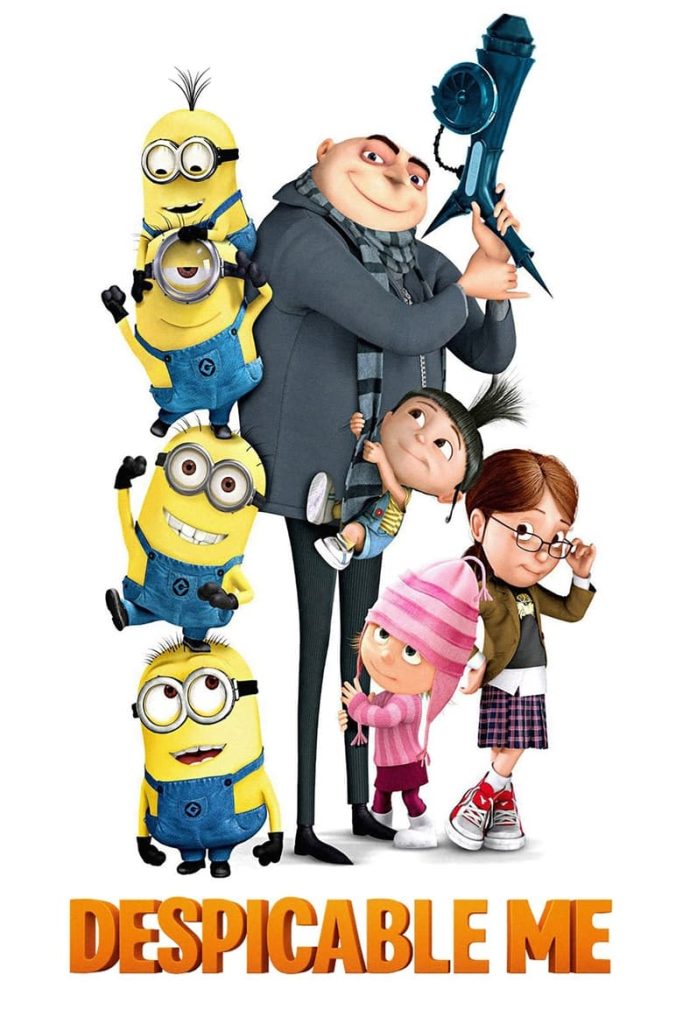
Despicable Me is a 2010 animated family comedy about a villain named Gru who plans to steal the moon. His life takes an unexpected turn when three orphaned girls enter his care, challenging his villainous ways. The film blends humor, heart, and science fiction elements as Gru navigates his criminal ambitions and newfound paternal responsibilities. It's a story about transformation, family bonds, and finding purpose beyond one's initial intentions.
Parent Guide
A family-friendly animated comedy with mild action and positive themes of redemption and family.
Content breakdown
Cartoonish villainy, non-graphic schemes, and comedic peril such as characters in brief danger or involved in slapstick situations.
Some scenes may be intense for very young viewers due to villainous characters and mild peril, but nothing graphic or lasting.
Occasional rude humor or mild insults, but no strong profanity.
No sexual content or nudity.
No depiction of substance use.
Mild emotional moments related to family bonds and character growth, but generally lighthearted.
Parent tips
Despicable Me is rated PG for mild action and rude humor. The film features cartoonish villainy, including non-graphic schemes and comedic peril, which may be intense for very young children but is generally lighthearted. Some scenes involve mild slapstick violence and brief moments where characters are in danger, though these are resolved humorously. The movie's themes of family, redemption, and kindness are positive, but parents should note that the main character starts as a morally questionable figure who learns to change.
Parent chat guide
Parent follow-up questions
- What was your favorite funny part in the movie?
- How did the girls make Gru feel happy?
- What did you learn about being kind to others?
- Which character did you like the most and why?
- How did the movie make you feel?
- Why do you think Gru wanted to steal the moon at first?
- How did taking care of the girls change Gru?
- What does it mean to be a family in this movie?
- Can you think of a time when you helped someone like Gru helped the girls?
- What was the most exciting part of the story for you?
- What message do you think the movie is trying to send about villainy and redemption?
- How does the film use humor to deal with serious topics like loneliness?
- In what ways did Gru's priorities shift throughout the story?
- Do you think it's realistic for someone to change so quickly? Why or why not?
- How did the science fiction elements add to the movie's appeal?
- How does Despicable Me explore themes of identity and purpose through Gru's character arc?
- What societal or personal factors might influence someone like Gru to pursue villainy initially?
- How does the film balance comedy with emotional depth in portraying family dynamics?
- In what ways can media like this movie inspire discussions about morality and personal growth?
- How effective is the animation style in conveying the story's tone and themes?
🎭 Story Kernel
At its core, 'Despicable Me' explores the transformative power of authentic connection versus performative ambition. Gru's journey from aspiring 'World's Greatest Villain' to devoted father reveals that his criminal pursuits were always a misguided cry for validation—first from his dismissive mother, then from a villainous community that measures worth by destructive scale. The three orphan girls succeed where the Vector's pyramid heist fails because they offer unconditional love that requires no grand theft. The film argues that true 'greatness' isn't measured in stolen monuments but in the quiet moments of bedtime stories and homemade cookies, suggesting that nurturing others ultimately nurtures the self.
🎬 Visual Aesthetics
The film's visual language masterfully contrasts cold, angular villainy with warm, rounded domesticity. Gru's lair is all sharp edges, metallic grays, and oppressive shadows, mirroring his emotional isolation. The orphanage is drab and institutional, washed in melancholic blues and browns. When the girls enter Gru's world, the palette gradually softens—their brightly colored bedtime storybook, the vibrant yellows of the Minions, and the final sunny picnic scene visually chart Gru's thawing heart. The camera often looks down on Gru in his villainous moments, emphasizing his smallness, but shifts to eye-level and close-ups during paternal scenes, creating intimacy. The iconic heist sequences use dynamic, exaggerated perspectives that feel like living comic panels.
🔍 Details & Easter Eggs
💡 Behind the Scenes
Steve Carell improvised much of Gru's distinctive accent, blending elements of Russian and Transylvanian dialects to create a voice that sounded menacing yet oddly charming. The Minions' language is a chaotic mix of words from various languages (including Spanish, Italian, and Korean), food items, and gibberish, designed to be universally silly. Originally, the script had Gru as a more traditionally sinister villain, but test audiences responded better to his vulnerable, humorous side, leading to significant rewrites that emphasized his paternal arc. Pierre Coffin, who co-directed, voiced all the Minions himself by recording hundreds of lines and pitching his voice differently for various characters.
Where to watch
Choose region:
- Netflix
- Peacock Premium
- Netflix Standard with Ads
- Peacock Premium Plus
- Amazon Video
- Apple TV
- Google Play Movies
- YouTube
- Fandango At Home
Trailer
Trailer playback is unavailable in your region.