
Destino (2003)
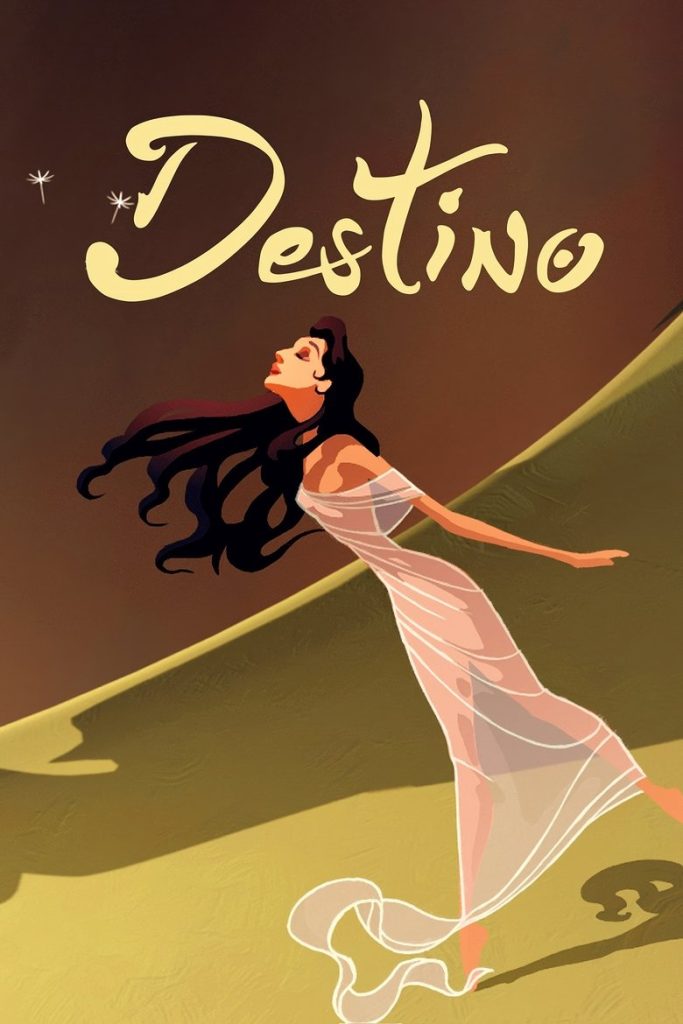
Story overview
Destino is a short animated film that explores themes of love, loss, and surreal transformation through dreamlike imagery. The film follows a woman who experiences a series of bizarre and fantastical changes as she navigates her emotions. With no dialogue, it uses visual metaphors and symbolic sequences to convey its narrative, set to music that enhances the emotional journey.
Parent Guide
A surreal animated short about love and transformation with no concerning content but some abstract imagery that might confuse or mildly unsettle very young viewers.
Content breakdown
No violence, fighting, or perilous situations.
Some surreal transformations might be mildly unsettling for sensitive viewers, including a melting face and unusual imagery, but nothing graphic or traditionally frightening.
No dialogue or language of any kind.
No sexual content or nudity.
No substance use or references.
Explores themes of love and loss through symbolic imagery, which might evoke mild emotional responses but isn't intense.
Parent tips
Destino is a PG-rated animated short that uses surreal and abstract imagery to tell a love story. While there's no violence, language, or sexual content, some transformations might be mildly unsettling for very young viewers, such as a melting face or ants crawling from a hand. The film's lack of dialogue and symbolic nature might confuse younger children, but it can spark interesting conversations about art and emotions with older kids.
At just 7 minutes long, it's easy to watch together and discuss afterward. The abstract visuals are more artistic than frightening, but parents should consider their child's sensitivity to unusual imagery. The PG rating reflects these mild surreal elements rather than traditional content concerns.
Parent chat guide
After watching, focus on the emotional journey rather than plot details. Ask open-ended questions like, 'What was your favorite part?' or 'How did the film make you feel?' For older children, you might discuss how artists use symbols to express ideas. Keep the conversation light and positive, emphasizing that different interpretations are okay.
Parent follow-up questions
- What colors did you like in the movie?
- Did you see any animals or shapes?
- Was the music happy or sad?
- What was your favorite picture?
- Would you like to draw something from the movie?
- What do you think the story was about?
- How did the pictures change to show feelings?
- Which part was most interesting to you?
- If you made a movie without words, what would you show?
- How did the music help tell the story?
- What symbols or metaphors did you notice?
- How did the film show love without using words?
- Why do you think the artist chose such unusual images?
- What emotions did the film try to express?
- How does this compare to other animated films you've seen?
- What artistic techniques did you notice in the animation?
- How does the surreal imagery enhance the emotional themes?
- What might the various transformations symbolize?
- How does the lack of dialogue affect the viewing experience?
- What connections do you see between the visuals and the musical score?
🎭 Story Kernel
At its core, 'Destino' is a meditation on the relentless, often cruel, passage of time and the human desire to transcend it through love and art. The film's narrative, driven by Salvador Dalí and Walt Disney's collaboration, explores how time both creates and destroys connections. The female protagonist's pursuit of the male figure—who is literally made of stone—represents humanity's futile yet beautiful attempt to grasp permanence in an impermanent world. Their dance across surreal landscapes symbolizes the cyclical nature of longing, where fulfillment is always just out of reach, echoing the film's real-world production history of being abandoned and later resurrected.
🎬 Visual Aesthetics
The visual language of 'Destino' is pure Dalí-esque surrealism, blending hand-drawn animation with early CGI to create a dreamlike fluidity. The color palette shifts from warm, earthy tones in intimate moments to stark, monochromatic landscapes, mirroring emotional states. Symbolism abounds: melting clocks represent time's malleability, while the recurring bell tower suggests both spiritual aspiration and temporal imprisonment. The camera movements mimic a dance, with sweeping pans and zooms that pull viewers into the characters' psychological space. The animation style—particularly the morphing of objects into new forms—visually enacts the film's theme of transformation under time's pressure.
🔍 Details & Easter Eggs
💡 Behind the Scenes
'Destino' began in 1945 as a collaboration between Salvador Dalí and Walt Disney, but was shelved after only 15 seconds of animation due to financial troubles. Disney's nephew Roy E. Disney rediscovered the project in 1999 and completed it in 2003, using Dalí's original storyboards and notes. The film's musical score by Mexican composer Armando Domínguez was adapted from the original 1945 song. Animation combined traditional hand-drawn techniques with early digital technology to preserve Dalí's surrealist vision. The six-minute short required 18 months to complete and premiered at the 2003 Annecy International Animated Film Festival, winning an Academy Award nomination.
Where to watch
Choose region:
- Disney Plus