
Devil’s Road: The True Story of Ed and Lorraine Warren (2020)
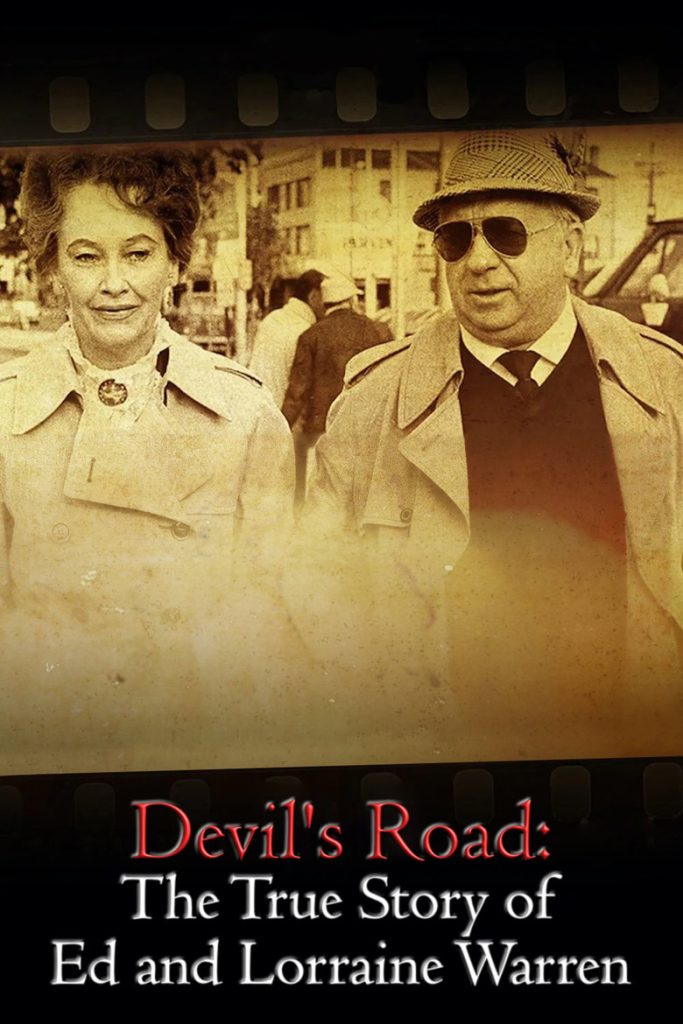
Story overview
This documentary explores the real-life investigations of paranormal researchers Ed and Lorraine Warren over their 50-year career. It covers their most famous cases, including the Amityville Horror house and the Rhode Island home that inspired 'The Conjuring' films, through interviews, archival footage, and reenactments. The film presents their work as factual accounts of hauntings and demonic possessions.
Parent Guide
A documentary about paranormal investigations that may be disturbing for younger viewers due to discussions of hauntings and demonic activity. Best for mature pre-teens and teenagers with parental guidance.
Content breakdown
Discussions of historical violence (like the Amityville murders) and descriptions of paranormal attacks, but no graphic violence shown. Some reenactments depict tense situations.
Themes of hauntings, demonic possession, and paranormal activity. Creepy atmosphere with spooky music and imagery. May be frightening for those sensitive to supernatural topics.
No strong language noted. Standard documentary dialogue.
No sexual content or nudity.
No substance use shown or discussed.
Serious tone discussing frightening real-life experiences. May cause anxiety about supernatural themes. Interviews with people describing traumatic events.
Parent tips
This documentary discusses real-life paranormal investigations and may be too intense for younger or sensitive viewers. Consider watching with children to provide context and reassurance. The TV-14 rating suggests it's suitable for ages 14+, but mature 10-13 year olds with interest in supernatural topics might handle it with guidance.
Parent chat guide
Parent follow-up questions
—
- What do you think ghosts might look like?
- Have you ever felt scared in the dark? What helps you feel safe?
- Do you think the Warrens' investigations were real or exaggerated? Why?
- How do documentaries try to convince viewers something is true?
- What evidence do the Warrens present for their claims? Is it convincing?
- How does this documentary compare to fictional horror movies about the same cases?
- What ethical questions arise from investigating people's traumatic experiences?
🎭 Story Kernel
The film is less about proving the supernatural and more about exploring the psychology and mechanics of belief systems. It dissects how the Warrens constructed their public personas as paranormal investigators, examining the intersection of faith, showmanship, and the human need for narrative in the face of the inexplicable. The driving force isn't a demon, but the couple's relentless curation of their own legacy and the public's desperate desire to believe in a tangible spiritual world, making it a meta-commentary on the very genre they helped popularize.
🎬 Visual Aesthetics
The visual language deliberately contrasts grainy, authentic-looking archival footage and home videos with crisp, modern interview segments. This creates a tangible texture between 'then' and 'now,' emphasizing the construction of history. A muted, often desaturated color palette dominates, evoking a sense of dusty records and faded memory. The camera lingers on objects—a worn crucifix, static-filled EVP recordings, case files—treating them as relics, visually underscoring the film's focus on evidence as curated artifact rather than definitive proof.
🔍 Details & Easter Eggs
💡 Behind the Scenes
The documentary utilizes previously unreleased audio recordings from the Warrens' private collection, provided by the family estate. Key interviews were conducted at the Warrens' former occult museum in Connecticut, now closed to the public. Filmmakers faced significant challenges in verifying and cross-referencing claims from decades-old case files, with some sequences explicitly detailing the forensic document analysis process used to separate fact from anecdote in the Warren archives.
Where to watch
Choose region:
- HBO Max
- Discovery +
- Tubi TV