
Diary of a Wimpy Kid: Rodrick Rules (2022)
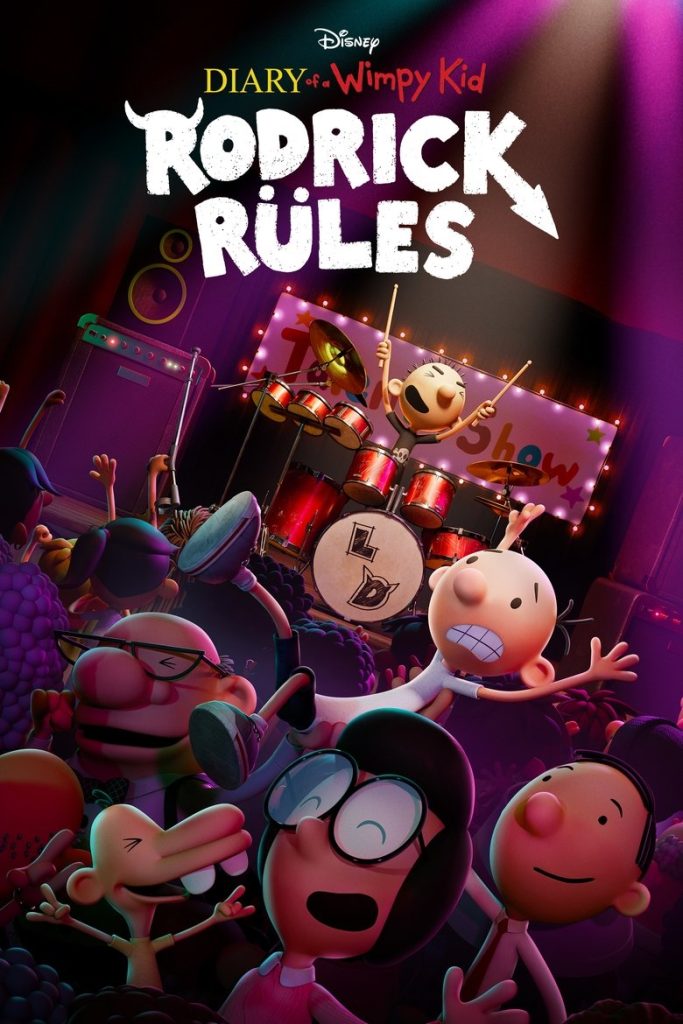
Story overview
In this animated family comedy, Greg Heffley faces a new school year while dealing with constant teasing from his older brother Rodrick. As Greg navigates typical middle school challenges and sibling rivalry, a secret threatens to complicate their already strained relationship. The story explores themes of family dynamics, honesty, and growing up through humorous situations relatable to children.
Parent Guide
A family-friendly animated comedy with mild sibling conflict and age-appropriate humor. Suitable for most children ages 8 and up with minimal parental guidance needed.
Content breakdown
Comedic pranks and sibling teasing only. No physical violence or dangerous situations. Examples include harmless practical jokes and exaggerated cartoon reactions.
No scary or disturbing content. The animation style is bright and cheerful throughout. Any conflicts are resolved humorously.
No offensive language. Typical family-friendly dialogue with occasional mild insults like 'wimpy' or 'dork' in sibling banter context.
No sexual content or nudity. Characters are appropriately dressed in school and home settings.
No substance use of any kind. Characters drink typical beverages like soda or water in family settings.
Mild emotional moments related to sibling rivalry and middle school social situations. Conflicts are resolved positively with humor. Some children might relate to feeling teased by siblings.
Parent tips
This film is appropriate for most children ages 8 and up. The PG rating comes from mild sibling conflict and comedic mischief. Parents should know that while there's no serious violence or inappropriate content, the sibling teasing and pranks might need discussion about family relationships. The animation style is bright and engaging, and the humor is age-appropriate for elementary and middle school viewers.
Parent chat guide
Parent follow-up questions
- Did you like the funny parts with the brothers?
- What was your favorite color in the movie?
- How did the brothers feel when they played together?
- Why do you think Rodrick teased Greg so much?
- What would you do if your sibling kept teasing you?
- Was it right for Greg to keep the secret? Why or why not?
- How does the movie show realistic sibling relationships?
- What lessons about honesty did Greg learn?
- How might Greg and Rodrick's relationship change as they grow older?
- How does the film portray middle school social dynamics accurately or inaccurately?
- What does the movie suggest about family communication patterns?
- How might cultural differences affect how siblings interact in different families?
🎭 Story Kernel
At its core, 'Diary of a Wimpy Kid: Rodrick Rules' explores the brutal yet tender ecosystem of brotherhood. It's not really about Greg's quest for popularity or avoiding embarrassment; it's about navigating the unspoken rules of sibling dynamics where love manifests as sabotage and loyalty emerges from shared humiliation. Rodrick's torment isn't just cruelty—it's a twisted form of mentorship, teaching Greg that survival in middle school requires thicker skin than he possesses. The film cleverly reveals that both brothers are prisoners of their social hierarchies: Rodrick clings to his fading cool-kid status while Greg desperately tries to climb the ladder, making their eventual alliance feel earned when they realize their common enemy is parental expectation.
🎬 Visual Aesthetics
The film employs a distinctly cartoonish visual language that mirrors Greg's illustrated diary entries, with exaggerated facial expressions and physical comedy that feel lifted from the pages of Jeff Kinney's books. The color palette shifts subtly between storylines: warm, saturated tones during Greg's fantasies of popularity contrast with the cooler, more chaotic lighting of Rodrick's band practices and basement parties. Camera work emphasizes awkwardness through tight close-ups during cringe moments (like the disastrous magic show) and wider shots that highlight Greg's smallness in overwhelming social situations. Symbolism appears in recurring motifs—the decaying 'Cheese Touch' represents social contagion, while Rodrick's constantly locked basement door becomes a metaphor for the barriers between childhood and adolescence.
🔍 Details & Easter Eggs
💡 Behind the Scenes
Zachary Gordon (Greg) and Devon Bostick (Rodrick) actually learned to play their instruments for the film, with Bostick practicing bass for weeks to authentically mimic Rodrick's sloppy rockstar poses. The iconic 'cheese' used for the Cheese Touch was a specially crafted rubber prop treated with food-safe brown paint to appear disgustingly realistic without rotting during filming. Most school scenes were shot at a real Vancouver middle school during summer break, requiring the art department to recreate typical school clutter—including thousands of handwritten notes and doodled textbooks—to achieve that authentically chaotic pre-teen environment. Director David Bowers insisted on practical effects for physical comedy scenes, including the disastrous magic show where real doves were replaced with trained birds to ensure animal safety during chaotic takes.
Where to watch
Choose region:
- Disney Plus
Trailer
Trailer playback is unavailable in your region.