
Diary of a Wimpy Kid: The Last Straw (2025)
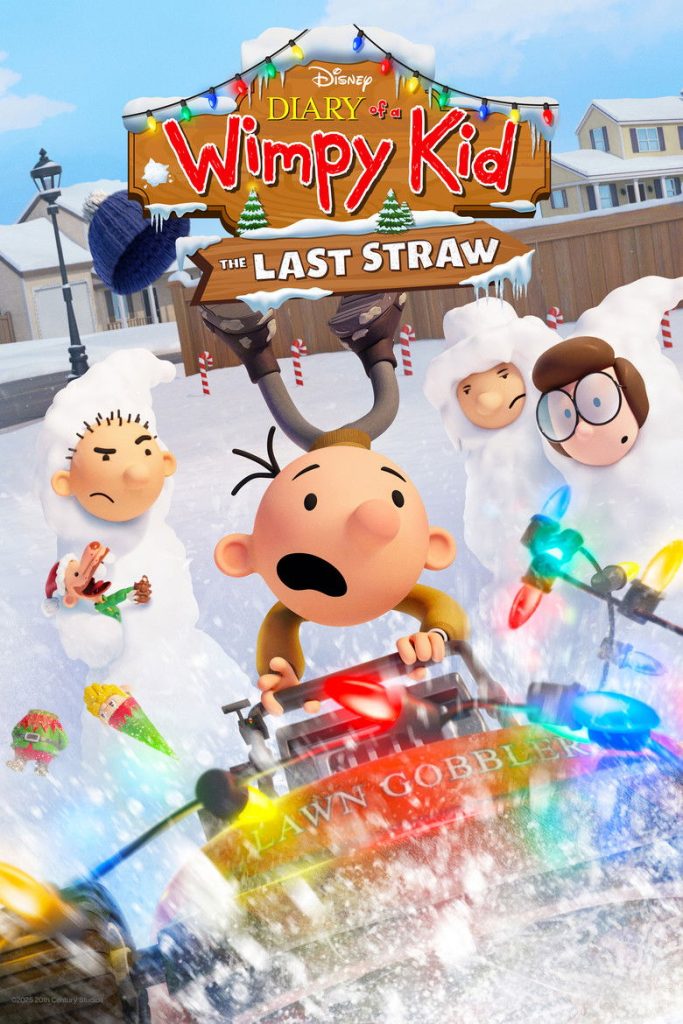
Story overview
In this animated family comedy, Greg, a laidback boy, struggles with his father's high expectations. As pressure mounts for Greg to improve his behavior, a series of comical mishaps ensue. The conflict reaches a peak when Greg's dad issues an ultimatum that could force Greg to overcome his 'wimpy' tendencies once and for all.
Parent Guide
A lighthearted animated comedy about family expectations and personal growth, suitable for most children with minimal concerning content.
Content breakdown
Comedic 'near disasters' likely involve slapstick humor, exaggerated accidents, or embarrassing situations typical of family animation. No real danger or serious violence expected.
As an animated family comedy, content should not be frightening or disturbing. Any tense moments will be resolved humorously.
Expected to have only mild, family-friendly language appropriate for the genre. No profanity or offensive language anticipated.
No sexual content or nudity expected in this family-oriented animated film.
No depiction of alcohol, drugs, or tobacco use expected.
Some emotional moments around family pressure and expectations, but handled with humor and positive resolution. The father-son conflict provides mild emotional engagement without being overwhelming.
Parent tips
This film focuses on parent-child relationships, expectations, and personal growth through humor. The 'near disasters' are played for laughs in typical animated comedy style. The ultimatum scenario provides opportunities to discuss communication, compromise, and understanding different perspectives within families.
Parent chat guide
Parent follow-up questions
- What was your favorite funny part?
- How did Greg's face look when he was surprised?
- Can you draw a picture of Greg and his dad?
- Why do you think Greg's dad had such high expectations?
- What would you do if you were in Greg's situation?
- What lesson do you think Greg learned?
- Do you think Greg's dad's ultimatum was fair? Why or why not?
- How might Greg's relationship with his dad change after this experience?
- What does 'being wimpy' mean to you, and is it always bad?
- How does this film portray generational differences in expectations?
- What societal pressures might influence parental expectations today?
- How do animated comedies use exaggeration to explore real family dynamics?
Where to watch
Choose region:
- Disney Plus
Trailer
Trailer playback is unavailable in your region.