
Doctor Strange (2016)
Story overview
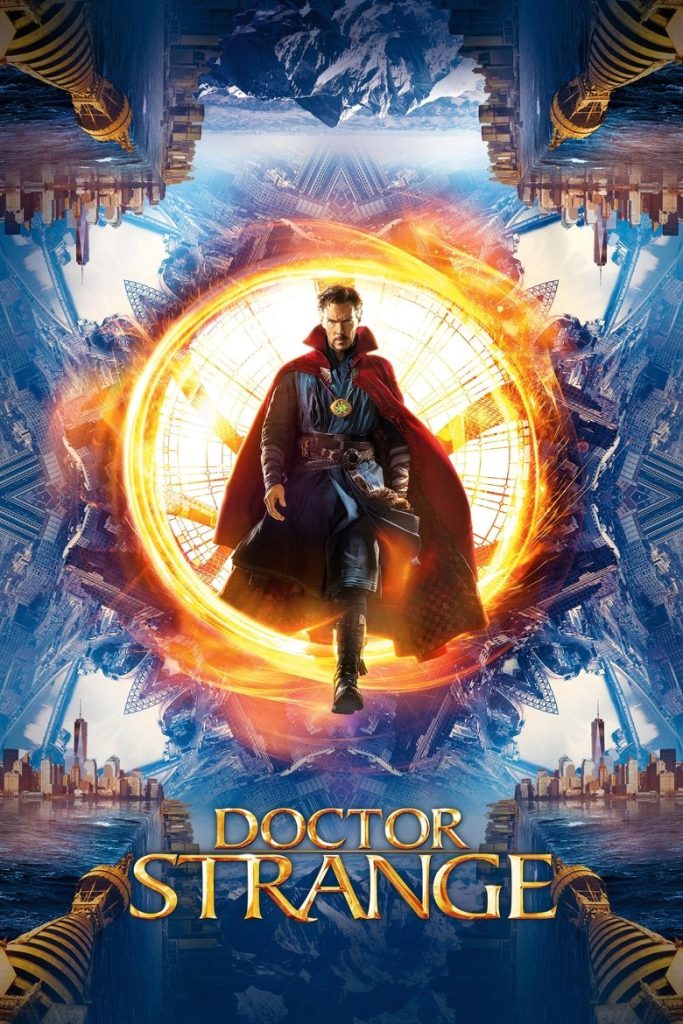
Doctor Strange follows a brilliant but arrogant neurosurgeon who, after a career-ending car accident, discovers the hidden world of magic and alternate dimensions. He travels to a mystical sanctuary to learn the ways of the mystic arts from a powerful sorcerer. As he trains, he must confront a dark force that threatens to destroy reality, forcing him to choose between his old life and his new responsibilities as a protector of Earth.
Parent Guide
Fantasy adventure with magical combat and reality-bending sequences suitable for older children and teens.
Content breakdown
Magical battles with energy weapons, characters thrown through dimensions, car accident scene, hand-to-hand combat, characters in peril from mystical threats.
Dark mystical entities, reality-distorting sequences, intense magical confrontations, themes of mortality and bodily injury.
Occasional mild language typical of PG-13 films.
No sexual content or nudity.
Social drinking in brief scenes.
Themes of loss, transformation, and responsibility; intense magical confrontations; character faces mortality and career-ending injury.
Parent tips
Doctor Strange is a visually intense fantasy adventure with magical battles and reality-bending sequences that may be overwhelming for younger viewers. The PG-13 rating reflects moderate violence, peril, and some frightening imagery. Parents should be aware that the film deals with themes of mortality, ego, and transformation, which could prompt discussions about personal growth and responsibility.
The film's complex visual effects and abstract concepts about time and alternate dimensions might confuse some children. The action sequences involve magical combat with energy weapons and mystical forces rather than traditional physical violence, but characters do experience pain and injury. Consider watching with children to help explain the fantasy elements and provide reassurance during tense moments.
Parent chat guide
For older children, you might discuss the film's exploration of different dimensions and reality. Ask what they think about the balance between science and magic in the story. The film also presents interesting questions about time, destiny, and making difficult choices for the greater good.
Parent follow-up questions
- What was your favorite magic trick in the movie?
- How did Doctor Strange help people?
- What colors did you see in the magic fights?
- Why did Doctor Strange need to learn magic?
- What made Doctor Strange a different person at the end?
- How do you think magic school is different from regular school?
- What does the movie show about dealing with failure and starting over?
- How does the film balance science and magic in its storytelling?
- What responsibilities come with having special knowledge or powers?
- How does the film explore themes of ego and humility through Doctor Strange's journey?
- What commentary does the movie make about Western medicine versus alternative healing approaches?
- How does the concept of time and alternate realities function as both plot device and thematic element?
🎭 Story Kernel
At its core, 'Doctor Strange' is about ego death and intellectual humility. Stephen Strange's journey isn't just about gaining power, but about surrendering his arrogant, scientific worldview. The Ancient One's final lesson—that it's not about controlling time but accepting mortality—completely inverts his surgeon's mentality of fixing what's broken. His victory comes not from outsmarting Dormammu but from embracing endless suffering, trading his hands' precision for temporal endurance. The film argues that true mastery requires first becoming a perpetual student, a painful transition for someone who defined himself by being the best.
🎬 Visual Aesthetics
The film's visual language mirrors Strange's mental unraveling. Director Scott Derrickson uses Inception-esque city-bending not as spectacle alone, but as literal representation of reality's malleability. The 'Mirror Dimension' sequences, with their kaleidoscopic fracturing of New York, visualize how magic perceives layers of existence invisible to ordinary sight. Color coding is deliberate: warm golds for protective magic, acidic greens for destructive forces. The Cloak of Levitation's playful personality—tapping Strange's shoulder, wiping his tears—makes magic feel alive rather than mechanical, contrasting with his clinical surgical world.
🔍 Details & Easter Eggs
💡 Behind the Scenes
Benedict Cumberbatch performed most of the intricate hand gestures himself after studying with a real neurosurgeon and a magician. The Mirror Dimension sequences required combining practical sets with CGI—actors performed on tilted sets while cameras rotated around them. Tilda Swinton's casting as the Ancient One sparked controversy, leading to script changes that made the character Celtic rather than Tibetan. The Cloak of Levitation was partly practical, with puppeteers controlling it on set, giving actors something real to react to during scenes.
Where to watch
Choose region:
- Disney Plus
- Amazon Video
- Apple TV
- Google Play Movies
- YouTube
- Fandango At Home
Trailer
Trailer playback is unavailable in your region.