
Dolphin Reef (2018)
Story overview
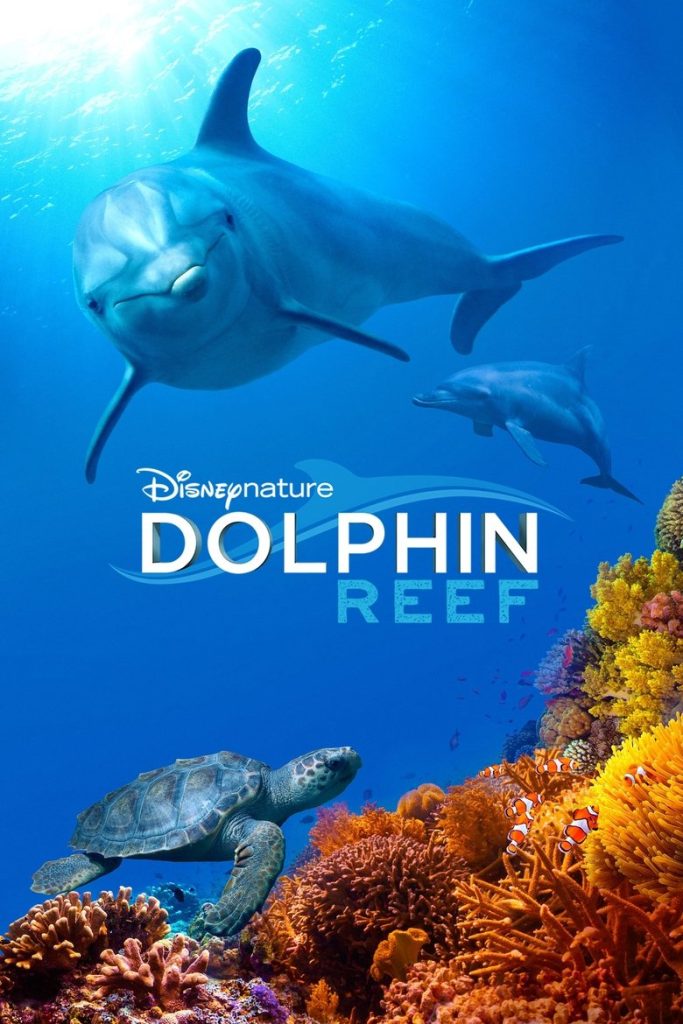
Dolphin Reef is a 2018 G-rated documentary that follows Echo, a young dolphin navigating the balance between playful adventures and growing responsibilities in her coral reef home. Narrated by Natalie Portman, this family film explores dolphin society and the interconnectedness of ocean ecosystems through stunning underwater cinematography.
Parent Guide
A gentle, educational documentary suitable for all ages with positive messages about nature and responsibility.
Content breakdown
Brief scenes of natural predator-prey interactions (fish eating smaller fish) shown matter-of-factly without graphic detail. No violence between dolphins.
No scary or disturbing content. All ocean scenes are presented as beautiful and educational. Very young children might find some fish shapes unusual but not frightening.
No inappropriate language. Narration is educational and family-friendly throughout.
No sexual content or nudity. Dolphins are shown naturally in their habitat.
No substance use of any kind.
Mild emotional moments when Echo faces challenges learning responsibilities, but resolution is always positive and reassuring.
Parent tips
This gentle documentary offers positive messages about responsibility, family bonds, and environmental stewardship. The underwater scenes are visually captivating but may be too slow-paced for very young children. Consider discussing how ocean creatures cooperate to maintain their habitat.
Parent chat guide
Parent follow-up questions
- What was your favorite ocean animal?
- Can you make dolphin sounds like Echo?
- What colors did you see in the coral reef?
- Why was it important for Echo to learn responsibilities?
- How do the different reef animals help each other?
- What might happen if the reef wasn't healthy?
- What did you notice about dolphin communication and social structure?
- How does the film show the balance between play and responsibility in nature?
- What conservation messages did you take from the documentary?
- How does the film use storytelling techniques to make scientific concepts engaging?
- What parallels can you draw between dolphin society and human communities?
- How effective is the film as both entertainment and environmental education?
🎭 Story Kernel
At its core, 'Dolphin Reef' is less about individual animals and more about the intricate ballet of a living ecosystem. The film's true protagonist is the reef itself, with Echo the young bottlenose dolphin serving as our guide through this complex web of life. The driving force isn't a traditional narrative arc but rather the fundamental biological imperatives of survival, cooperation, and adaptation. We witness how every creature—from the tiniest cleaner shrimp to the massive humpback whales—plays a specific role in maintaining the reef's delicate balance. The movie subtly argues that intelligence in nature takes many forms beyond just dolphin cognition, showing how symbiotic relationships and specialized adaptations represent different evolutionary solutions to the same problems of existence.
🎬 Visual Aesthetics
The cinematography employs a remarkable intimacy, with underwater cameras that seem to float effortlessly through coral canyons, creating a first-person perspective of reef life. The color palette shifts dramatically with depth and time of day—vibrant, saturated blues and oranges in sunlit shallows give way to cooler, more mysterious tones in deeper waters. Slow-motion sequences of hunting and feeding transform brutal natural acts into balletic performances, while macro photography reveals entire micro-worlds on a single coral head. The camera often lingers on textures: the rough skin of a humpback whale, the intricate patterns of coral polyps, the fluid movement of mantas' wings. This visual approach doesn't just document nature but aestheticizes it, encouraging viewers to see beauty in ecological functions.
🔍 Details & Easter Eggs
💡 Behind the Scenes
The film's production involved over 300 days of underwater filming across multiple Pacific locations, with cinematographers using custom-built rebreather systems to avoid disturbing marine life with bubbles. Natalie Portman's narration was recorded after principal photography, with the script being adjusted to match the actual behaviors captured on film rather than forcing a predetermined narrative. Several sequences, including the humpback whale nursing scene, required the crew to maintain position for weeks waiting for natural behaviors to occur. The production collaborated with marine biologists who identified individual animals by their unique markings, allowing for continuity in following specific creatures' stories across the filming period.
Where to watch
Choose region:
- Disney Plus
Trailer
Trailer playback is unavailable in your region.