
Dolphins Up Close with Bertie Gregory (2025)
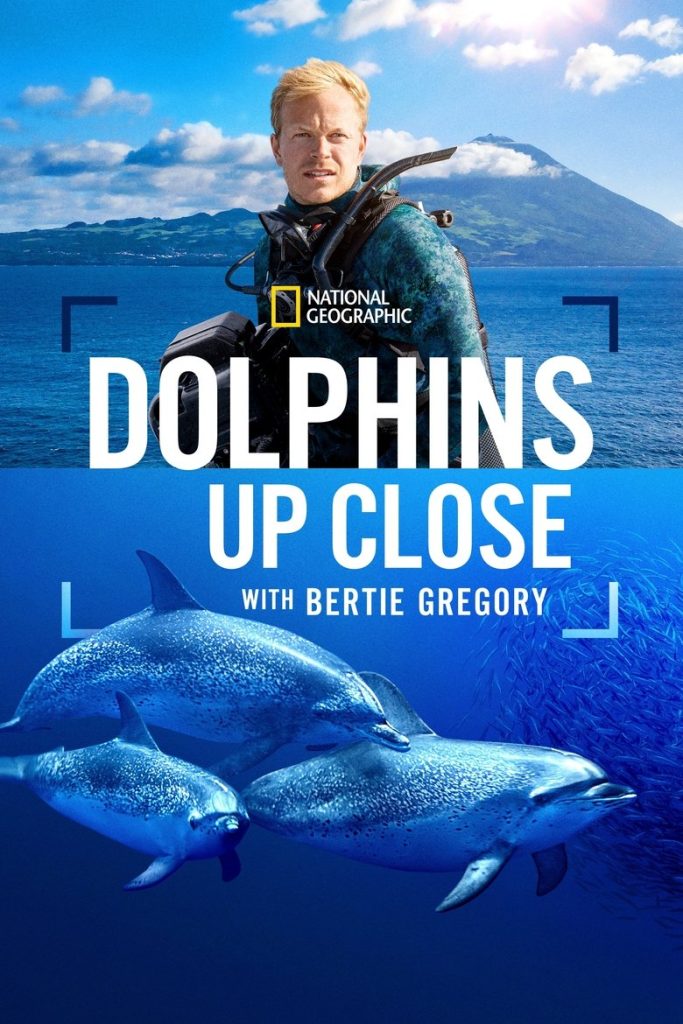
Released: 2025-09-18 Recommended age: 8+ No IMDb rating yet
Dolphins Up Close with Bertie Gregory

Movie details

  • Genres: Documentary, TV Movie
  • Director: Adam Boyle
  • Main cast: Bertie Gregory
  • Country / region: United States of America, United Kingdom
  • Original language: en
  • Premiere: 2025-09-18

Story overview

This documentary follows wildlife filmmaker Bertie Gregory as he travels to the Azores archipelago to document the annual migration and feeding frenzy of dolphins and other ocean predators. The film captures the natural spectacle of thousands of marine animals hunting together in massive bait balls, while also showing the challenges of filming in stormy ocean conditions.

Parent Guide

Educational documentary about marine life with no concerning content beyond natural animal behaviors. Suitable for most children with parental guidance for younger viewers.

Content breakdown

Violence & peril
Mild

Natural predator-prey interactions shown as dolphins and other marine animals hunt fish in bait balls. No graphic violence or blood. Some scenes show fish being eaten, but it's presented as natural ecosystem behavior rather than violent content.

Scary / disturbing
Mild

Stormy ocean scenes with rough waves might be intense for very young children. The scale of the feeding frenzy with thousands of animals could be overwhelming for some viewers. No jump scares or intentionally frightening content.

Language
None

No profanity or inappropriate language. Educational narration throughout.

Sexual content & nudity
None

No sexual content or nudity. Only marine animals shown.

Substance use
None

No substance use shown.

Emotional intensity
Mild

Some excitement during hunting scenes and storm sequences. The filmmaker's race against time creates mild tension. Sensitive children might feel sad about fish being eaten, but the overall tone is educational and respectful of nature.

Parent tips

This educational documentary is appropriate for most children, but younger viewers might find some scenes intense. The film shows natural predator-prey interactions in the ocean, which could be upsetting for sensitive children. There are no human conflicts, violence, or inappropriate content. The main challenges are weather conditions and the natural hunting behaviors of marine animals.

Parent chat guide

This documentary provides excellent opportunities to discuss marine ecosystems, animal behavior, and conservation. You can talk about why animals migrate, how food chains work in the ocean, and why places like the Azores need protection. The film also shows the work of wildlife filmmakers and the challenges of documenting nature.

Parent follow-up questions

  • Did you see the dolphins swimming together?
  • What colors did you see in the ocean?
  • How do you think the fish feel when they swim in big groups?
  • Why do you think the dolphins work together to hunt?
  • What challenges did Bertie face while filming?
  • How are the Azores different from where we live?
  • What makes the Azores a good place for marine animals to gather?
  • How do bait balls help both predators and prey survive?
  • What skills does a wildlife filmmaker need to have?
  • What conservation issues might affect marine sanctuaries like the Azores?
  • How does climate change impact animal migration patterns?
  • What ethical considerations should wildlife filmmakers keep in mind?
⚠️ Deep Film Analysis (Contains Spoilers) · Click to Expand
A breathtaking underwater ballet where dolphins become the choreographers and we're just clumsy guests in their liquid world.

🎭 Story Kernel

The film isn't about observing dolphins—it's about entering their consciousness. Bertie Gregory's journey reveals how these creatures don't just inhabit their environment; they compose it through movement. The core theme explores interspecies communication as physical poetry, where every breach and dive tells stories older than human language. What drives the 'characters' (both human and dolphin) is the primal urge to connect across biological boundaries, demonstrating that intelligence manifests not just in problem-solving but in the artistry of existence. The documentary subtly argues that true understanding comes not from scientific detachment but from immersive participation in another being's reality.

🎬 Visual Aesthetics

The cinematography achieves something remarkable: it makes water feel like a character rather than a setting. Shots from dolphin-eye level create a radical perspective shift—suddenly humans appear as awkward, bubble-trailing intruders. The color palette moves from surface-level turquoise brilliance to deep blue mysteries, mirroring the journey from superficial observation to profound connection. Slow-motion sequences transform hunting into aquatic ballet, while the camera's fluid tracking shots mimic dolphin movement so perfectly that viewers experience a kind of species dysphoria. The visual language consistently prioritizes intimacy over spectacle, with extreme close-ups of dolphin skin and eyes establishing emotional connections before intellectual ones.

🔍 Details & Easter Eggs

1
Early shots of Bertie struggling with his breathing apparatus foreshadow the film's central theme: humans must first overcome their own physiological limitations before they can hope to understand another species' natural grace.
2
Watch how juvenile dolphins mirror Bertie's movements during his first dive—this isn't just curiosity but a sophisticated form of cross-species play that establishes the documentary's thesis about shared consciousness.
3
The changing light patterns on the ocean floor during group hunting sequences aren't just beautiful—they visually represent the complex, real-time communication networks dolphins use to coordinate without audible signals.

💡 Behind the Scenes

Bertie Gregory and his team spent over 300 hours underwater to capture just 45 minutes of usable footage, with many sequences requiring rebreather technology to avoid disturbing the dolphins with bubble noise. The production used custom-built camera rigs that could move at dolphin speeds (up to 20 mph) while maintaining crystal clarity. Most remarkably, several 'planned' interactions were actually spontaneous—the dolphins initiated contact with the crew repeatedly, including one instance where a mother dolphin brought her calf to 'meet' the cameras, behavior never before documented in wild bottlenose populations.

Where to watch

Choose region:

  • Disney Plus
  • fuboTV

Trailer

Trailer playback is unavailable in your region.

SkyMe App
SkyMe Guide Download on the App Store
VIEW