
Don’t Blame Karma! (2022)
Story overview
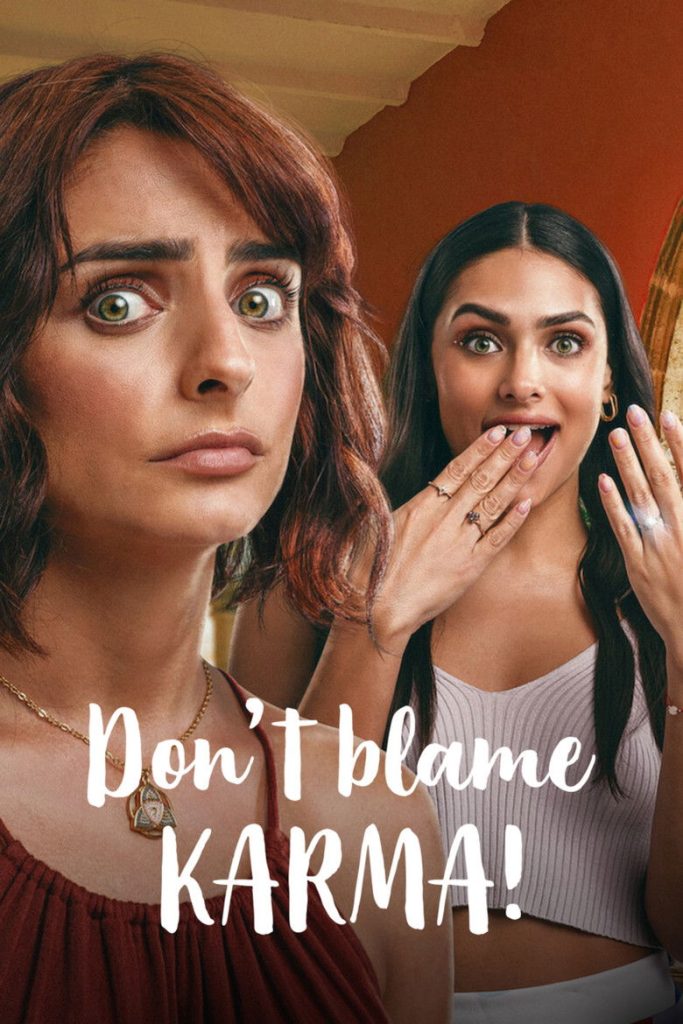
Sara, a struggling fashion designer, believes karma is responsible for her constant misfortune. When she reconnects with her sister Lucy, who seems to have all the luck, a series of unexpected events and reunions forces Sara to reconsider her perspective and make a life-changing decision.
Parent Guide
A lighthearted romantic comedy with some mature themes and content. Best for mature teens who can understand the film's exploration of personal responsibility versus fate.
Content breakdown
No physical violence or perilous situations. The conflict is entirely emotional and interpersonal.
Nothing frightening or disturbing. The tone remains comedic and romantic throughout.
Occasional mild profanity and some stronger language in Spanish (subtitled). Includes words like 'damn' and occasional stronger expressions.
Romantic situations including kissing and implied sexual relationships. Some suggestive dialogue and situations, but no explicit nudity or graphic content.
Social drinking in party and restaurant scenes. Characters are shown drinking alcohol in social settings, but no excessive drinking or drug use.
Moderate emotional themes involving sibling rivalry, romantic relationships, and life decisions. Some scenes show characters experiencing frustration, jealousy, and personal crisis, but resolved in a positive, comedic manner.
Parent tips
This Mexican romantic comedy deals with themes of sibling rivalry, personal responsibility, and self-discovery. While generally lighthearted, it contains some mature content typical of TV-MA ratings. Parents should be aware of occasional strong language, romantic situations, and social drinking depicted in the film.
Parent chat guide
Parent follow-up questions
—
- What does 'karma' mean?
- Why do you think Sara and Lucy have different luck?
- What would you do if you felt unlucky like Sara?
- Do you think karma is real, or do people make their own luck?
- How do Sara and Lucy's different personalities affect their lives?
- What does the movie suggest about taking responsibility for our choices?
- How does the film portray the tension between fate and free will?
- What cultural values about family and success are shown in this Mexican production?
- How do the romantic relationships in the film reflect different approaches to love and commitment?
🎭 Story Kernel
At its core, 'Don't Blame Karma!' is a satirical exploration of modern self-help culture and the human tendency to externalize responsibility. The film cleverly subverts the traditional 'karma' narrative by presenting it not as cosmic justice, but as a chaotic, flawed system that can be manipulated—much like social media algorithms. The protagonist's journey reveals that true transformation comes from confronting one's own choices rather than blaming external forces. The movie's real tension lies in the characters' struggle between wanting predetermined destiny and the terrifying freedom of creating their own paths, ultimately arguing that personal accountability is more powerful than any mystical retribution.
🎬 Visual Aesthetics
The film employs a vibrant, almost artificial color palette that shifts with the protagonist's emotional state—saturated pinks and blues during moments of perceived cosmic intervention, desaturated grays during reality checks. Camera work frequently uses Dutch angles when 'karma' is supposedly at work, visually destabilizing scenes to mirror the character's confusion. The action sequences involving karmic events are choreographed with exaggerated physical comedy reminiscent of silent film slapstick, creating a deliberate contrast with the otherwise contemporary setting. Symbolism appears through recurring mirror shots where characters avoid their own reflections, visually representing their refusal to confront themselves.
🔍 Details & Easter Eggs
💡 Behind the Scenes
The film was shot entirely on location in Buenos Aires, with several scenes filmed in the historic Palermo neighborhood where the production team had to coordinate around daily tango performances in public squares. Lead actress Martina Gusmán reportedly improvised many of her character's sarcastic lines about spirituality, drawing from her own skepticism about New Age trends. The 'karma effects' were created using practical in-camera techniques rather than CGI, with the visual effects team using prisms, colored gels, and forced perspective to achieve the surreal moments. Director Eliana Pacheco intentionally cast actors with backgrounds in physical comedy for the ensemble roles to enhance the film's slapstick elements.
Where to watch
Choose region:
- Netflix
- Netflix Standard with Ads