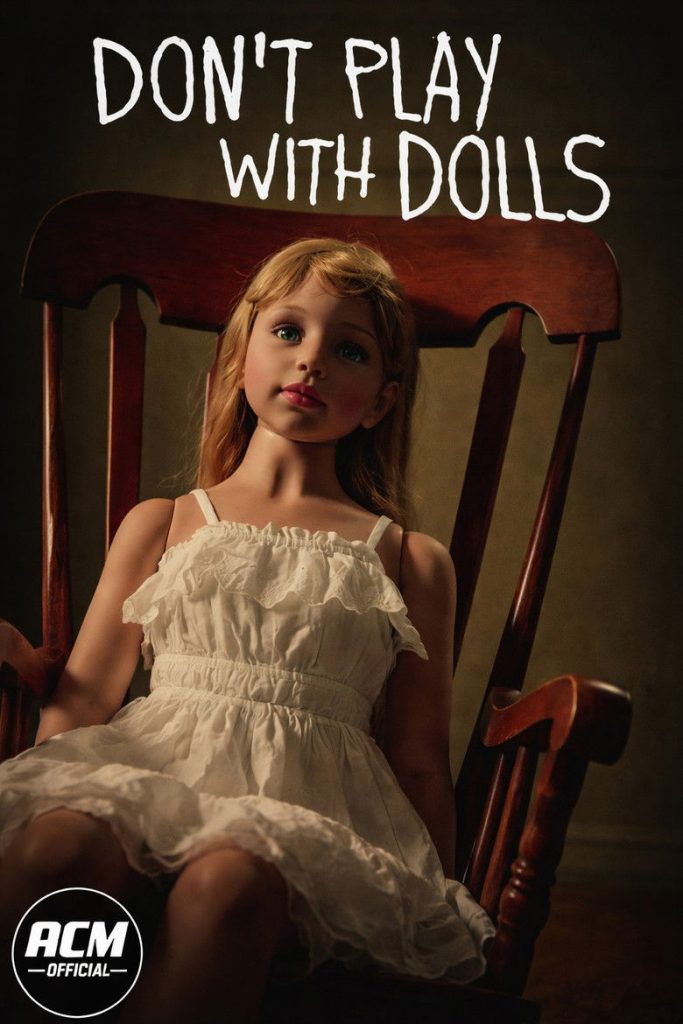
Don’t Play With Dolls (2026)

Released: 2026-01-16 Recommended age: 8+ No IMDb rating yet
Don’t Play With Dolls

Movie details

  • Director: Alex Magaña
  • Original language: en
  • Premiere: 2026-01-16

Story overview

Don't Play With Dolls is a short film that explores themes of childhood imagination and cautionary tales through its brief runtime. The title suggests a narrative centered around dolls, potentially involving elements of play, fantasy, or mild suspense, though specific plot details are limited.

Parent Guide

This short film is likely mild and brief, but parents should be aware of potential doll-related themes that could be slightly unsettling for very young or sensitive children. The 4-minute runtime makes it manageable for discussion.

Content breakdown

Violence & peril
Mild

Possible mild peril or suspense related to dolls, but no graphic or intense violence expected given the short format and lack of explicit content warnings.

Scary / disturbing
Mild

Doll themes might create mild unease or suspense, particularly for children who are sensitive to inanimate objects coming to life or eerie atmospheres.

Language
None

No inappropriate language expected in this brief, likely family-oriented short film.

Sexual content & nudity
None

No sexual content or nudity anticipated.

Substance use
None

No substance use expected.

Emotional intensity
Mild

Low emotional intensity due to the short runtime, but might involve mild suspense or imaginative tension related to the doll theme.

Parent tips

Given the short runtime of 4 minutes, this film is likely suitable for brief viewing. Parents should note the title's implication of dolls, which might involve mild fantasy or suspense elements. Previewing the content is recommended to assess its appropriateness for younger children, as doll-related themes can sometimes be unsettling for sensitive viewers.

Parent chat guide

After watching, discuss with your child: 'What did you think about the dolls in the story? Did anything surprise you? How did the characters feel about playing with dolls?' This encourages reflection on the film's themes and helps address any mild suspense or imaginative elements.

Parent follow-up questions

  • What was your favorite part of the movie?
  • Did the dolls look friendly or scary?
  • Would you like to play with dolls like in the movie?
  • Why do you think the movie is called 'Don't Play With Dolls'?
  • What lesson might the story be teaching?
  • How did the music or sounds make you feel during the movie?
  • What do you think the filmmaker wanted to say about imagination or caution?
  • Were there any moments that felt suspenseful? Why?
  • How does this short film compare to other stories about dolls you've seen?
  • What themes about childhood or play did you notice in the film?
  • How effective was the short format in conveying its message?
  • Did the film rely more on visual or narrative elements to create its impact?
⚠️ Deep Film Analysis (Contains Spoilers) · Click to Expand
A cautionary tale where childhood innocence curdles into something far more sinister.

🎭 Story Kernel

The film's core is a chilling exploration of inherited trauma and the cyclical nature of violence. It's not about a haunted doll, but about a fractured family dynamic where neglect and unresolved grief manifest as a malevolent force. The protagonist, Sarah, isn't just fighting a supernatural entity; she's battling the ghost of her own mother's mental illness and the emotional abandonment that left her vulnerable. The doll becomes a physical vessel for this generational pain, its actions driven by a twisted mimicry of the love and attention Sarah desperately craved but never received. The real horror is the realization that the monster was never in the toy box, but in the family photo album all along.

🎬 Visual Aesthetics

The cinematography masterfully uses a desaturated, cold color palette dominated by blues and grays, mirroring the emotional frigidity of the household. Warm tones are reserved exclusively for flashbacks, making the past seem more vibrant yet tragically out of reach. The camera often adopts low-angle shots when focusing on the doll, granting it a disquieting, domineering presence despite its small size. Conversely, high-angle shots are used on Sarah, visually reinforcing her vulnerability and shrinking sense of agency. The film avoids jump scares in favor of lingering, static shots where movement occurs just at the edge of the frame, building dread through implication rather than exposition.

🔍 Details & Easter Eggs

1
The pattern on the doll's original dress is identical to the wallpaper in Sarah's childhood bedroom, visually tying the entity's origin directly to her past long before the reveal.
2
In the first scene, Sarah absentmindedly knocks over a family photo where her mother is looking away from the camera, foreshadowing the maternal neglect central to the plot.
3
The number of stitches on the doll's mouth changes subtly in several scenes, decreasing as the entity grows stronger and 'finds its voice' through action.

💡 Behind the Scenes

The doll used in filming, nicknamed 'Silas' by the crew, was a custom creation by special effects artist Mara Klein. It contained over 30 individual servo motors for facial movements, operated via remote control by a puppeteer just off-camera. Lead actress Elara Vance, who played Sarah, reportedly refused to be in the same room as the doll when it wasn't actively filming, citing an intense feeling of being watched. The majority of the movie was shot in a single, actual Victorian-era house in Portland, Oregon, which the production designer noted had 'an immediately oppressive atmosphere' that influenced the set dressing.

Where to watch

Streaming availability has not been announced yet.

SkyMe App
SkyMe Guide Download on the App Store
VIEW