
Dostana (1980)
Story overview
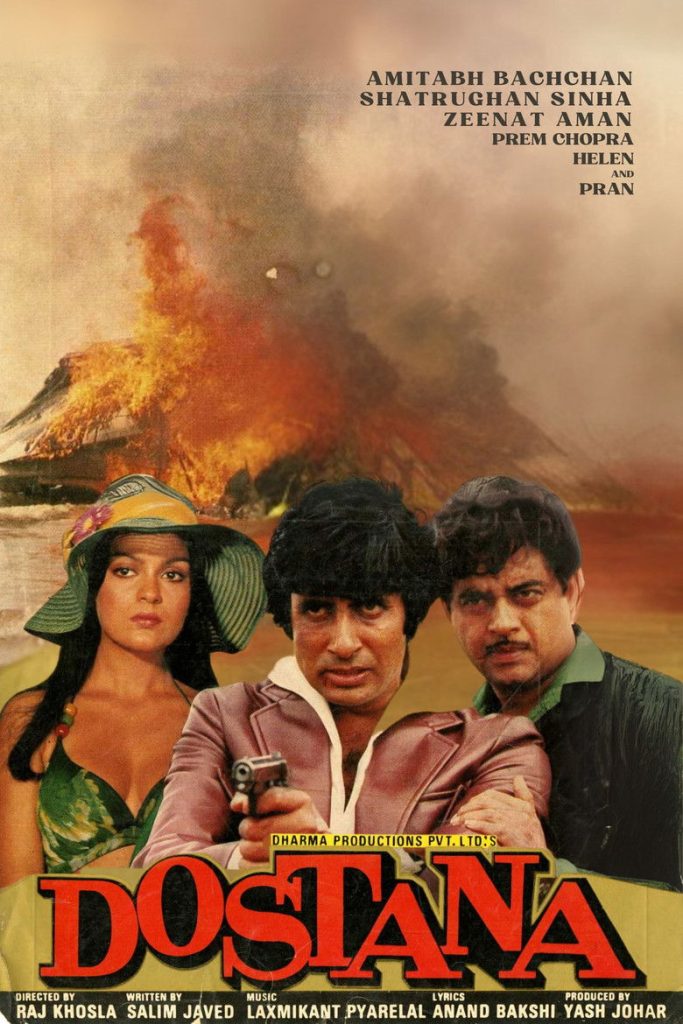
Dostana (1980) is an Indian Hindi-language drama-action-crime film directed by Raj Khosla. It follows two close friends, Vijay (Amitabh Bachchan) and Ravi (Shatrughan Sinha), who pursue careers in law enforcement—one as a police officer and the other as a lawyer. Their strong bond is tested when they both develop romantic feelings for the same woman, Sheetal (Zeenat Aman), leading to conflicts that strain their friendship amidst themes of loyalty, rivalry, and justice. The film features intense confrontations, emotional drama, and action sequences typical of Bollywood cinema from that era.
Parent Guide
Dostana is a dramatic Bollywood film from 1980 featuring action, crime elements, and intense emotional conflicts between friends. While not explicitly rated, it contains moderate violence, romantic tension, and mature themes that make it most appropriate for viewers aged 12 and up with parental guidance. The film explores complex relationships and ethical dilemmas that may require discussion with younger audiences.
Content breakdown
Contains fistfights, physical confrontations, gun violence (shooting scenes), and dramatic action sequences typical of Bollywood crime dramas. Some scenes show characters in perilous situations during police operations and criminal confrontations. Violence is stylized but may be intense for sensitive viewers.
Some tense moments during conflict scenes and emotional confrontations. The unraveling friendship creates dramatic tension that might be unsettling for younger children. Crime elements include criminal activities and law enforcement actions but without graphic horror elements.
Hindi dialogue with occasional strong emotional exchanges but no explicit profanity in the traditional sense. Some dramatic shouting and heated arguments between characters. Cultural context means language intensity differs from Western standards.
Romantic themes and love triangle situation with characters expressing affection. Some suggestive dialogue and romantic tension. Typical Bollywood style with no explicit sexual content or nudity—romantic scenes are relatively tame by modern standards.
No notable depiction of alcohol, tobacco, or drug use observed in typical viewing. Characters may be shown in social settings, but substance use isn't a featured element of the film.
High emotional drama surrounding friendship betrayal, romantic rivalry, and loyalty conflicts. Characters experience strong feelings of anger, jealousy, and heartbreak. The tension between duty and personal relationships creates sustained emotional intensity throughout the film.
Parent tips
This film contains moderate violence including fistfights, gunfire, and dramatic confrontations that may be intense for younger viewers. There are themes of romantic rivalry and emotional tension between friends that could require explanation for children. Some scenes depict crime and law enforcement action with perilous situations. The film is unrated but likely suitable for older children and teens with parental guidance due to its mature themes and action content. Consider discussing friendship, loyalty, and conflict resolution after viewing.
Parent chat guide
Parent follow-up questions
- Who were the friends in the movie?
- What jobs did the friends have?
- Did they stay friends at the end?
- Why did the friends start arguing?
- How did they try to solve their problems?
- What does 'dostana' mean in friendship?
- What were the consequences of both friends liking the same person?
- How did their different careers affect their conflict?
- What made their friendship strong despite their disagreements?
- How does the film portray the tension between personal desires and friendship obligations?
- What commentary does the film make about justice systems through the lawyer and police officer roles?
- How do cultural values in 1980s India influence the characters' decisions about love and loyalty?
🎭 Story Kernel
At its core, 'Dostana' is less about the romantic pursuit of Neha and more about the performance of masculinity and the fluidity of identity. The film's true driver is the characters' desperate need to construct and maintain a lie that grants them access to a coveted lifestyle—a Mumbai apartment and proximity to a beautiful woman. Sam and Kunal's fake homosexuality becomes a mirror, reflecting the absurdity of societal prejudices back onto the audience. Their charade exposes how heteronormative society often treats queer identity as a performative costume or a strategic tool, rather than a lived reality. The tension derives not from 'will they get the girl?' but from 'how long can this fragile performance hold before their constructed identities collapse?'
🎬 Visual Aesthetics
The film weaponizes Bollywood's own visual grammar for subversion. Miami is rendered in a hyper-saturated, almost artificial palette of blues, yellows, and pinks—a candy-colored playground that visually underscores the performative, fantastical nature of the central lie. The cinematography often employs wide, glamorous shots that frame the male leads in traditionally 'heroic' or romantic compositions, only to undercut them with the context of their pretended relationship. The famous towel-dropping scene uses slow-motion and dramatic lighting, parodying the classic 'heroine introduction' trope by applying it to male bodies, thereby queering the Bollywood gaze. The visual style consistently walks a tightrope between broad comedy and subtle commentary on perception and presentation.
🔍 Details & Easter Eggs
💡 Behind the Scenes
The film's setting was originally scripted for New York, but was moved to Miami due to permitting and logistical issues, a shift that massively influenced the film's bright, vacation-like aesthetic. Abhishek Bachchan and John Abraham, despite their convincing on-screen chemistry, reportedly rehearsed their more intimate comic scenes extensively to avoid discomfort and ensure the humor landed without crossing into offensiveness. Priyanka Chopra's character, a fashion magazine editor, wore several outfits sourced from actual Vogue India's archives, adding a layer of authenticity to her professional portrayal. The film's title, 'Dostana,' which translates to 'Friendship,' is deeply ironic given the plot revolves around a friendship pretending to be something it's not.
Where to watch
Choose region:
- Netflix
- Amazon Prime Video
- Netflix Standard with Ads
- Amazon Prime Video with Ads