
Down by Law (1986)
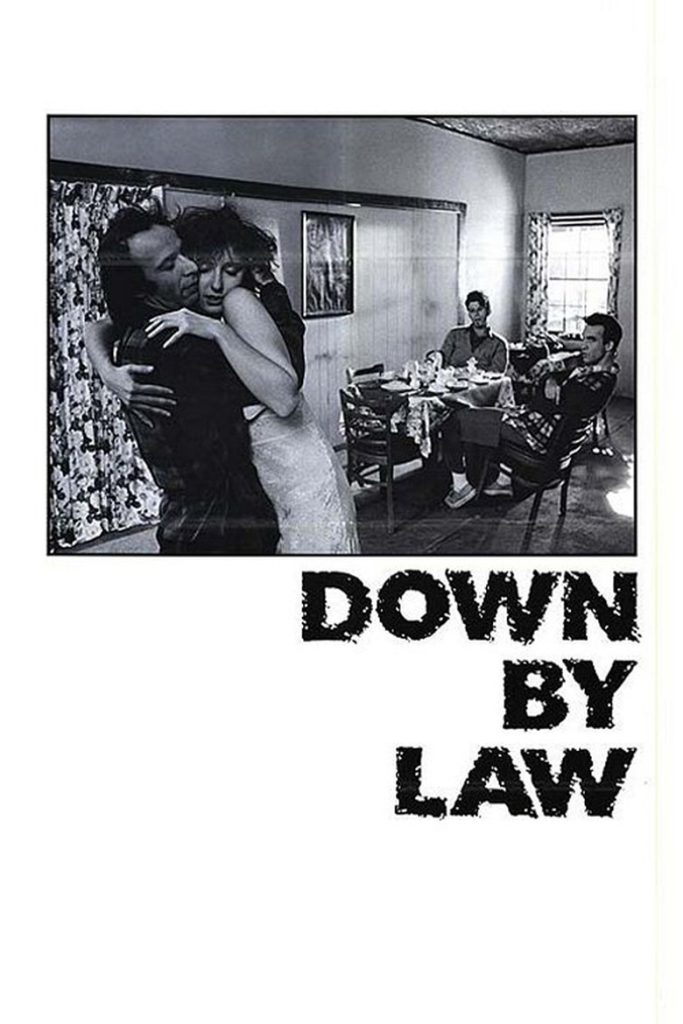
Story overview
Down by Law is a 1986 black-and-white film by Jim Jarmusch that blends crime, drama, and comedy. It follows three unlikely cellmates—a disc jockey, a pimp, and an Italian tourist—who escape from a New Orleans jail and navigate the Louisiana bayous. The film is known for its deadpan humor, minimalist style, and character-driven storytelling, focusing on their quirky interactions and survival rather than intense action.
Parent Guide
A quirky, slow-paced film with mature themes and language, suitable for older teens who appreciate character-driven stories and indie cinema. Not recommended for children due to content.
Content breakdown
Includes fistfights, characters being arrested, and implied criminal activity (e.g., pimping). No graphic or intense violence; scenes are brief and not gory. The escape involves mild peril but is handled with humor.
Some scenes in jail and the bayou might feel tense or bleak due to the setting, but nothing is truly frightening. The black-and-white style adds a noir atmosphere without being disturbing.
Contains occasional strong language (e.g., 'f**k', 's**t') and milder profanity. Not excessive, but present in dialogue, especially from the pimp character.
References to sexual themes like pimping and prostitution, but no explicit scenes or nudity. Conversations are suggestive rather than graphic.
Characters are shown drinking alcohol in social settings (e.g., bars). No depiction of drug use or abuse.
Emotional moments are low-key, focusing on camaraderie and frustration. The tone is often humorous and reflective, with no high-stress drama or intense emotional scenes.
Parent tips
This R-rated film is best for mature teens due to thematic elements and language. It contains moderate language (including some strong words), mild violence (fistfights, implied criminal activity), and references to adult themes like pimping and prostitution. The black-and-white cinematography and slow pace may not engage younger viewers. Parents should preview for language and discuss the characters' criminal backgrounds and moral choices.
Parent chat guide
Parent follow-up questions
—
—
—
- What makes the friendship between the three characters believable or unlikely?
- How does the film use humor to lighten serious situations like being in jail?
- What does the ending suggest about freedom and responsibility?
- How do the black-and-white visuals affect the mood of the story?
🎭 Story Kernel
At its core, 'Down by Law' explores the absurdity of societal constructs versus the raw, often uncomfortable, reality of human connection. The film posits that freedom is not merely a physical state but a psychological one. Zack and Jack, imprisoned for crimes they didn't commit, are already prisoners of their own cynicism, misanthropy, and failed American dreams. Their cell is just a concrete manifestation of their internal cages. Roberto, the cheerful Italian optimist, is their foil—imprisoned for a genuine, if foolish, crime of passion, yet he remains spiritually free. The escape into the Louisiana bayou doesn't grant liberation; it merely changes the scenery. The true journey is their forced coexistence, where language barriers and cultural clashes slowly erode their defensive walls. The film's real escape happens at the crossroads in the fog, where they must choose between the uncertain camaraderie they've forged or returning to the isolated 'freedom' of a society that already failed them. It's a quiet thesis on how connection, however fragile, is the only real reprieve from life's inherent confinement.
🎬 Visual Aesthetics
Jim Jarmusch and cinematographer Robby Müller craft a world that is both starkly beautiful and palpably oppressive through a masterful use of black-and-white. The camera is predominantly static, employing long, contemplative takes that force the audience to sit in the discomfort and boredom of the characters' existence, making the rare moments of movement—like the tracking shot through the prison corridors—feel momentous. The high-contrast lighting sculpts the characters' faces in shadows and hard light, visually echoing their moral ambiguities and internal conflicts. New Orleans and the bayou are rendered not as picturesque postcards but as liminal spaces—damp, fog-shrouded, and eerily quiet. The mise-en-scène is deliberately sparse; the prison cell, the diner, the forest cabin are almost empty, stripping away distraction and focusing entirely on the human dynamics within the frame. This visual minimalism amplifies the film's core themes of isolation and the essential, unadorned nature of the characters' interactions.
🔍 Details & Easter Eggs
💡 Behind the Scenes
The film's iconic leads were cast against type. Tom Waits (Zack) and John Lurie (Jack) were primarily musicians, bringing a raw, non-actorly authenticity to their roles of downtrodden hustlers. Roberto Benigni, then unknown in America, improvised much of his dialogue, with his limited English enhancing his character's charming disorientation. The prison scenes were shot in a former mental asylum in New Orleans, adding an unnerving historical texture. The minimalist, dialogue-heavy script was largely developed through rehearsal, with Jarmusch famously giving the actors the freedom to find their characters' voices within his structured, deadpan framework.
Where to watch
Choose region:
- HBO Max
- HBO Max Amazon Channel
- Criterion Channel
- Tubi TV
- Amazon Video
- Apple TV Store
- Fandango At Home
Trailer
Trailer playback is unavailable in your region.