
Down the Rabbit Hole (2024)
Story overview
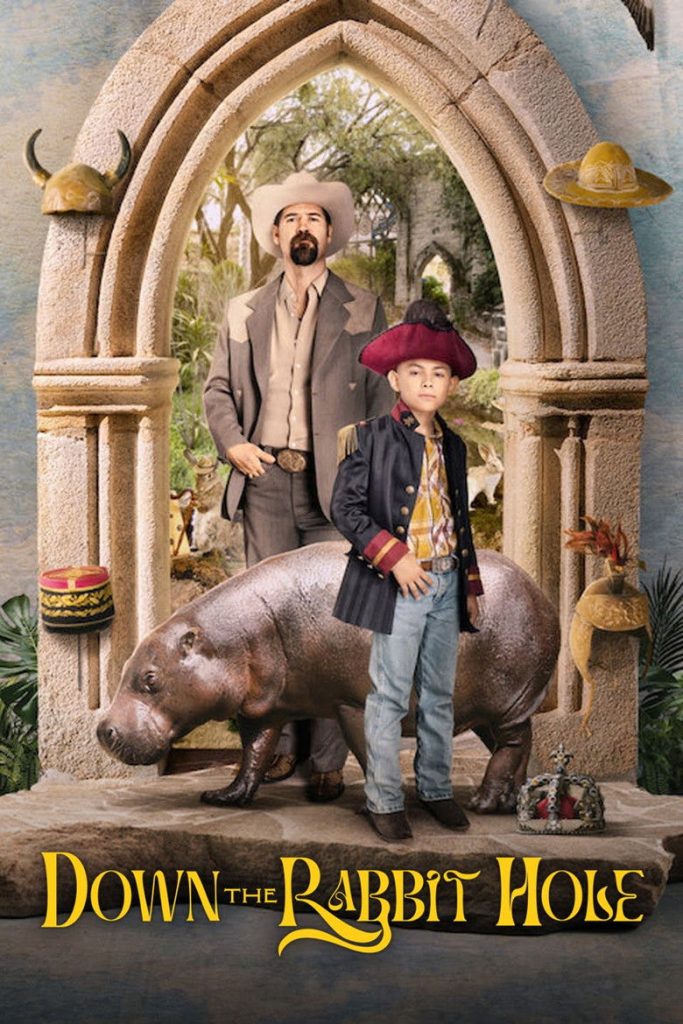
Down the Rabbit Hole is a 2024 Mexican dark comedy-drama directed by Manolo Caro. The film follows a young boy who grows up in a life of luxury and cultural refinement, but this privileged existence is increasingly overshadowed by the dark criminal activities of his father. The story explores the contrast between his sheltered upbringing and the dangerous reality that threatens to consume his family, blending humor with dramatic tension.
Parent Guide
This dark comedy-drama contains mature themes suitable for older teens and adults. The TV-MA rating reflects content that may be inappropriate for children under 17 without parental guidance. The film explores complex family dynamics within a criminal context, using humor to address serious subjects.
Content breakdown
Contains implied criminal violence and threats rather than graphic depictions. There are tense situations involving criminal activities, discussions of violence, and perilous circumstances related to the father's illegal work. No explicit gore or prolonged violent sequences.
Themes of family corruption and moral compromise may be disturbing. The contrast between the boy's innocent world and his father's criminal activities creates psychological tension. Some dark humor addresses serious topics that could be unsettling for sensitive viewers.
Some mild profanity in Spanish, typical of adult conversations. No excessive or aggressive language. The dialogue includes occasional strong words related to criminal contexts and family conflicts.
No sexual content or nudity. The film focuses on family relationships and criminal activities without romantic or sexual subplots.
Occasional social drinking by adult characters in background scenes. No glorification of substance use. Some scenes may show adults with alcoholic beverages during social gatherings.
Emotional tension arises from the boy's realization about his father's activities and the threat to his privileged life. The film explores themes of betrayal, family loyalty, and moral compromise that may provoke strong emotional responses. The dark comedy elements provide relief from the dramatic tension.
Parent tips
This TV-MA rated film contains mature themes related to criminal activities and family conflict. The dark comedy elements may include sarcastic humor about serious situations. Parents should be aware that the film portrays a child navigating an adult world of crime, which could be confusing or unsettling for younger viewers. The Mexican cultural context and Spanish language may require explanation for non-Spanish speaking children.
Parent chat guide
Parent follow-up questions
—
- What did you think about the boy's fancy house and toys?
- How did you feel when the boy seemed worried about his dad?
- What was your favorite funny part in the movie?
- Why do you think the movie showed both the boy's nice life and his dad's criminal work?
- How did the humor in the movie help tell a serious story?
- What would you do if you discovered a family member was doing something wrong?
- How does the film use dark comedy to comment on privilege and corruption?
- What does the boy's journey reveal about the cost of maintaining appearances?
- How does the Mexican cultural context influence the story's themes of family loyalty versus morality?
🎭 Story Kernel
Down the Rabbit Hole (Fiesta en la madriguera) explores the distorted reality of childhood when sheltered by the extreme wealth and violence of the Mexican drug trade. Through the eyes of Tochtli, a young boy living in an opulent, isolated estate, the film examines the psychological insulation provided by power. It isn't just a story about a drug lord; it is a meditation on the construction of truth. Tochtli’s father, Yolcaut, curates a world where the boy’s every whim—including the acquisition of a rare Namibian pygmy hippopotamus—is granted, yet this indulgence serves as a gilded cage. The film expresses the tragedy of inherited legacies, where a child’s innocence is not lost through trauma, but rather meticulously preserved within a vacuum of moral bankruptcy, ultimately questioning if one can ever truly escape the rabbit hole of their upbringing.
🎬 Visual Aesthetics
Manolo Caro departs from the high-camp aesthetic of his previous works to embrace a more controlled, clinical vibrancy that mirrors Tochtli’s regimented life. The cinematography utilizes wide, symmetrical shots to emphasize the vast emptiness of the mansion, making the luxury feel claustrophobic rather than inviting. Color palettes are deliberate; the warmth of the Mexican sun contrasts with the sterile, museum-like interiors of the madriguera. Symbolism is rife, particularly in the recurring imagery of animals—both taxidermied and alive—which represent the father’s attempt to colonize nature and reality itself. The journey to Namibia introduces a stark, dusty realism that punctures the dreamlike quality of the first act, visually signaling the intrusion of the outside world into Tochtli’s curated existence. The camera often stays at the boy's eye level, forcing the audience to share his limited, skewed perspective.
🔍 Details & Easter Eggs
💡 Behind the Scenes
The film is an adaptation of the acclaimed 2010 debut novel by Juan Pablo Villalobos, which was shortlisted for the Guardian First Book Award. Director Manolo Caro, known for The House of Flowers, took a more somber approach here, filming on location in both Mexico and Namibia to capture the authentic contrast required by the narrative. The production marks a significant collaboration between Caro and Netflix, continuing his streak of high-profile Spanish-language content. Interestingly, the child actor Miguel Valverde Uribe was selected for his ability to convey a mix of precocious intelligence and haunting emotional detachment.
Where to watch
Choose region:
- Netflix
- Netflix Standard with Ads