
Downfall (2004)
Story overview
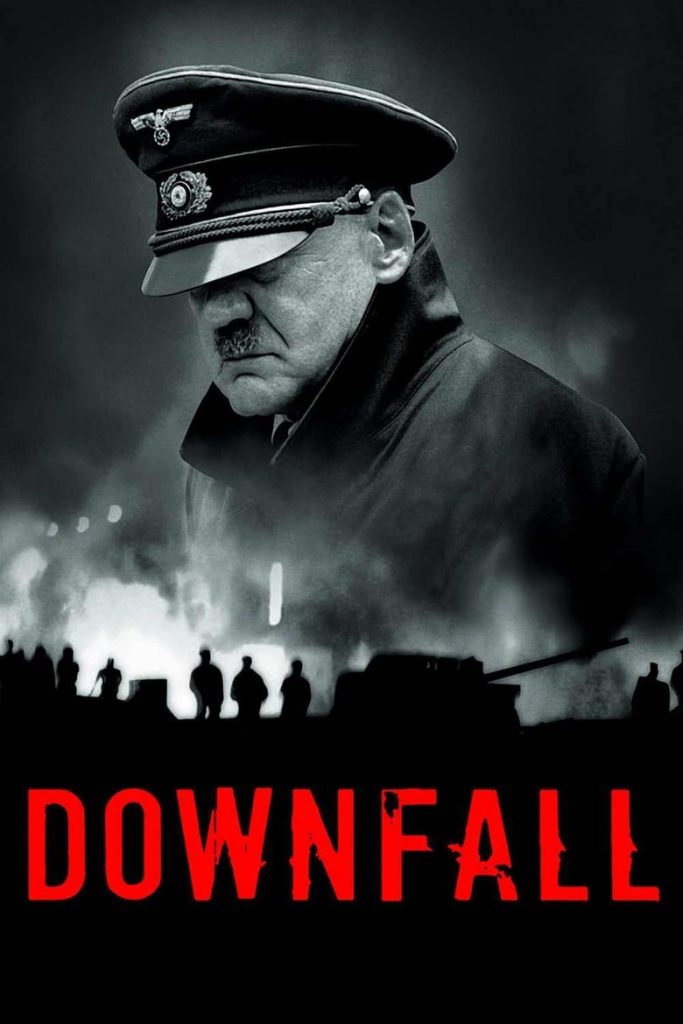
This historical drama depicts the final days of World War II in Berlin as German forces face imminent defeat. The film portrays the leadership's refusal to surrender and the resulting human cost during the Battle of Berlin. It examines the psychological state of those in power as their regime collapses around them.
Parent Guide
A historically accurate but intense depiction of war's final days with mature themes.
Content breakdown
Realistic war violence including combat, injuries, and deaths; some scenes show the aftermath of battle
Intense psychological tension, depictions of suicide, and the collapse of a regime; disturbing historical realities
Some wartime language and emotional outbursts; not excessive but contextually appropriate
No sexual content or nudity present in the film
Brief depictions of alcohol consumption in tense situations
High emotional tension throughout; deals with defeat, desperation, and historical tragedy
Parent tips
This R-rated war drama contains intense historical violence and mature themes unsuitable for younger viewers. The film realistically portrays the brutality of urban warfare, including combat scenes, injuries, and deaths. Parents should be aware that the movie deals with suicide, military defeat, and the psychological unraveling of historical figures.
Parent chat guide
Parent follow-up questions
- What did you see in the movie?
- How did the people in the movie feel?
- What colors did you notice most?
- What was happening in the story?
- Why were the people fighting?
- How do you think the characters felt at the end?
- What historical period does this film show?
- Why do you think the leaders refused to surrender?
- What were the consequences of the decisions made?
- How does the film portray the psychology of leadership in crisis?
- What historical lessons can we learn from this period?
- How does the film handle the moral complexities of war?
🎭 Story Kernel
At its core, 'Downfall' explores the banality of evil within an apocalyptic bunker. The film isn't about Hitler's ideology but about the mechanics of denial—how intelligent people rationalize serving madness until reality collapses around them. Characters are driven not by conviction but by varying degrees of cognitive dissonance: Traudl Junge's youthful naivete, Albert Speer's pragmatic self-preservation, Joseph Goebbels' fanatical devotion. The real tension isn't military but psychological—watching educated adults choose collective suicide over admitting their life's work was monstrous. The bunker becomes a pressure cooker where decades of propaganda finally meets irreversible consequence.
🎬 Visual Aesthetics
The film's visual language masterfully contrasts claustrophobic intimacy with historical scale. Oliver Hirschbiegel's camera lingers in tight bunker corridors, then pulls back to reveal Berlin's apocalyptic destruction—creating visceral contrast between the Führer's insulated fantasy and reality. A desaturated color palette drains warmth from every scene, mirroring the regime's moral decay. Particularly powerful are the overhead shots of Hitler's map room—the shrinking red territory visually tracking his disintegrating power. The documentary-style handheld work during street battles grounds the horror in immediate, chaotic realism, refusing to aestheticize violence.
🔍 Details & Easter Eggs
💡 Behind the Scenes
Bruno Ganz spent four months studying Hitler's rare home movies to master the dictator's posture and speech patterns, particularly the left arm tremor. The bunker set was reconstructed with obsessive accuracy using original architectural plans, causing cast members to report genuine claustrophobia. Most controversially, the film used actual Hitler Youth songs—prompting legal battles with copyright holders who opposed their association with the film. Director Oliver Hirschbiegel insisted on shooting in chronological order to mirror the characters' psychological deterioration.
Where to watch
Choose region:
- Amazon Prime Video
- Amazon Prime Video with Ads
- Shout! Factory Amazon Channel
- Amazon Video
- Apple TV
- Google Play Movies
- YouTube
- Fandango At Home
- Pluto TV
- Shout! Factory TV
- Amazon Prime Video Free with Ads
- Tubi TV
- Kanopy
- Hoopla
- Plex
- Plex Channel
- Fawesome
Trailer
Trailer playback is unavailable in your region.