
Dr. Strangelove or: How I Learned to Stop Worrying and Love the Bomb (1964)
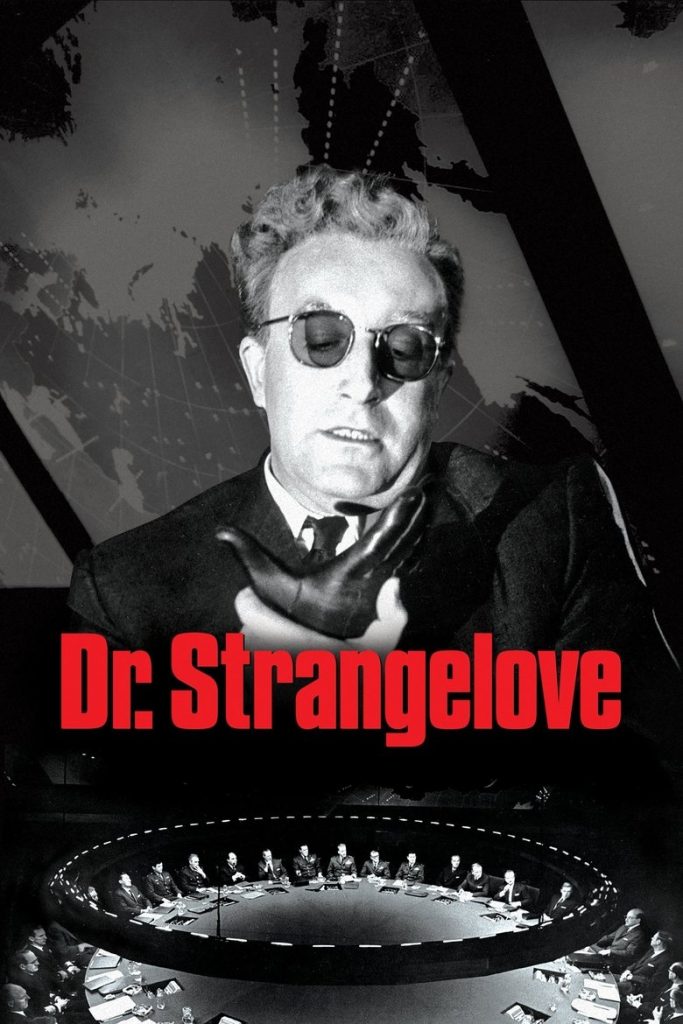
Story overview
This satirical comedy explores Cold War tensions through a fictional nuclear crisis. When a rogue general orders a nuclear attack on the Soviet Union, political and military leaders scramble to prevent global catastrophe. The film uses dark humor to critique military strategy and political systems during a tense historical period.
Parent Guide
A satirical Cold War comedy with mature themes presented through dark humor.
Content breakdown
References to nuclear war and military conflict, though presented comically rather than graphically.
Themes of global destruction and military escalation could be concerning despite comedic treatment.
Occasional mild language typical of military/political settings.
No sexual content or nudity present.
Brief references to alcohol consumption in social/political contexts.
High-stakes scenario creates tension, though humor provides relief.
Parent tips
This film is a political satire that uses exaggerated scenarios and dark humor to comment on Cold War tensions. While rated PG, it deals with mature themes of nuclear war and military decision-making that may be confusing or concerning for younger viewers. The comedic tone helps soften the serious subject matter, but parents should be prepared to discuss the historical context and fictional nature of the events.
Parent chat guide
Parent follow-up questions
- What was funny in the movie?
- Did you see any airplanes?
- What colors did you notice most?
- What made this movie a comedy?
- Why were the people in the movie worried?
- How did the characters try to solve their problem?
- What historical period does this movie reference?
- How does the film use humor to talk about serious topics?
- What message do you think the director wanted to share?
- How does the satire critique military and political systems?
- What aspects of Cold War tensions does the film exaggerate for effect?
- How does the film's comedic approach affect its message about nuclear weapons?
🎭 Story Kernel
The film explores how institutional absurdity and bureaucratic incompetence make global catastrophe not just possible but inevitable. Characters are driven by rigid ideologies—General Ripper's paranoid purity, President Muffley's diplomatic paralysis, Dr. Strangelove's detached scientific fascination—that override basic survival instincts. Kubrick reveals how systems designed for safety (the Doomsday Device, fail-safe protocols) become instruments of destruction when operated by flawed humans clinging to abstract principles. The real horror isn't malicious intent but the collision of sincere beliefs within broken systems, where everyone follows procedure while the world ends.
🎬 Visual Aesthetics
Kubrick employs claustrophobic, symmetrical compositions that mirror bureaucratic rigidity—the War Room's circular table under harsh overhead light feels like a sterile operating theater for geopolitics. Cinematography shifts between stark black-and-white realism in military bases and the exaggerated, shadowy War Room. Notice how characters are often framed in tight close-ups during irrational monologues, emphasizing their isolation in madness. The bomber sequences use documentary-style handheld shots contrasting with the static control rooms, visually separating the mechanical execution from human decision-making. Even the phallic imagery of bombers and missiles feels less erotic than mechanically absurd.
🔍 Details & Easter Eggs
💡 Behind the Scenes
Peter Sellers famously played three roles (Group Captain Mandrake, President Muffley, Dr. Strangelove) after originally being slated for four—he injured his ankle and couldn't play Major Kong, leading to Slim Pickens' iconic casting. Kubrick shot over a million feet of film, obsessively reshooting scenes until actors' performances achieved his precise blend of realism and satire. The B-52 bomber interior was reconstructed from declassified manuals, with Kubrick insisting on technical accuracy to heighten the absurdity. Sterling Hayden (General Ripper) delivered his paranoid monologue in near-darkness because Kubrick believed it would feel more authentically unhinged.
Where to watch
Choose region:
- Amazon Video
- Apple TV
- Google Play Movies
- YouTube
- Fandango At Home
- Spectrum On Demand
Trailer
Trailer playback is unavailable in your region.