
Dragon Around (1954)
Story overview
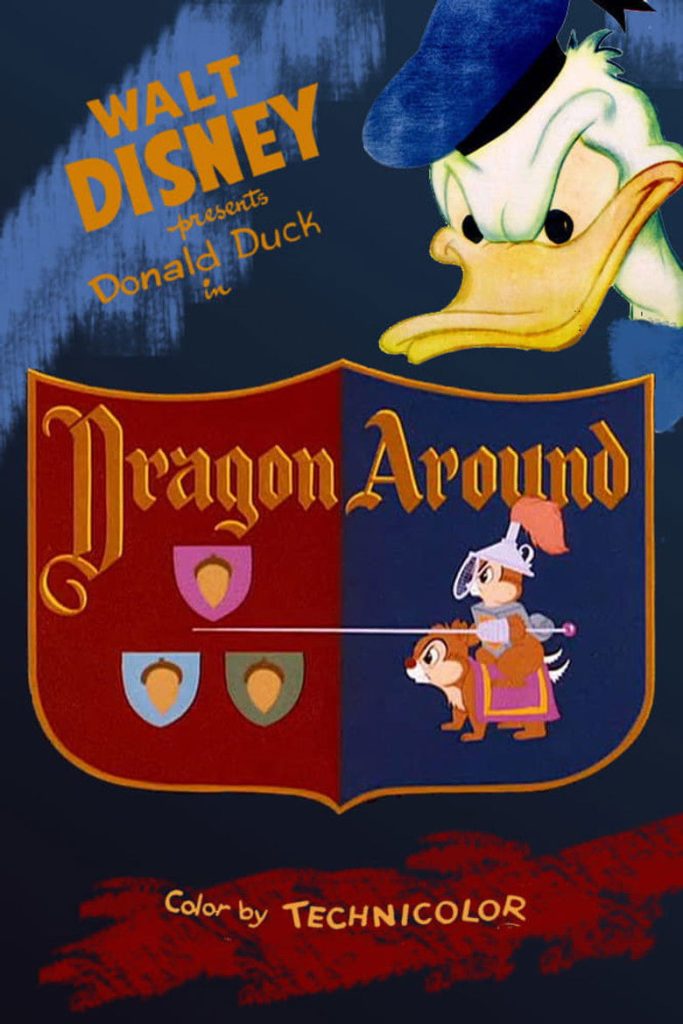
Dragon Around is a 1954 animated short featuring Chip and Dale as they imagine themselves as knights battling a dragon after reading fairy tales. When Donald Duck arrives with a steam shovel to clear a path through their tree for a new freeway, the chipmunks prepare for a medieval-style battle using household items as armor and weapons. Donald cleverly turns his steam shovel into a fire-breathing dragon prop, leading to a comedic showdown over their junkyard home.
Parent Guide
A lighthearted animated short with cartoon slapstick and imaginative play themes.
Content breakdown
Cartoonish pretend battles with props like hat pins; no real weapons or injuries shown.
No frightening content; the 'dragon' is clearly a machine prop.
No objectionable language; typical cartoon character sounds.
No sexual content or nudity.
No substance use depicted.
Brief tension about home displacement resolved playfully.
Parent tips
This classic Disney short features cartoon slapstick violence typical of the era, with characters using exaggerated props like hat pins and tuna cans in their pretend battle. The conflict revolves around property rights and imagination, as Chip and Dale defend their tree home from Donald's construction project. The 7-minute runtime makes it suitable for short viewing sessions, and the resolution is lighthearted without lasting consequences.
Parent chat guide
Parent follow-up questions
- What was your favorite part of the chipmunks' costumes?
- How did Donald make his machine look like a dragon?
- What would you use from our house to make knight armor?
- How did the characters feel when they were pretending?
- Was it funny when the chipmunks rode on each other?
- Why do you think Chip and Dale wanted to protect their tree?
- How did using imagination help solve their problem?
- What was fair or unfair about how Donald acted?
- Have you ever turned a disagreement into a game like they did?
- What would you have done differently if you were Donald?
- How does this cartoon show different perspectives on property and progress?
- What does the 'dragon' represent in their imaginary battle?
- How does the animation style from 1954 compare to today's cartoons?
- What message might the creators have wanted about using creativity in conflicts?
- How realistic were the characters' reactions to the construction threat?
- How does this short reflect 1950s attitudes toward urbanization and nature?
- What storytelling techniques make cartoon violence humorous rather than threatening?
- How does the class dynamic play out between the characters?
- What commentary might be present about industrialization versus tradition?
- How effective is the resolution in addressing the underlying conflict?
🎭 Story Kernel
At its core, 'Dragon Around' explores the tension between primal nature and societal expectations through the lens of a dragon forced into suburban life. The protagonist's journey isn't about becoming human, but about negotiating which parts of his draconic identity he must suppress versus which can be integrated. The film cleverly uses the dragon's literal fire-breathing as a metaphor for repressed emotions that inevitably surface. What drives the characters is the universal struggle for authenticity in a world that demands conformity, with the dragon's eventual acceptance coming not from changing himself, but from finding a community that values his unique qualities.
🎬 Visual Aesthetics
The film employs a striking visual dichotomy between warm, fiery oranges during the dragon's moments of authenticity and cool, sterile blues in suburban settings. Director uses low-angle shots when the dragon asserts his identity, making him appear powerful and majestic, while high-angle shots during his attempts to fit in visually diminish him. The action sequences are choreographed like dance, with the dragon's movements flowing between animalistic grace and awkward human imitation. The color palette subtly shifts throughout, with more reds and golds appearing as the dragon becomes more comfortable expressing his true nature.
🔍 Details & Easter Eggs
💡 Behind the Scenes
The dragon suit weighed 45 pounds and required three puppeteers to operate during complex scenes. The suburban neighborhood was actually a purpose-built set on a studio backlot, with every house facade being removable for camera access. Lead actor performed all his scenes first in motion capture before donning the physical suit, creating a unique hybrid performance. The film's fire effects were primarily practical using controlled gas jets rather than CGI, giving the flames a more textured, realistic quality that contrasts with the otherwise fantastical elements.
Where to watch
Choose region:
- Disney Plus