
Dreamscape (1984)
Story overview
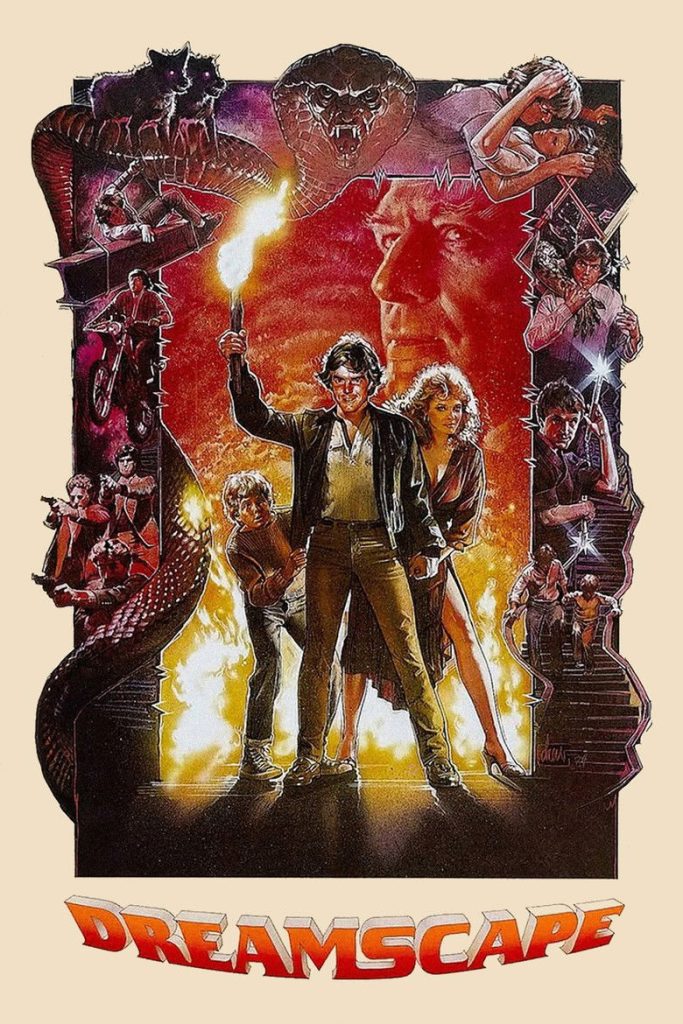
Dreamscape is a 1984 science fiction thriller about a young psychic named Alex Gardner who is recruited by a scientist to enter patients' dreams to help them overcome psychological trauma. The film explores themes of psychic abilities, dream manipulation, and government conspiracies as Alex navigates dangerous dreamscapes while uncovering a sinister plot.
Parent Guide
A suspenseful sci-fi thriller with psychological elements that explores dream manipulation and psychic abilities. Contains moderate violence in dream sequences, some strong language, and intense emotional moments. Recommended for mature teens who enjoy thought-provoking science fiction.
Content breakdown
Dream sequences contain chase scenes, monster encounters (including a snake-like creature), psychological threats, and peril. Some physical confrontations occur in both dream and real-world settings. The violence is stylized but can be intense.
Dream sequences feature unsettling imagery, psychological horror elements, and suspenseful moments. The concept of someone invading dreams may be disturbing to some viewers. Nightmare sequences contain frightening creatures and situations.
Some strong language including occasional uses of profanity. Not excessive but present throughout the film.
Brief romantic moments and some suggestive dialogue. No explicit sexual content or nudity.
Social drinking in a few scenes. No prominent drug use.
Psychological themes involving trauma, manipulation, and ethical dilemmas create emotional tension. Characters experience fear, anxiety, and moral conflict throughout the film.
Parent tips
This R-rated film contains moderate violence and peril in dream sequences, including chase scenes, monster encounters, and psychological threats. It features some strong language and intense emotional moments. Best suited for mature teens who can handle suspenseful sci-fi themes.
Parent chat guide
Parent follow-up questions
—
—
- What would you do if you could enter someone's dreams?
- How do you think dreams help us understand our feelings?
- Why is it important to respect people's privacy, even in dreams?
- What ethical boundaries should exist when using psychic abilities to help others?
- How does the film explore the relationship between dreams and trauma?
- What commentary does the film make about government control of special abilities?
- How does the film balance science fiction elements with psychological themes?
🎭 Story Kernel
At its core, 'Dreamscape' explores the weaponization of consciousness and the ethical boundaries of psychic intervention. The film's true tension stems from the conflict between scientific curiosity and political exploitation—psychic abilities aren't just supernatural gifts but tools for control. Dennis Quaid's Alex Gardner represents the reluctant hero archetype, driven not by altruism but by a mix of self-preservation and growing moral responsibility. The narrative cleverly questions whether entering someone's dreams constitutes therapy or violation, making the dreamscape itself a battleground for ideological warfare. The climax reveals that the most dangerous nightmares aren't supernatural monsters but human ambitions.
🎬 Visual Aesthetics
The film's visual language masterfully distinguishes between reality and dream states through practical effects and subtle shifts in color temperature. Reality scenes employ a muted, slightly desaturated palette with naturalistic lighting, while dream sequences feature heightened contrasts, surreal set designs, and practical creature effects that predate CGI reliance. The snake-man antagonist's design remains particularly effective through puppetry and makeup. Camera work in dream sequences often uses Dutch angles and fluid tracking shots to create disorientation, while action scenes maintain a grounded, physical quality that contrasts with the ethereal dream battles. The visual storytelling reinforces the theme that dreams feel more 'real' than waking life through their vivid, tactile presentation.
🔍 Details & Easter Eggs
💡 Behind the Scenes
The film's production faced significant challenges with its dream sequences, requiring extensive practical effects work that pushed 1984's technical limits. Dennis Quaid performed most of his own stunts, including the climactic train sequence which used a combination of scale models and carefully timed practical effects. Kate Capshaw's role was originally written for a different actress but was recast shortly before filming began. The iconic snake-man creature required multiple puppeteers and took hours to apply makeup each shooting day. Interestingly, the film's modest budget forced creative solutions that arguably enhanced its practical effects legacy, with the dream sequences becoming influential for later psychological thrillers.
Where to watch
Choose region:
- Peacock Premium
- Peacock Premium Plus
- Shout! Factory Amazon Channel
- The Roku Channel
- Fandango at Home Free
- Shout! Factory TV
- Mometu
- Tubi TV
- Amazon Video
- Apple TV Store
- Fandango At Home
- Google Play Movies
- YouTube
Trailer
Trailer playback is unavailable in your region.