
Dreamy Eyes (2019)
Story overview
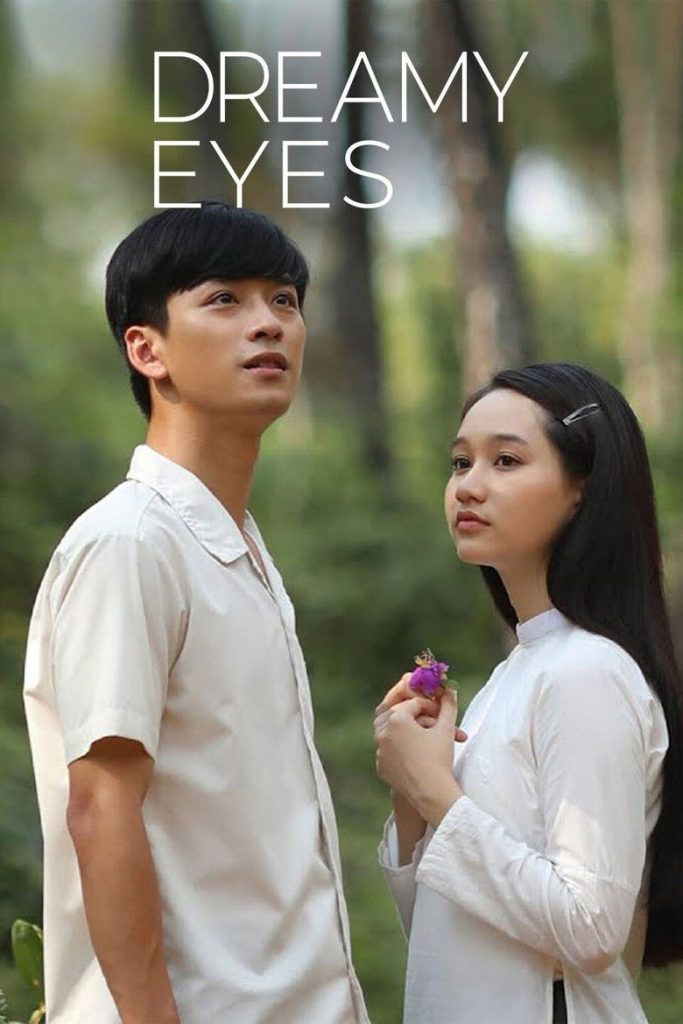
Dreamy Eyes is a 2019 Vietnamese romantic drama directed by Victor Vũ. The film follows Ngan, who harbors deep, unrequited feelings for his childhood friend Ha Lan. Set against the backdrop of their growing up, it explores themes of friendship, longing, and the emotional complexities of one-sided love, with a runtime of 117 minutes.
Parent Guide
A gentle romantic drama suitable for pre-teens and up, focusing on emotional themes with minimal concerning content. Best for viewers who can engage with nuanced feelings about friendship and love.
Content breakdown
No violence, peril, or physical conflict depicted in the film.
No scary, disturbing, or horror elements; the tone is dramatic but not frightening.
No strong or offensive language; dialogue is in Vietnamese with likely mild, everyday expressions.
No sexual content or nudity; the romance is portrayed through emotional connections and longing.
No depiction of alcohol, drugs, or substance use.
Moderate emotional intensity due to themes of unrequited love and friendship dynamics, which might be poignant or sad for sensitive viewers, but not overwhelming.
Parent tips
This film focuses on emotional themes of unrequited love and friendship, with minimal mature content. It's suitable for older children and teens who can handle discussions about relationships. No violence, strong language, or substance use is depicted, but the emotional intensity might be poignant for sensitive viewers.
Parent chat guide
Parent follow-up questions
- What did you like about the friends in the movie?
- How do you show your friends you care about them?
- How do you think Ngan felt when his friend didn't feel the same way?
- What are some ways to be a good friend even when you have different feelings?
- Why do you think the movie focused on one-sided love?
- How can someone handle feelings of rejection in a healthy way?
- What does this film say about the complexities of childhood friendships turning into romantic feelings?
- How do cultural aspects, like it being a Vietnamese film, influence the portrayal of relationships?
🎭 Story Kernel
At its core, 'Dreamy Eyes' is not a love story but a dissection of self-deception. The protagonist's pursuit of the titular 'Dreamy Eyes' is a meticulously constructed escape from his own profound mediocrity and fear of mortality. The film argues that the object of obsession is irrelevant; the act of obsessing itself provides the narrative structure and emotional intensity missing from an otherwise mundane existence. The character isn't driven by love for her, but by the desperate need for the 'quest' she represents. The chilling finale reveals the truth: he preferred the beautiful prison of his fantasy to the terrifying freedom of an unremarkable reality.
🎬 Visual Aesthetics
The cinematography masterfully employs a shallow depth of field, keeping 'Dreamy Eyes' herself perpetually slightly soft-focused, visually representing the protagonist's idealized, never-quite-clear perception of her. The color palette drains of warmth as his obsession deepens, moving from golden-hour ambers to cold, clinical blues and greys, mirroring the isolation of his fantasy. Key scenes use reflective surfaces—windows, mirrors, puddles—to fragment her image, symbolizing how he only ever interacts with shattered reflections of his own creation, never with a whole person.
🔍 Details & Easter Eggs
💡 Behind the Scenes
The actor playing the protagonist lost a significant amount of weight during the filming schedule to physically manifest the character's consuming obsession. The director insisted on shooting in chronological order to aid this transformation. Many of the 'stalker' POV shots were filmed with a custom, lightweight rig to achieve a shaky, breathless intimacy. The apartment set was deliberately built slightly smaller than true scale to enhance the feeling of constriction and psychological compression.
Where to watch
Choose region:
- Netflix
- Netflix Standard with Ads
Trailer
Trailer playback is unavailable in your region.