
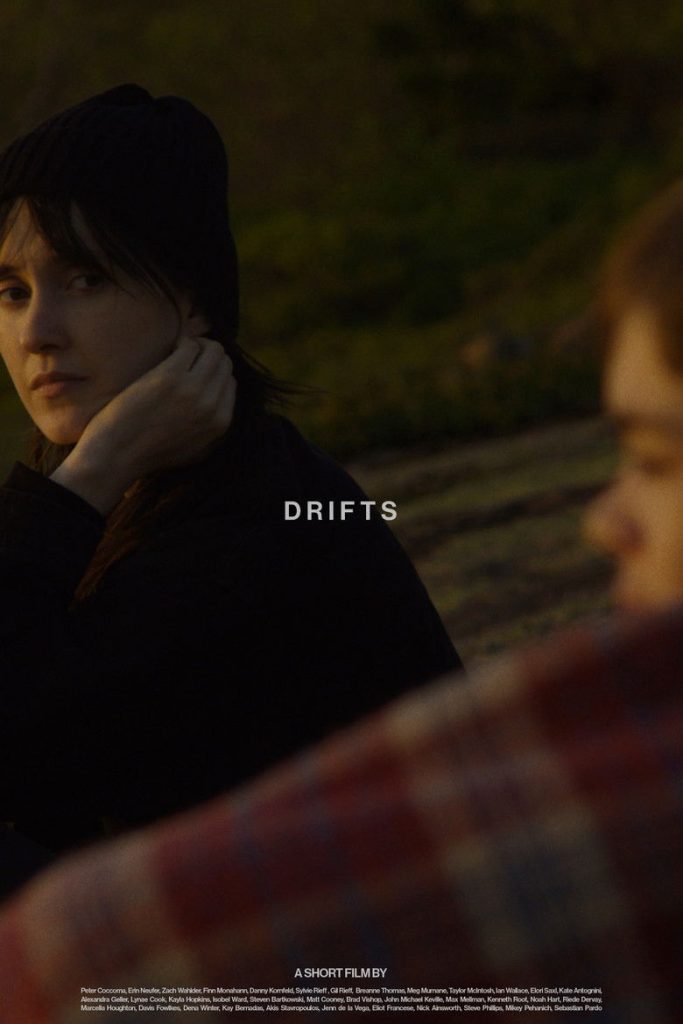
Drifts (2026)

Released: 2026-01-10 Recommended age: 8+ No IMDb rating yet
Drifts

Movie details

  • Genres: Drama
  • Director: Peter Coccoma
  • Main cast: Erin Neufer, Zachary Wahlder, Danny Kornfeld, Finn Monahan
  • Country / region: United States of America
  • Original language: en
  • Premiere: 2026-01-10

Story overview

Drifts is a 19-minute drama set on the coast of Maine, where a father and son's camping trip intersects with a burnt-out photographer. This brief encounter reawakens something in her that had long been dormant, exploring themes of connection, inspiration, and personal renewal in a natural setting.

Parent Guide

A gentle, contemplative drama about personal renewal through unexpected human connection in nature. Suitable for most children with parental guidance due to emotional themes.

Content breakdown

Violence & peril
None

No violence, danger, or peril depicted. The camping setting is peaceful and safe.

Scary / disturbing
None

Nothing frightening or disturbing. The tone is reflective and calm throughout.

Language
None

No offensive language expected given the drama genre and family-oriented premise.

Sexual content & nudity
None

No sexual content or nudity. Focus is purely on emotional and artistic themes.

Substance use
None

No depiction of alcohol, drugs, or smoking.

Emotional intensity
Mild

Mild emotional themes about personal fulfillment and connection. The photographer's 'burnt-out' state might prompt questions about adult stress, but it's handled gently.

Parent tips

This short drama focuses on emotional themes rather than action. The runtime is brief (19 minutes), making it manageable for family viewing. The coastal Maine setting provides beautiful scenery that can spark conversations about nature and art. Since it's unrated, parents should preview to ensure it aligns with family values.

Parent chat guide

After watching, discuss: How did the photographer's meeting with the father and son change her? What might she have 'buried' and why? How does nature affect the characters' emotions? For younger viewers, talk about what camping teaches us about family and discovery.

Parent follow-up questions

  • What was your favorite part of the camping trip?
  • What animals might live near the ocean in Maine?
  • How do you think the photographer felt when she met new friends?
  • Why do you think the photographer was 'burnt-out'?
  • What might the father and son have taught her?
  • How does being in nature help people feel better sometimes?
  • What does 'sparking something buried' mean emotionally?
  • How might this brief encounter impact the photographer's future work?
  • What does this film say about unexpected connections?
  • Analyze the symbolism of the coastal setting versus the photographer's emotional state.
  • How does the film explore midlife reflection versus childhood wonder?
  • What commentary might it offer about artistic inspiration and human connection?
⚠️ Deep Film Analysis (Contains Spoilers) · Click to Expand
A quiet storm of memory and regret that haunts long after the credits roll.

🎭 Story Kernel

At its core, 'Drifts' is less about a linear narrative and more about the psychological erosion of its protagonist, Leo. The film explores the theme of how unresolved trauma and guilt can metastasize into a paralyzing force, severing one's connection to the present. Leo is not driven by a goal, but by the absence of one—he is adrift, pulled by the undertow of a past mistake involving his estranged sister, Maya. The plot's central 'event' is internal: the slow, agonizing realization that running from memory is a form of self-imprisonment. The sparse dialogue and elliptical scenes mirror the fragmented nature of repressed experience, suggesting that some silences are louder than screams.

🎬 Visual Aesthetics

The film's visual language is one of profound isolation and muted tension. Director Ana Chen employs a desaturated, cool color palette dominated by grays, blues, and washed-out greens, visually translating Leo's emotional numbness. Static, lingering wide shots trap characters in vast, empty landscapes—a beach house, a barren highway—emphasizing their smallness and solitude. The camera often observes from a distance, like an unwilling witness, refusing to offer comforting close-ups. Key actions, like Leo repeatedly stacking and restacking stones by the shore, are filmed with a documentary-like stillness, transforming mundane acts into rituals of unresolved anxiety. The rare moments of warmth in lighting coincide with flashbacks, starkly contrasting the cold present.

🔍 Details & Easter Eggs

1
The recurring motif of water stains on the ceiling of Leo's rental—first shown in the opening scene—visually mirrors the spreading, inkblot-like guilt in his mind, a flaw in his environment he cannot fix.
2
In an early scene, Leo absentmindedly draws a small sailboat in the margin of a newspaper. This simple doodle foreshadows the final reveal of the model boat he and Maya built, the literal object of their shared past that 'drifted' away.
3
The radio in Leo's car is perpetually tuned to static or faint, indecipherable talk shows, an auditory metaphor for his inability to process clear communication or engage with the world outside his own head.

💡 Behind the Scenes

The lead actor, Julian Rivers, reportedly lived alone in the remote coastal filming location for two weeks prior to shooting to embody Leo's isolation. The minimalist score, featuring almost sub-audible drones and field recordings of wind, was composed by experimental artist Elara Vance, who worked only from the edited footage without reading the script. A notable challenge was the weather; several key 'grey day' scenes were shot under unexpectedly bright sun, forcing the crew to use large silks and post-production color grading to maintain the film's consistently overcast, melancholic atmosphere.

Where to watch

Streaming availability has not been announced yet.

SkyMe App
SkyMe Guide Download on the App Store
VIEW