
Dumbo (1941)
Story overview
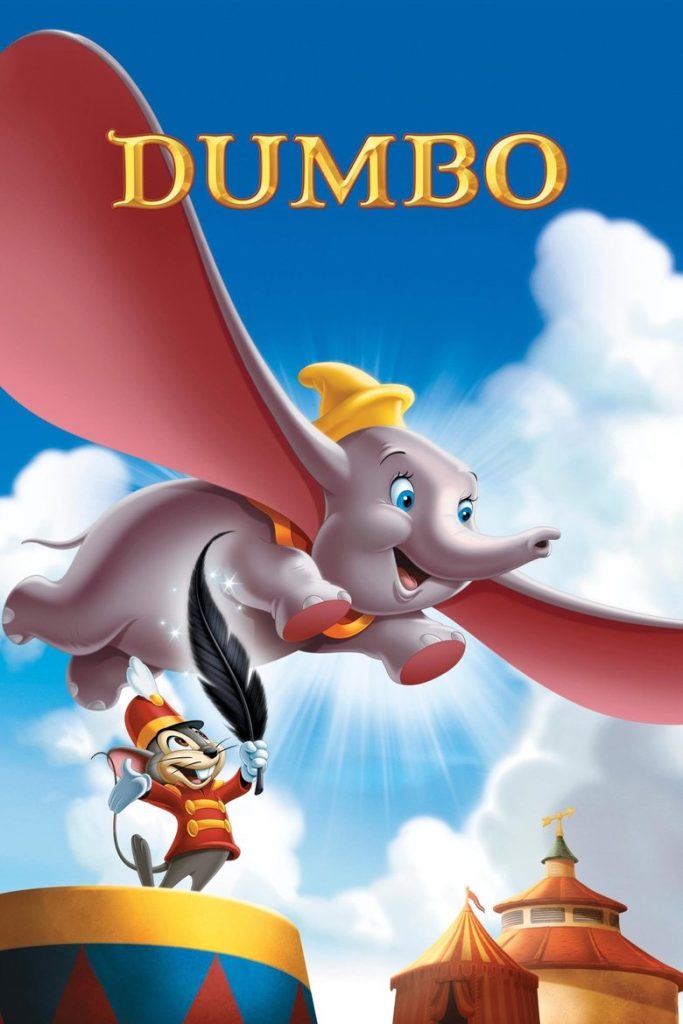
Dumbo is a classic animated film about a baby elephant with unusually large ears who faces ridicule from others. With the help of his loyal friend Timothy the Mouse, Dumbo learns to overcome his insecurities and discovers his unique abilities. The story explores themes of friendship, perseverance, and self-acceptance in a family-friendly format.
Parent Guide
A gentle animated classic with positive messages about friendship and self-acceptance, though it contains some emotional moments that might be challenging for very young viewers.
Content breakdown
Some scenes show animals being separated from parents and mild bullying behavior.
Some scenes might be emotionally intense for young children, particularly those involving separation from a parent.
No concerning language present.
No sexual content or nudity present.
Brief, non-graphic scene involving champagne that is portrayed humorously.
Themes of bullying, separation from parent, and overcoming insecurity create emotional moments.
Parent tips
Dumbo is a gentle, classic Disney film suitable for most children. The story deals with themes of bullying and separation from a parent, which might be emotionally challenging for very young viewers. The film's positive messages about friendship and self-confidence make it a good choice for family viewing, though parents should be prepared to discuss the emotional moments with sensitive children.
Parent chat guide
Parent follow-up questions
- How did Dumbo feel when other animals laughed at him?
- What did Timothy do to help his friend?
- What was your favorite part of the movie?
- Why do you think the other elephants treated Dumbo differently?
- How did Dumbo's friendship with Timothy help him?
- What did Dumbo learn about himself by the end?
- What does this story teach us about dealing with bullies?
- How does the film show the importance of supportive friendships?
- What are some ways people can build confidence when they feel different?
- How does the film address themes of social acceptance versus individuality?
- What commentary might the film be making about how society treats those who are different?
- How do the characters demonstrate resilience in the face of adversity?
🎭 Story Kernel
At its core, Dumbo is a brutal critique of exploitation disguised as wonder. The film exposes how society commodifies difference—Dumbo's ears aren't just a physical trait but a marketable spectacle. Mrs. Jumbo's heartbreaking separation from her child mirrors how institutions prioritize profit over maternal bonds. The circus represents capitalism's relentless machinery, where even kindness (like Timothy's) serves the system. Dumbo's eventual liberation isn't a triumph of individuality but an escape from a world that only values him as a product. The real villain isn't the bullies but the entire economic structure that makes his exploitation possible.
🎬 Visual Aesthetics
The animation masterfully contrasts two visual worlds: the harsh, angular lines of the circus—all rigid tents and cages—versus the soft, dreamlike sequences of Dumbo's flights. The 'Pink Elephants on Parade' sequence uses surreal, morphing shapes and psychedelic colors to visualize psychological breakdown, creating one of animation's most avant-garde moments. Notice how Dumbo's ears are initially framed as grotesque (low angles emphasizing their size) before becoming majestic in flight (high angles showing their grace). The color palette shifts from muted browns and grays in captivity to vibrant blues and pinks during moments of freedom, visually mapping emotional liberation.
🔍 Details & Easter Eggs
💡 Behind the Scenes
Dumbo was created as a 'breather' project after the expensive failures of Pinocchio and Fantasia, made for just $950,000—Disney's cheapest feature at the time. The film's brief 64-minute runtime resulted from wartime budget cuts. Sterling Holloway (later the voice of Winnie the Pooh) performed the stork's opening song. Most famously, the 'Pink Elephants' sequence was animated by effects specialist Dan MacManus while actually drunk, according to studio lore, to capture the hallucinatory feel.
Where to watch
Choose region:
- Disney Plus
- Amazon Video
- Apple TV
- Google Play Movies
- YouTube
- Fandango At Home
Trailer
Trailer playback is unavailable in your region.