
Dune (1984)
Story overview
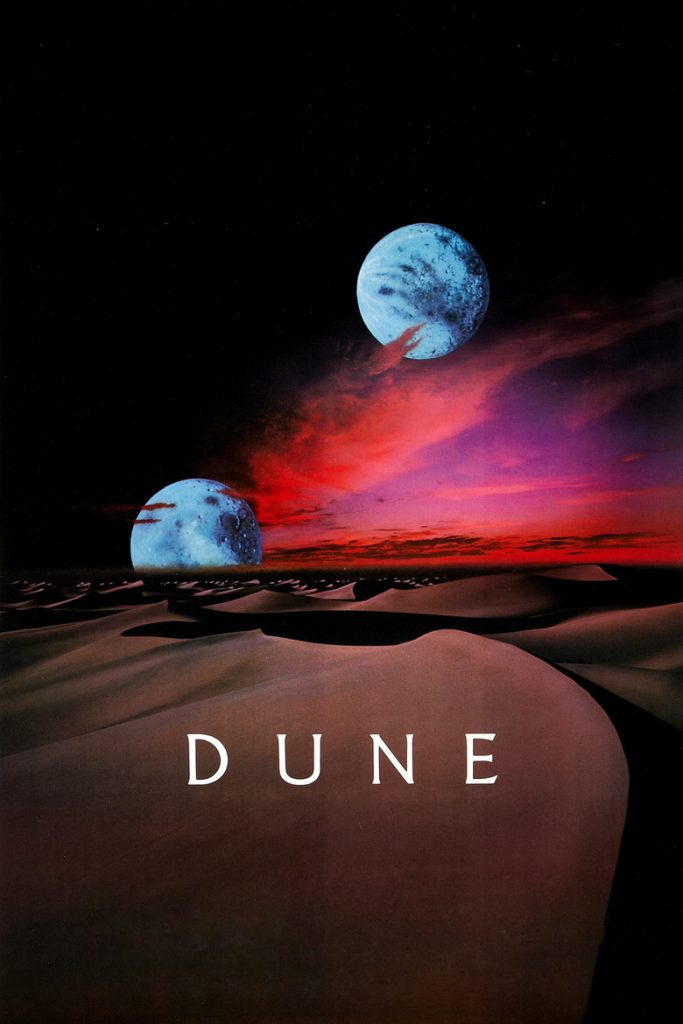
Dune (1984) is a science fiction epic set on the desert planet Arrakis, where a young nobleman, Paul Atreides, becomes embroiled in a complex political and mystical conflict over control of the spice melange, a substance essential for space travel and consciousness expansion. The film explores themes of destiny, power, and ecology through a visually rich, sometimes surreal narrative.
Parent Guide
David Lynch's adaptation of Dune is a visually striking but complex science fiction film with intense violence, disturbing imagery, and mature themes. Best suited for teenagers who can handle the film's challenging narrative and surreal elements.
Content breakdown
Includes battle scenes with laser weapons, hand-to-hand combat, knife fights, and implied torture. Several characters die violently, including decapitation and poisoning. Intense peril throughout as characters face constant threats.
Features surreal, dream-like sequences that may be confusing or unsettling. Giant sandworms are intimidating. Disturbing body horror elements including a character with grotesque physical transformation. The film's overall tone is dark and ominous.
Minimal strong language. Occasional mild expletives. Some invented terminology and formal dialogue typical of epic storytelling.
Brief suggestive dialogue and romantic tension. No explicit sexual content or nudity. Some characters wear revealing desert attire appropriate to the setting.
The spice melange is a central plot element with drug-like properties (expands consciousness, is addictive). Characters consume it ceremonially. No contemporary drug use depicted.
High-stakes political drama with betrayal, family conflict, and heavy responsibility themes. Characters experience grief, fear, and pressure throughout. The protagonist's coming-of-age journey involves significant emotional weight.
Parent tips
This film features intense scenes of violence, including battles and hand-to-hand combat, as well as surreal and disturbing imagery that may be confusing or frightening to younger viewers. The complex plot and philosophical themes are best suited for older children and teens who can follow intricate storytelling. Consider watching with your child to discuss the film's themes and visual style.
Parent chat guide
Parent follow-up questions
- Did you like the sandworms? Were they scary or cool?
- What was your favorite part of the movie?
- How do you think the characters felt in the desert?
- Why do you think the spice was so important in the story?
- What made Paul special compared to other characters?
- How did the Fremen people live differently on their desert planet?
- What political lessons can we learn from the conflict between the houses?
- How does the film use symbolism with water and the desert?
- Do you think Paul's destiny was predetermined or did he have choices?
- How does Lynch's surreal direction style affect your interpretation of the story?
- What commentary does the film make about colonialism and resource extraction?
- Compare the film's treatment of messianic figures with real-world religious concepts.
🎭 Story Kernel
At its core, 'Dune' is a chilling deconstruction of the 'chosen one' narrative and a stark examination of ecological imperialism. The story is driven not by heroism, but by the brutal mechanics of power, resource extraction, and religious manipulation. Paul Atreides is less a willing savior and more a pawn in a centuries-long genetic breeding program and a geopolitical game for control of the spice melange. His journey is a tragic awakening to the holy war he will unleash, making his apparent destiny feel like a terrifying burden rather than a triumph. The characters are propelled by survival, revenge, and the intoxicating, addictive nature of absolute power—both political and prescient.
🎬 Visual Aesthetics
Villeneuve crafts a visual language of immense, crushing scale and stark minimalism. The camera often gazes upward at monolithic architecture or down upon ant-like figures in vast deserts, emphasizing human insignificance. The color palette is deliberately drained on Arrakis—all bleached golds, dusty oranges, and deep blacks—contrasting sharply with the cool, sterile blues and greys of the off-world imperial forces. Action is presented not as spectacle but as brutal, efficient consequence: the Harkonnen attack is a symphony of shadows and sudden, shocking violence. The sandworms are portrayed as forces of nature, their movements slow, seismic, and awe-inspiring, symbolizing the planet's retribution against those who would plunder it.
🔍 Details & Easter Eggs
💡 Behind the Scenes
To achieve the otherworldly look of Arrakis, director Denis Villeneuve insisted on shooting as much as possible on location. Key desert scenes were filmed in the Wadi Rum desert in Jordan, often called the 'Valley of the Moon' for its Martian-like landscape. The stillsuits, the Fremen survival suits that recycle bodily moisture, were fully functional, custom-fitted costumes that actors described as extremely hot and challenging to perform in. Composer Hans Zimmer, a longtime fan of the novel, created unique sonic textures for the film, inventing new instruments and using recordings of desert winds to build the score, and famously turned down scoring 'Tenet' to work on 'Dune'.
Where to watch
Choose region:
- Netflix
- Netflix Standard with Ads
- Amazon Video
- Apple TV Store
- Google Play Movies
- YouTube
- Fandango At Home
Trailer
Trailer playback is unavailable in your region.