
Eating Raoul (1982)
Story overview
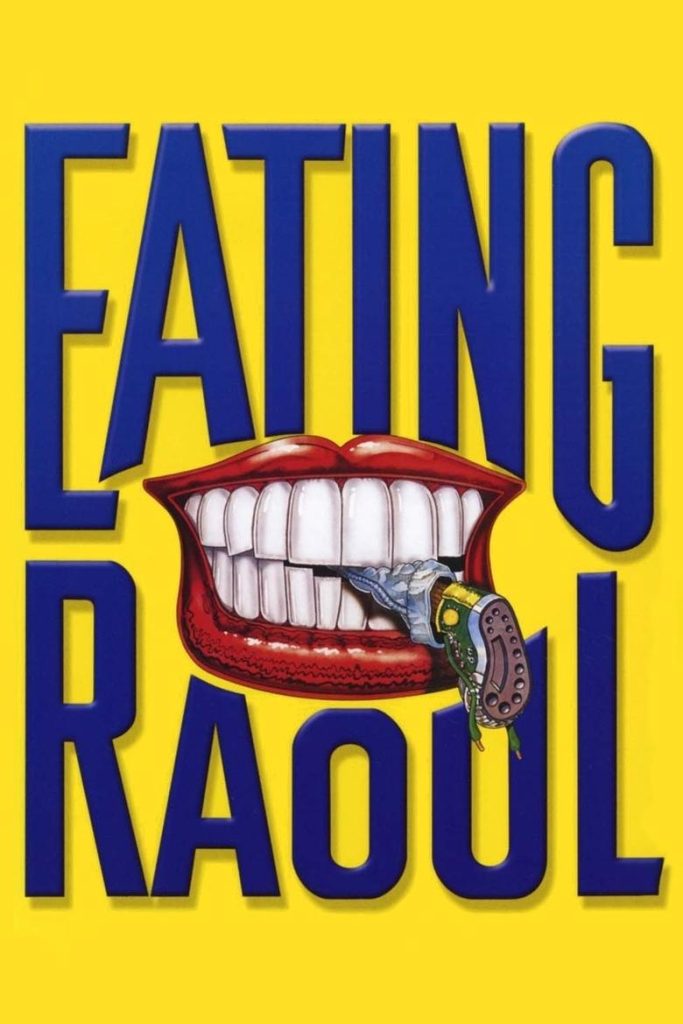
Eating Raoul is a dark comedy from 1982 about a conservative married couple, Paul and Mary Bland, who are disgusted by the promiscuous 'swingers' in their apartment building. After accidentally killing one of these neighbors during a confrontation, they discover they can fund their dream of opening a restaurant by luring swingers to their home, robbing them, and disposing of the bodies. The film blends humor with crime and horror elements, presenting a satirical look at morality, consumerism, and suburban values.
Parent Guide
Eating Raoul is a darkly comedic film that explores mature themes through satire, making it unsuitable for younger audiences. It contains strong content in violence, sexual material, and language, warranting its R rating. Recommended for viewers 17 and older with parental guidance, as it requires emotional maturity to understand its humorous critique of societal issues.
Content breakdown
Includes scenes of murder (e.g., bludgeoning with a frying pan, implied killings), disposal of bodies, and dark comedic violence. There are references to cannibalism (though not graphically depicted) and perilous situations. The violence is often played for laughs but involves lethal actions.
Features disturbing themes such as murder, corpse disposal, and implied cannibalism, presented in a satirical tone. The horror elements are mild but may unsettle sensitive viewers due to the macabre plot. The overall effect is more comedic than terrifying, but the content can be unsettling.
Includes occasional strong language (e.g., 'hell,' 'damn,' sexual references) and crude dialogue related to the adult themes. Not excessively frequent, but present in context with the mature content.
Contains sexual themes throughout, including references to swinging, promiscuity, and sexual acts. There are scenes with partial nudity (e.g., characters in underwear or suggestive situations) and sexual innuendo. The content is integral to the plot's satire of suburban morality.
Shows social drinking in scenes (e.g., characters with cocktails at parties). No depiction of drug use or excessive alcohol consumption, but alcohol is present in adult settings.
Emotionally intense due to dark comedic elements involving crime and moral ambiguity. The satire may provoke thought about societal values, but the tone keeps it from being overly distressing. Suitable for mature viewers who can handle ironic humor mixed with serious themes.
Parent tips
This film is rated R for strong thematic elements, including violence, sexual content, and dark humor. It is not suitable for children or young teens due to its mature themes. Parents should watch it first to assess appropriateness for older teens (17+), as it contains scenes of murder, implied cannibalism, sexual situations, and strong language. The comedic tone may make disturbing content seem less intense, but the underlying themes require emotional maturity to process.
Parent chat guide
Parent follow-up questions
—
—
—
- What did you think about the way the film mixes comedy with crime and horror elements?
- How does the movie satirize ideas about 'normal' vs. 'deviant' behavior in society?
- What message do you think the film is sending about money and ambition?
- Did the dark humor make the violent scenes easier to watch, or more disturbing? Why?
- How would you describe the moral choices the main characters make throughout the story?
🎭 Story Kernel
At its core, 'Eating Raoul' is a savage critique of American middle-class hypocrisy and consumerism. The Blands, Paul and Mary, are not driven by greed alone but by a desperate, puritanical desire to sanitize their ascent into respectability. Their murder spree is framed as a moral crusade against the 'perverts' they lure, allowing them to fund their dream of a sterile, upscale restaurant. The film exposes how capitalism corrupts even the most mundane fantasies, turning suburbanites into cold-blooded entrepreneurs who commodify vice to achieve virtue, all while maintaining their bland facade.
🎬 Visual Aesthetics
The film employs a deliberately cheap, gritty visual style reminiscent of 1970s exploitation cinema, with muted colors and flat lighting that underscore the Blands' drab existence. Camera work is static and unflashy, mirroring their rigid personalities, yet punctuated by sudden, almost slapstick violence that feels jarringly mundane. Symbolism is blunt but effective: their apartment's beige decor represents their stifling conformity, while the swinging scenes they despise are shot with a seedy, garish palette, visually contrasting 'debauchery' with their murderous 'cleanliness.'
🔍 Details & Easter Eggs
💡 Behind the Scenes
Directed by Paul Bartel, who also stars as Paul Bland, the film was shot on a shoestring budget of about $500,000 in Los Angeles, using real apartments to enhance its gritty authenticity. Mary Woronov, playing Mary Bland, was a frequent collaborator in cult films, bringing a deadpan intensity. The movie's success as a midnight cult classic stemmed from word-of-mouth, with its mix of satire and low-budget charm resonating in the early 1980s independent scene.
Where to watch
Choose region:
- HBO Max
- HBO Max Amazon Channel
- Criterion Channel
- Tubi TV
- Amazon Video
- Apple TV Store
- Fandango At Home
Trailer
Trailer playback is unavailable in your region.