
Edward Scissorhands (1990)
Story overview
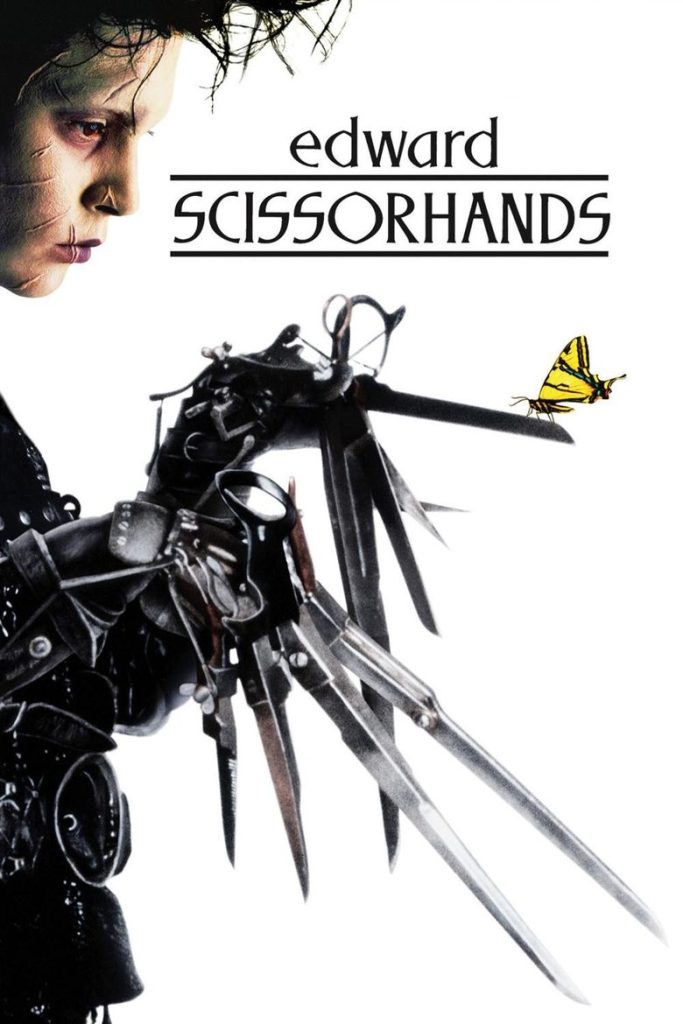
Edward Scissorhands is a fantasy drama about a gentle, artificial man named Edward who has scissors for hands. Created by an inventor who died before finishing him, Edward lives alone in a Gothic mansion until a kind Avon saleswoman discovers him and brings him into her suburban neighborhood. The film explores themes of acceptance, difference, and the complexities of human relationships as Edward tries to fit into a world that both embraces and fears his uniqueness. It's a poignant story about love, loss, and the search for belonging.
Parent Guide
A poignant fantasy about acceptance and difference with some emotional intensity and mild peril. Suitable for older children who can handle thematic complexity.
Content breakdown
Some suspenseful sequences and mild peril involving Edward's scissor-hands, but no graphic violence.
Gothic mansion setting and Edward's unusual appearance may be unsettling for very young viewers. Some emotional scenes of rejection and loneliness.
Minimal mild language appropriate for the PG-13 rating.
Some romantic themes and mild suggestive content, but no explicit sexual content or nudity.
No substance use depicted.
Strong themes of loneliness, rejection, and the search for belonging. Some poignant and emotionally charged scenes.
Parent tips
This PG-13 film contains some intense emotional moments and mild peril that may be unsettling for younger children. The central character's scissor-hands, while not used violently, create a sense of unease and potential danger in certain scenes. Parents should be prepared to discuss themes of bullying, social rejection, and what it means to be different with their children.
The film's fantasy elements are balanced with realistic human emotions and conflicts, making it more suitable for older children and teens who can understand its deeper themes. While there's no graphic content, the story's emotional weight and some suspenseful sequences warrant the PG-13 rating. It's a beautiful film that can spark meaningful conversations about empathy and acceptance.
Parent chat guide
For older children and teens, you can explore the film's commentary on suburban conformity versus individuality. Discuss how the community's initial fascination with Edward turns to fear and rejection. These conversations can help children develop critical thinking about social dynamics and personal values.
Parent follow-up questions
- How did Edward use his scissor hands to help people?
- What made Edward feel happy or sad in the story?
- How did the family show kindness to Edward?
- What colors did you notice in Edward's house compared to the other houses?
- What was your favorite thing Edward created with his scissors?
- Why do you think some people were afraid of Edward at first?
- How did Edward's differences make him special in some ways?
- What does it mean to be a good friend to someone who is different?
- How did the neighborhood change when Edward arrived?
- What would you do if you met someone like Edward?
- What does the film say about how communities treat people who are different?
- How does Edward's innocence contrast with the more complicated adult world?
- Why do you think the inventor created Edward but didn't finish him?
- What responsibilities come with bringing someone new into a community?
- How does the film show that both kindness and cruelty can come from the same people?
- How does the film use fantasy elements to comment on real social issues?
- What does Edward represent in terms of artistic expression versus practical utility?
- How does the film explore the tension between conformity and individuality in suburban life?
- What commentary does the film make about how society creates and then rejects 'others'?
- How does the romantic subplot illustrate both the possibilities and limitations of Edward's integration into society?
🎭 Story Kernel
At its core, 'Edward Scissorhands' explores the tragedy of the outsider who can never be fully integrated, no matter how much society initially celebrates his uniqueness. It's less about a man with scissors for hands and more about how communities consume and discard difference. The suburban drive for novelty turns Edward from charming spectacle to threatening anomaly. His inability to touch without harming becomes the perfect metaphor for how love and connection remain perpetually out of reach for those who don't fit the mold. The film suggests that true belonging requires complete assimilation—something Edward's fundamental nature makes impossible.
🎬 Visual Aesthetics
Tim Burton creates a visual dialectic between the pastel uniformity of suburbia and the Gothic grandeur of the mansion. The neighborhood's candy-colored houses are shot with wide angles emphasizing their artificial perfection, while Edward's castle employs Dutch angles and dramatic shadows. The scissors themselves become the film's primary visual motif—they're tools of creation (topiary, ice sculptures, hair) and destruction. Notice how the camera often frames Edward's hands in close-up, making them both beautiful and terrifying. The color palette shifts from vibrant suburbia to monochromatic flashbacks, visually separating Edward's origins from his attempted assimilation.
🔍 Details & Easter Eggs
💡 Behind the Scenes
Johnny Depp based Edward's movements on his dog's behavior when confused or scared. The iconic topiary scenes used real sculptors working with giant scissors. Winona Ryder, who plays Kim, was dating Depp during filming—their real-life romance informed the chemistry. The suburban neighborhood was a real Florida development called 'Carpenter's Run,' chosen for its artificial perfection. Danny Elfman's score was so integral that Burton sometimes shot scenes to match the music rather than vice versa.
Where to watch
Choose region:
- Disney Plus
- AMC Plus Apple TV Channel
- AMC+ Amazon Channel
- Philo
- BBC America
- Amazon Video
- Apple TV
- Google Play Movies
- YouTube
- Fandango At Home
Trailer
Trailer playback is unavailable in your region.