
Eeb Allay Ooo! (2020)
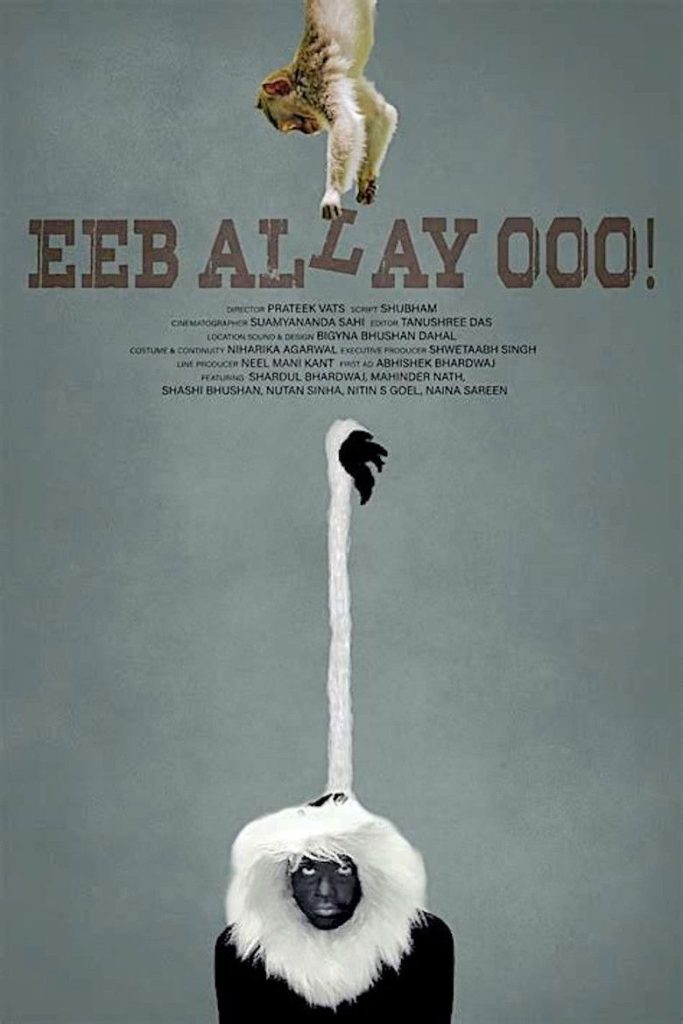
Story overview
Eeb Allay Ooo! is a 2020 Indian comedy-drama film that follows a young man's unusual job in New Delhi. The story explores themes of urban life, economic struggles, and social dynamics through a humorous lens. It presents a satirical look at contemporary Indian society with both comedic and dramatic elements.
Parent Guide
A social satire that uses comedy to explore serious themes of urban poverty and economic struggle in contemporary India. Suitable for mature children who can understand social commentary.
Content breakdown
May include minor workplace conflicts or tense situations related to economic stress.
Themes of poverty and economic hardship could be concerning for sensitive viewers.
May include mild expressions or workplace dialogue typical of adult environments.
No sexual content or nudity expected in this type of social comedy-drama.
No substance use depicted based on the genre and themes.
Deals with serious themes of economic struggle and social inequality that may provoke thoughtful discussion.
Parent tips
This film deals with adult themes like economic hardship and social inequality, though presented through comedy. Parents should be prepared to discuss the realities of urban poverty and workplace dynamics that younger viewers might not fully understand. The cultural context is specifically Indian, which may require some explanation for international audiences.
Parent chat guide
Parent follow-up questions
- What was your favorite part of the movie?
- Did you see any animals in the film?
- What colors did you notice most?
- How did the music make you feel?
- What job would you like to have when you grow up?
- What was the main character trying to do in the story?
- How did people help each other in the movie?
- What made some parts funny and other parts serious?
- What did you learn about life in a big city?
- How would you solve the problems the characters faced?
- What social issues does the film address through comedy?
- How does the movie show different economic classes?
- What does the title 'Eeb Allay Ooo!' mean to you?
- How does the main character's job reflect larger social problems?
- What message does the film send about perseverance?
- How effective is satire in addressing social inequality?
- What cultural commentary does the film make about modern India?
- How does the film balance humor with serious themes?
- What does the protagonist's journey reveal about urban survival?
- How does the film use workplace dynamics to explore larger societal issues?
🎭 Story Kernel
At its core, 'Eeb Allay Ooo!' is a devastating exploration of systemic dehumanization through the lens of India's informal labor economy. The film follows Anjani, a young man hired as a 'monkey repeller' in Delhi's government district, whose job is to mimic monkey sounds and gestures to scare away actual monkeys. The brilliance lies in how director Prateek Vats transforms this absurd premise into a profound metaphor for how capitalism reduces humans to performing animals for survival. Anjani's gradual psychological breakdown isn't just about a difficult job—it's about how economic desperation forces people to abandon their dignity, becoming exactly what the system needs them to be: creatures of pure function. The film asks what happens when your livelihood requires you to become less human, and whether there's any escape from this performance once you've mastered it.
🎬 Visual Aesthetics
The visual language of 'Eeb Allay Ooo!' masterfully mirrors its thematic concerns through deliberate aesthetic choices. Cinematographer Saumyananda Sahi employs a documentary-like realism with handheld camerawork that keeps us uncomfortably close to Anjani's deteriorating mental state. The color palette is dominated by the oppressive beige and gray of Delhi's bureaucratic architecture, against which Anjani's bright orange uniform makes him look like a caged animal. Most striking is how the camera frames monkeys and humans in similar compositions—both are often shot from low angles against imposing buildings, visually equating their positions in this urban ecosystem. The film's few moments of beauty (like the golden-hour light on government buildings) only heighten the tragedy of Anjani's situation, showing a world that's aesthetically pleasing but morally bankrupt.
🔍 Details & Easter Eggs
💡 Behind the Scenes
Director Prateek Vats spent months researching Delhi's actual 'monkey repellers'—a real but little-known profession in India's capital. Lead actor Shardul Bhardwaj prepared by shadowing these workers for weeks, learning their specific vocalizations and movements. The film was shot guerrilla-style in actual government districts of Delhi, often without permits, which explains its raw, authentic feel. Many background actors were real street vendors and office workers going about their daily routines. The monkey sounds were created through a combination of Bhardwaj's vocal training and subtle sound design—no actual monkey recordings were used, maintaining the film's theme of human performance.
Where to watch
Choose region:
- Netflix
- Netflix Standard with Ads
- Tubi TV
- Amazon Video
Trailer
Trailer playback is unavailable in your region.