
Eight Below (2006)
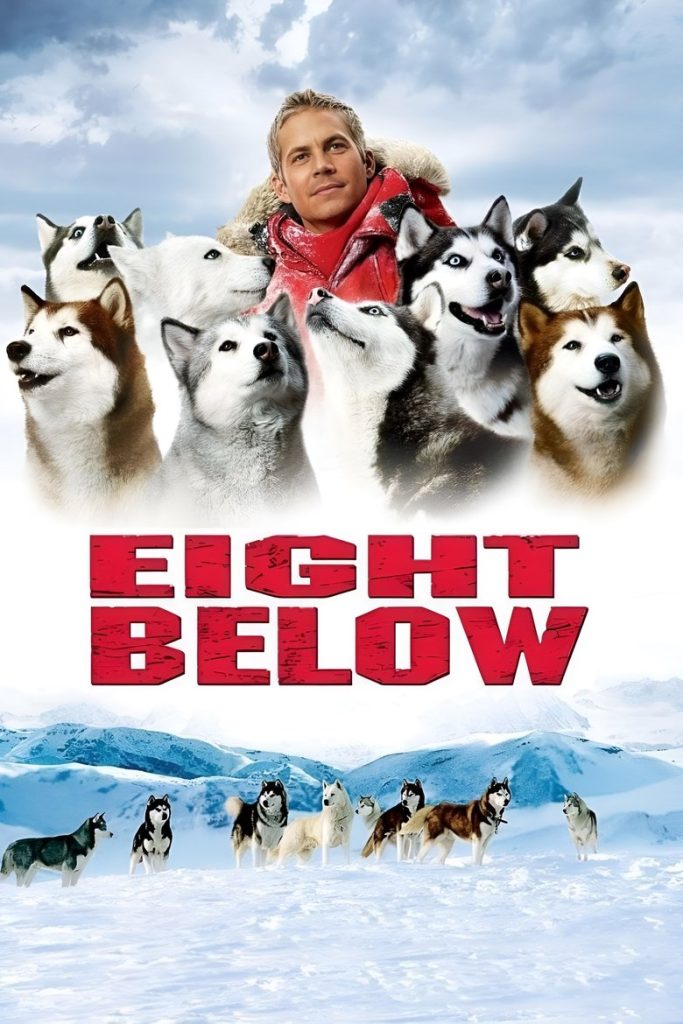
Story overview
Eight Below is a 2006 adventure drama film about a team of sled dogs in Antarctica who must survive on their own after their human companions are forced to evacuate during a severe storm. The story follows the dogs' struggle for survival in the harsh Antarctic wilderness while their handler works tirelessly to mount a rescue mission. This family film celebrates loyalty, courage, and the bond between humans and animals.
Parent Guide
Family adventure film with survival themes and emotional moments involving animal peril.
Content breakdown
Animals face life-threatening situations including harsh weather, starvation, and encounters with wildlife. No graphic violence shown.
Some tense survival scenes and emotional moments as dogs struggle to survive. Separation from human companions may be upsetting.
No offensive language noted in this family film.
No sexual content or nudity.
No substance use depicted.
Emotional themes of loyalty, separation, and survival. Some scenes may be intense for sensitive viewers.
Parent tips
This film is rated PG for some peril and mild thematic elements. The movie contains intense survival situations where the dogs face starvation, harsh weather, and dangerous wildlife, which may be emotionally challenging for sensitive viewers. The themes of separation, loyalty, and perseverance are handled in a family-appropriate way, making it suitable for most children with parental guidance.
Parent chat guide
Parent follow-up questions
- Which dog was your favorite and why?
- How did the dogs help each other when they were cold?
- What did the people do to try to help the dogs?
- What were some ways the dogs showed they were smart about surviving?
- How did the different dogs have different jobs in their team?
- Why was it so important for the people to go back for the dogs?
- What leadership qualities did the lead dog show during their survival?
- How did the film show the difference between giving up and persevering?
- What responsibilities do humans have toward animals they work with?
- How does the film explore themes of loyalty versus survival instincts?
- What ethical questions does the evacuation situation raise about human-animal relationships?
- How does the Antarctic setting serve as both a character and a challenge in the story?
🎭 Story Kernel
At its core, 'Eight Below' explores the fundamental human-animal bond through the lens of abandonment and loyalty. The film's true engine isn't the human rescue mission, but the dogs' primal struggle for survival, which becomes a mirror for Jerry's guilt and moral obligation. It asks: what does it mean to be responsible for another life when you're powerless? The dogs' pack dynamics—leadership, sacrifice, and cooperation—are presented not as anthropomorphism but as genuine social structures, making their survival a testament to instinct and the trust placed in humans. Jerry's journey is one of redemption, driven by the haunting knowledge that his companions are suffering because of his necessary, yet devastating, decision to leave them.
🎬 Visual Aesthetics
The film employs a stark visual dichotomy. The human world is often framed in warm, cluttered interiors and the vibrant chaos of the research base. In contrast, the Antarctic wilderness is captured with a chilling, minimalist palette of blinding whites, deep blues, and oppressive grays, emphasizing the dogs' isolation. Wide, sweeping shots dwarf the huskies against the immense, indifferent landscape, visually reinforcing their vulnerability. The camera lingers on close-ups of the dogs' eyes and weathered paws, telling their story through physical endurance rather than dialogue. The action during the survival sequences is gritty and visceral, focusing on the raw mechanics of hunting and shelter-building without romanticizing the harsh reality.
🔍 Details & Easter Eggs
💡 Behind the Scenes
The film is loosely based on the true story of the 1958 Japanese Antarctic research expedition, which was forced to leave its sled dogs behind. Fifteen of the film's canine actors were rescued from shelters. Paul Walker, who played Jerry, performed many of his own stunts in the freezing conditions and formed strong bonds with the dog actors. Much of the filming took place in Smithers, British Columbia, and Greenland, standing in for Antarctica. The trainers used real sled dog commands, and the dogs' interactions were often genuine reactions to the cold environment and each other, requiring minimal direction for the survival sequences.
Where to watch
Choose region:
- Disney Plus
- Amazon Video
- Apple TV
- Google Play Movies
- YouTube
- Fandango At Home