
El Pepe: A Supreme Life (2019)
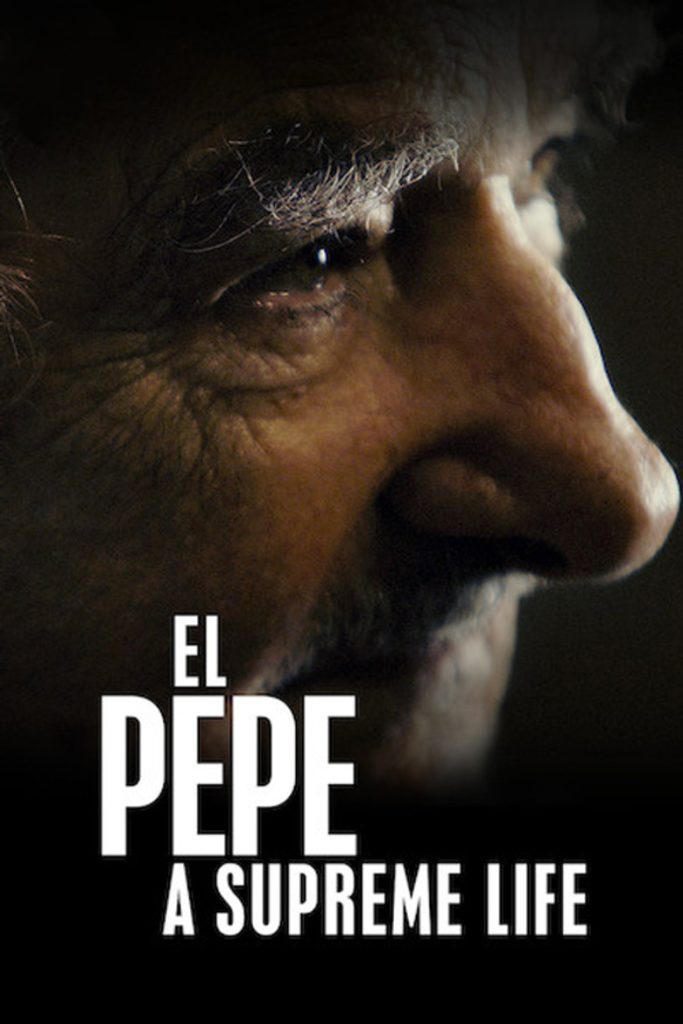
Story overview
This 2019 documentary explores the life of José 'Pepe' Mujica, a former Uruguayan president, guerrilla fighter, and political figure. Directed by Emir Kusturica, the film presents Mujica's journey from armed resistance to political leadership, focusing on his humble lifestyle, philosophical views, and impact on Uruguayan society. It combines interviews, archival footage, and personal reflections to portray a man who values simplicity and social justice.
Parent Guide
A thoughtful documentary about a political figure's life journey, suitable for mature children and teens with interest in history and social issues.
Content breakdown
Discusses historical guerrilla warfare and political violence through interviews and archival footage, but no graphic depictions.
Mentions of imprisonment and political conflict might be unsettling for sensitive viewers, but presented in a reflective, non-sensational manner.
No offensive language noted; primarily philosophical and political discussion in Spanish with subtitles.
No sexual content or nudity.
No depiction or discussion of substance use.
Emotional moments when discussing imprisonment and political struggles, but overall tone is contemplative rather than intense.
Parent tips
This documentary is suitable for older children and teens interested in politics, history, or social issues. It discusses guerrilla warfare and political violence in a historical context, which may require parental explanation. The film's philosophical tone and subtitles (if not dubbed) might challenge younger viewers. Consider watching together to discuss Mujica's life lessons and the documentary's themes.
Parent chat guide
Parent follow-up questions
—
- Who was Pepe Mujica?
- What country did he lead?
- What did you learn about being a leader?
- Why was Mujica in a guerrilla group?
- How did his time in prison change him?
- What made his leadership style unique?
- How does the documentary portray the balance between armed resistance and political change?
- What does Mujica's lifestyle say about materialism in politics?
- How does the film use interviews and footage to tell his story?
🎭 Story Kernel
The film is not a conventional biopic but a meditation on revolutionary idealism versus the practical, often lonely, reality of leadership. It explores what drives José 'Pepe' Mujica: not power, but a profound, almost spiritual, connection to the land and its people, forged during his brutal imprisonment. The narrative reveals how his austere lifestyle and philosophical musings are direct consequences of surviving torture and isolation, transforming personal trauma into a political ethos of simplicity and direct human connection. The core tension lies between his public image as a 'philosopher-president' and the private man grappling with the weight of history and the compromises of governance.
🎬 Visual Aesthetics
The visual language is intimate and textured, favoring close-ups and handheld shots that create a sense of immediate, unvarnished presence. The color palette is dominated by the earthy tones of his rustic farmhouse and the muted greens of the Uruguayan countryside, visually anchoring his philosophy in the land. Archival footage is seamlessly woven in, not as exposition, but as emotional counterpoint—the stark black-and-white of his prison years violently contrasts with the warm, sun-dappled present. The camera often lingers on Mujica's hands—gardening, gesturing, resting—symbolizing his hands-on, practical approach to life and governance, a man who works the soil he vows to protect.
🔍 Details & Easter Eggs
💡 Behind the Scenes
The film was directed by Emir Kusturica, known for his chaotic, vibrant style, which makes his choice of a restrained, observational approach here particularly significant. Much of the film was shot at Mujica's actual modest farmhouse on the outskirts of Montevideo, with no constructed sets. Kusturica reportedly spent extended periods simply living with Mujica and his wife, Lucía Topolansky, to capture unfiltered moments. The project faced logistical challenges due to Mujica's continued political engagements, requiring a flexible, documentary-style shooting schedule over several years.
Where to watch
Choose region:
- Netflix
- Netflix Standard with Ads