
Embrace the Panda: Making Turning Red (2022)
Story overview
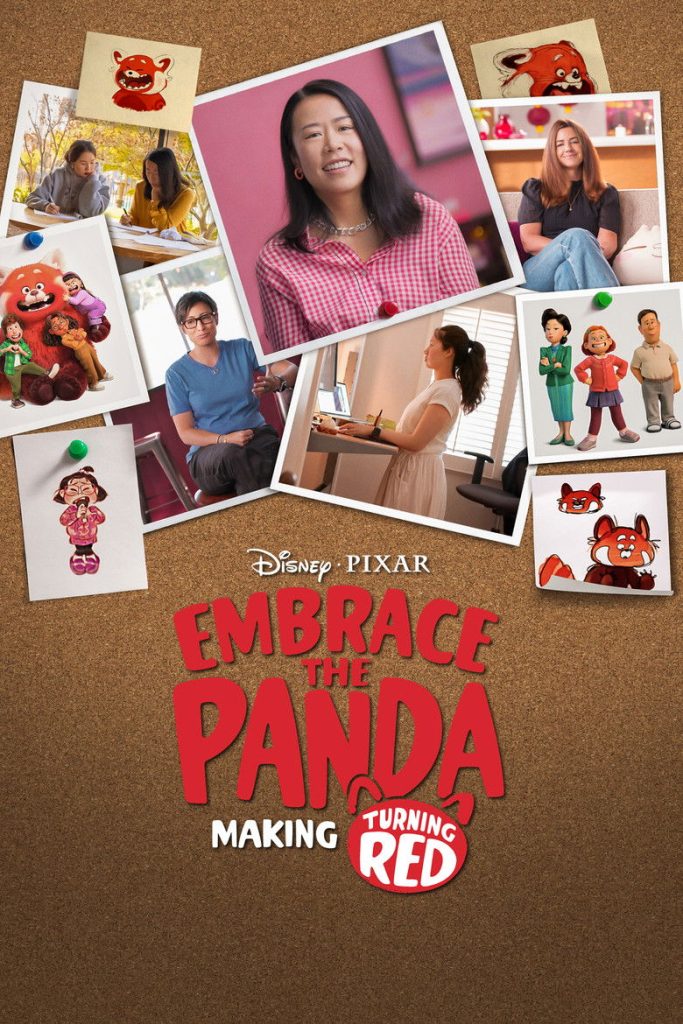
This 48-minute documentary provides an intimate look at the all-women creative team behind Pixar's 'Turning Red.' Through behind-the-scenes footage and interviews with director Domee Shi and her core leadership crew, viewers witness the professional and personal journeys that shaped this heartfelt animated film. The documentary explores themes of creativity, collaboration, cultural representation, and the challenges of bringing a personal story to the big screen.
Parent Guide
Educational documentary about filmmaking with no concerning content. Suitable for all ages interested in animation production.
Content breakdown
No violence or peril depicted. The documentary focuses entirely on creative processes and personal stories.
Nothing scary or disturbing. Contains only behind-the-scenes footage, interviews, and discussions about creative work.
No offensive language. Professional discussions about filmmaking and personal reflections.
No sexual content or nudity. Professional workplace setting throughout.
No depiction or discussion of substance use.
Some emotional moments as creators discuss personal connections to their work, but presented in a positive, inspirational manner.
Parent tips
This documentary offers a positive, educational viewing experience about filmmaking and creative collaboration. It's suitable for children interested in animation or storytelling, with no concerning content. Parents can use it to discuss careers in creative fields, teamwork, and cultural diversity. The documentary's focus on an all-women team provides an opportunity to talk about gender representation in media industries.
Parent chat guide
Parent follow-up questions
- Did you like seeing how people make cartoons?
- What was your favorite part of the movie-making?
- Would you like to make movies when you grow up?
- What tools did the filmmakers use that surprised you?
- How do you think the team worked together?
- What part of making a movie looks hardest to you?
- Why do you think Pixar chose to make a documentary about this particular film?
- How did the filmmakers balance personal stories with entertainment?
- What challenges might an all-women creative team face in animation?
- How does this documentary change your perspective on animated film production?
- What cultural significance does 'Turning Red' have that this documentary highlights?
- How does this documentary address representation both in front of and behind the camera?
🎭 Story Kernel
At its core, 'Turning Red' explores the generational trauma of emotional suppression versus the messy authenticity of adolescence. The red panda isn't just a metaphor for puberty—it's the uncontainable emotional truth that women in Mei's family have been taught to seal away. The driving conflict isn't between Mei and her mother, but between centuries of 'be a good girl' conditioning and the revolutionary act of claiming one's full emotional spectrum. The characters are propelled by this tension: Ming Lee by her fear of Mei repeating her own suppressed youth, and Mei by the terrifying freedom of choosing her messy, loud, authentic self over familial perfection.
🎬 Visual Aesthetics
The film's visual language masterfully mirrors Mei's internal chaos through its Toronto setting—a blend of orderly skyscrapers and vibrant Chinatown streets. The animation shifts dramatically between two distinct styles: the crisp, controlled lines of Mei's 'perfect daughter' persona versus the fuzzy, energetic, almost uncontrollable motion of her panda form. Color acts as emotional shorthand—red dominates during emotional peaks, while cooler blues and greens appear during moments of suppression. The 2002 period details (Tamagotchis, boy band mania) aren't just nostalgia but visual markers of a specific cultural moment where teenage identity was becoming increasingly performative and commercialized.
🔍 Details & Easter Eggs
💡 Behind the Scenes
Director Domee Shi drew heavily from her own Toronto childhood in the early 2000s, with specific locations like the SkyDome (now Rogers Centre) and Chinatown being meticulously recreated. The red panda concept originated from Shi's childhood nickname 'red panda' given by her mother. Animation supervisors developed new fur technology specifically for the panda sequences, creating over 3 million individually animated hairs that respond to emotion and movement. The film's composer, Ludwig Göransson, incorporated traditional Chinese instruments alongside early 2000s pop synths to bridge the cultural and generational divides central to the story.
Where to watch
Choose region:
- Disney Plus
Trailer
Trailer playback is unavailable in your region.