
Emma. (2020)
Story overview
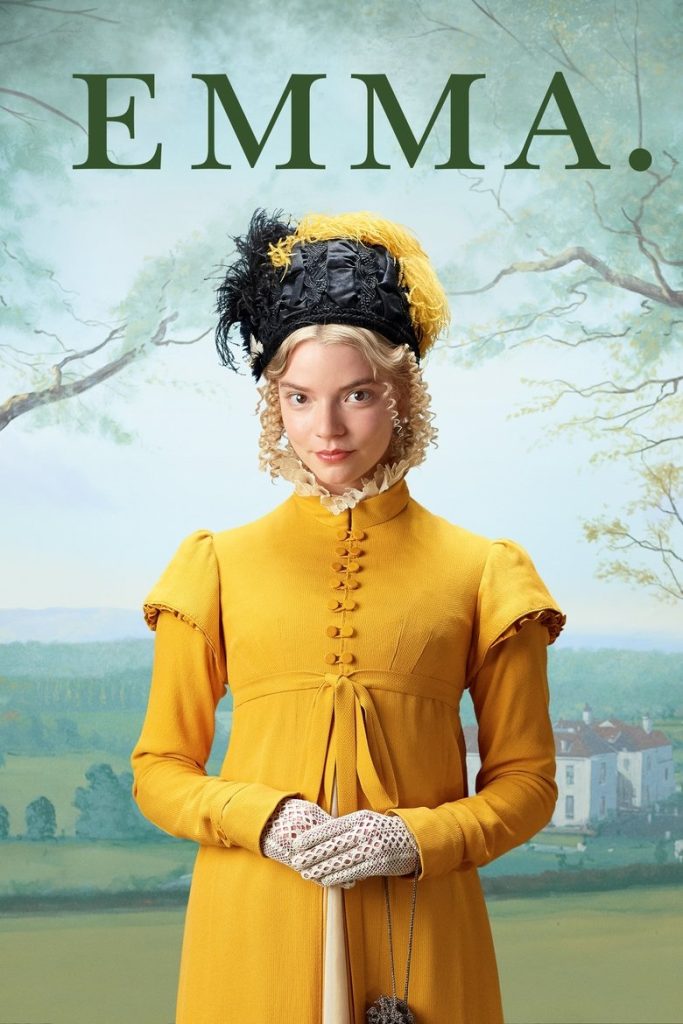
Emma is a 2020 romantic comedy adaptation of Jane Austen's classic novel about a well-meaning but misguided young woman who enjoys matchmaking for her friends in early 19th-century England. The film follows Emma Woodhouse as she navigates social expectations, romantic misunderstandings, and her own personal growth while interfering in the love lives of those around her. This period piece combines witty dialogue, elegant costumes, and lighthearted social commentary about class and relationships in Regency-era society.
Parent Guide
Gentle period romance suitable for most children 8+, with themes of matchmaking and social relationships requiring some maturity to appreciate.
Content breakdown
No violence, threats, or physical peril present.
Nothing frightening or disturbing; all content is lighthearted.
No strong language or profanity; period-appropriate polite dialogue.
Very mild romantic elements including hand-holding, brief kisses, and discussions of marriage; no nudity or sexual situations.
No depiction of alcohol, drugs, or tobacco use.
Light romantic tension and occasional social embarrassment, all resolved positively.
Parent tips
This PG-rated adaptation of Jane Austen's classic novel offers a gentle introduction to period romance for older children and teens. The film contains no violence, strong language, or substance use, making it appropriate for family viewing. Parents should note that the plot revolves around romantic relationships, matchmaking, and social class dynamics, which may require some explanation for younger viewers unfamiliar with historical context.
The film's themes of personal growth, self-awareness, and learning from mistakes provide good discussion opportunities. While there are no graphic elements, some subtle romantic tension and social maneuvering might be confusing for very young children. The 2-hour runtime and period dialogue may challenge shorter attention spans.
Parent chat guide
Consider discussing the difference between helpful advice and unwanted interference in others' lives. The film also provides opportunities to talk about class differences and social expectations, though these are presented in a gentle, comedic way. Ask your children about their favorite characters and what they thought about the various romantic relationships in the story.
Parent follow-up questions
- What was your favorite pretty dress in the movie?
- Did you like the big houses they lived in?
- What made you laugh during the movie?
- Why do you think Emma wanted to help her friends find husbands?
- How were parties different in the old days compared to now?
- What lesson do you think Emma learned by the end?
- How does the movie show that good intentions don't always lead to good results?
- What does the film tell us about friendship and honesty?
- Why do you think social class was so important in this time period?
- How does Emma's character development reflect broader themes of self-awareness?
- What commentary does the film make about marriage and independence for women in that era?
- How do the romantic misunderstandings drive both the comedy and the plot?
🎭 Story Kernel
At its core, 'Emma' is a study in the perils of benevolent narcissism. The film explores how Emma Woodhouse's matchmaking stems not from altruism but from a desire to control her social sphere and validate her own superiority. Her journey isn't about finding love for others but about confronting the damage caused by treating people as projects. The narrative reveals that her greatest flaw—her interference—is also her pathway to self-awareness, as she must dismantle the very social engineering that defines her identity to achieve genuine connection with Mr. Knightley.
🎬 Visual Aesthetics
Director Autumn de Wilde crafts a confectionary world of pastel aesthetics that serves as both setting and character. The camera often frames Emma in symmetrical, portrait-like compositions, visually reinforcing her curated, controlled existence. The vibrant, almost edible color palette of pinks, yellows, and creams in Hartfield contrasts with the more muted, earthy tones of the surrounding world, mirroring Emma's insulated privilege. This visual language subtly critiques the artifice of Regency society, where beauty and manners often mask deeper emotional truths and social manipulations.
🔍 Details & Easter Eggs
💡 Behind the Scenes
Anya Taylor-Joy, who portrays Emma, is a classically trained ballet dancer, which informed her precise, almost choreographed physicality and posture in the role. The film was shot entirely on location in England, with Hartfield being a composite of several historic country houses. Director Autumn de Wilde, known for her photography, brought a meticulous eye for composition, often using paintings by Gainsborough and Reynolds as direct visual references for the film's painterly aesthetic and blocking.
Where to watch
Choose region:
- Peacock Premium
- Peacock Premium Plus
- Amazon Video
- Apple TV
- Google Play Movies
- Fandango At Home
Trailer
Trailer playback is unavailable in your region.