
End Game (2018)
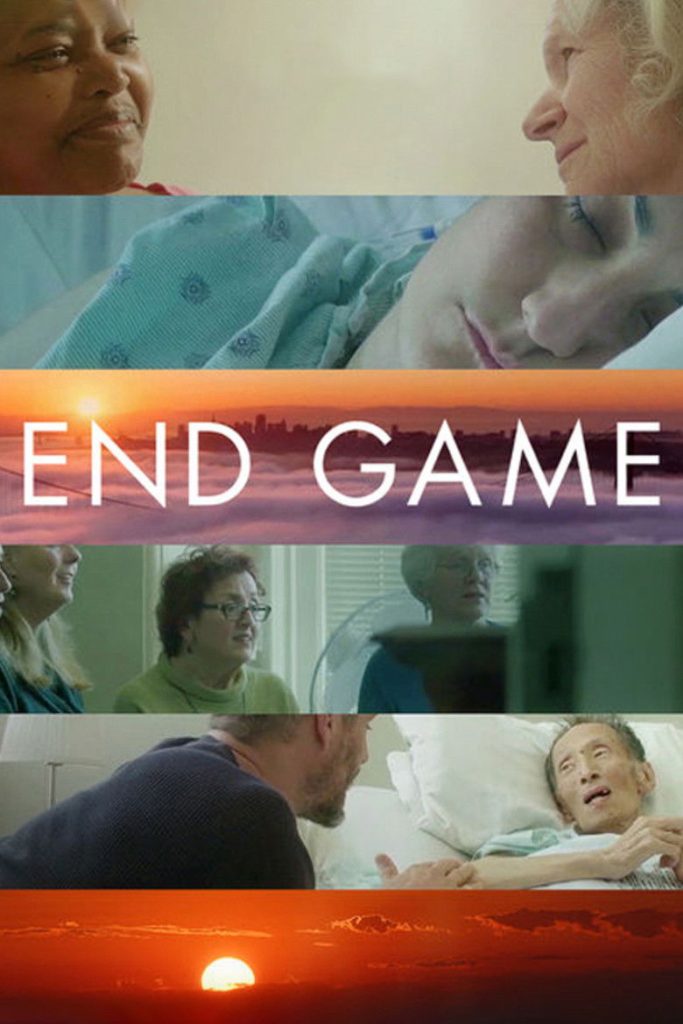
Story overview
End Game (2018) is a documentary that intimately follows medical professionals working at the forefront of end-of-life care, exploring how they approach life, death, and changing societal perspectives on these topics through a vérité filmmaking style.
Parent Guide
A thoughtful documentary about end-of-life medical care that presents mature themes in a respectful, educational manner. Best for mature children who can handle discussions about mortality.
Content breakdown
No violence. Contains medical situations involving seriously ill patients, but presented clinically rather than dramatically.
Some children may find scenes of seriously ill patients or discussions of death unsettling. The documentary maintains a respectful, educational tone throughout.
No concerning language. Medical terminology is used appropriately.
No sexual content or nudity.
No substance use depicted. Medical treatments and pain management are shown in clinical contexts.
Deals with emotionally heavy themes of mortality, terminal illness, and end-of-life care. While presented thoughtfully, the subject matter may be intense for sensitive viewers.
Parent tips
This documentary deals with mature themes of death and medical care in a thoughtful, non-sensational way. It's suitable for older children who can handle discussions about mortality, but parents should be prepared to answer questions about terminal illness and hospice care. The TV-PG rating indicates it contains material that parents may find unsuitable for younger children.
Parent chat guide
Parent follow-up questions
—
- What did the doctors do to help people feel better?
- How did the patients' families help them?
- What different approaches to end-of-life care did you notice?
- How do you think doctors balance hope with honesty when patients are very sick?
- What ethical dilemmas did the medical professionals face?
- How does this documentary challenge common perceptions about death and dying in our society?
🎭 Story Kernel
At its core, 'End Game' explores the psychological toll of failure and the desperate measures taken to correct it. The film isn't really about defeating Thanos; it's about the Avengers confronting their own inadequacies. Tony Stark's obsession with creating a failsafe, Steve Rogers clinging to a past he can't return to, and Thor's descent into guilt-driven hedonism all stem from their shared trauma of 'The Snap.' The time heist becomes a narrative device for each character to face their personal demons—Natasha's search for family, Clint's rage, Bruce's reconciliation with the Hulk—making their final victory as much about internal healing as external triumph.
🎬 Visual Aesthetics
The film employs a stark visual dichotomy. The post-Snap scenes are drained of color, dominated by grays and washed-out tones, visually representing a world devoid of hope. This contrasts sharply with the time heist sequences, which burst with the vibrant, saturated palettes of each past film's era. The final battle is a masterclass in chaotic clarity—the camera follows specific character arcs through the maelstrom, like Captain America wielding Mjolnir or Pepper Potts' rescue. Notice how Thanos is often framed centrally and immovable, a monolith against the swirling chaos of the heroes, emphasizing his role as an inevitable force.
🔍 Details & Easter Eggs
💡 Behind the Scenes
Robert Downey Jr. improvised Tony Stark's final line, 'I am Iron Man,' mirroring his iconic phrase from the first film, bringing his arc full circle. The massive final battle scene was filmed over several months with most principal actors, but due to scheduling, their interactions were often shot separately and composited. The Russo brothers used a 'virtual production' technique, filming actors against LED screens displaying real-time digital environments to create more authentic reactions during the time heist sequences.
Where to watch
Choose region:
- Netflix
- Netflix Standard with Ads
Trailer
Trailer playback is unavailable in your region.