
EO (2022)
Story overview
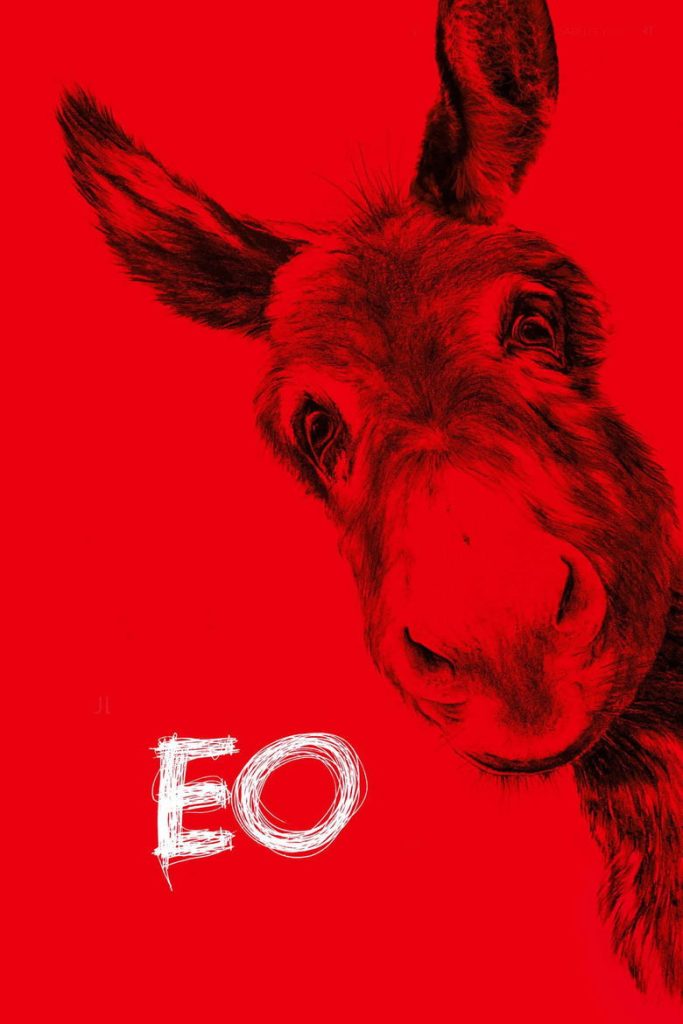
EO is a 2022 Polish-Italian drama adventure film directed by Jerzy Skolimowski. The story follows EO, a gentle grey donkey, as he journeys through various human environments, experiencing both kindness and cruelty. Through his innocent perspective, the film explores themes of animal welfare, human nature, and the random twists of fate, blending moments of joy with poignant sadness as EO navigates a world he cannot fully understand.
Parent Guide
EO is a thoughtful, artistic film that presents the world through a donkey's eyes, featuring both beautiful and distressing moments. While not explicitly violent or inappropriate, its emotional themes and depictions of animal hardship require parental guidance for younger viewers.
Content breakdown
Some scenes show animals in distress: EO is occasionally mistreated (pushed, confined), there's a tense scene where he's chased, and other animals appear in potentially dangerous situations. No graphic violence against humans or animals is shown.
The film contains emotionally intense moments: EO experiences separation, confinement, and uncertainty. Some scenes feature industrial environments that may feel ominous. Sensitive children might find EO's vulnerable position and occasional mistreatment disturbing.
Minimal dialogue throughout. What little human speech exists is in Polish/Italian with subtitles, containing no profanity or inappropriate language.
No sexual content, nudity, or romantic situations. The film focuses entirely on EO's experiences and human-animal interactions.
No depiction of alcohol, drugs, tobacco, or substance use.
The film creates strong emotional engagement through EO's journey. Viewers may experience sadness, anxiety, or empathy during scenes of animal hardship, balanced by moments of beauty and connection. The ambiguous ending may provoke thoughtful discussion.
Parent tips
EO is an artistic, contemplative film suitable for mature children who can handle emotional themes. The donkey's perspective creates a unique, often melancholic viewing experience with minimal dialogue. Parents should be prepared to discuss animal treatment, empathy, and the film's ambiguous ending. While not graphically violent, some scenes depict animal distress and human neglect that may upset sensitive viewers. Best for children who appreciate slower-paced, thoughtful storytelling over action.
Parent chat guide
Parent follow-up questions
- What was your favorite animal in the movie?
- How did EO show he was happy or sad?
- What nice things did people do for EO?
- Why do you think EO kept moving to different places?
- How did different people treat EO differently?
- What would you do if you found an animal like EO?
- What does the film say about how humans treat animals?
- How does seeing the world through EO's eyes change how we understand his experiences?
- What do you think happens to EO after the movie ends?
- How does the film use EO's journey as a metaphor for the human condition?
- What commentary does the film make about industrialization versus nature?
- How does the cinematography and sound design enhance EO's perspective?
🎭 Story Kernel
EO is not a donkey's journey but a mirror held to humanity's selective empathy. The film's true subject isn't the donkey but the humans who project their needs onto him—the circus owner who sees profit, the activists who see a cause, the farmer who sees labor, the aristocrat who sees a pet. Each human interaction reveals our transactional relationship with nature, where compassion is conditional and temporary. EO's silent endurance becomes an accusation of our inconsistency, showing how we compartmentalize cruelty while claiming to care. The film suggests that true connection requires seeing animals as beings with their own existence, not as symbols for our narratives.
🎬 Visual Aesthetics
Jerzy Skolimowski's camera becomes EO's consciousness—unblinking, observational, and devoid of sentimentality. The frequent use of extreme close-ups on EO's eye creates a portal into a world we can witness but never truly enter. The color palette shifts dramatically with each chapter: the garish reds of the circus give way to the muted greens of the forest, then the sterile whites of the laboratory, visually mapping EO's displacement. Most striking are the surreal sequences—the red-filtered forest, the abstract light shows—that reject anthropomorphism by presenting reality as EO might perceive it: fragmented, overwhelming, and often incomprehensible.
🔍 Details & Easter Eggs
💡 Behind the Scenes
EO is a loose reimagining of Robert Bresson's 1966 film 'Au Hasard Balthazar,' but Skolimowski insisted on working with six different donkeys to avoid overworking any single animal. The film was shot in Poland and Italy with a minimal crew to maintain spontaneity. Most remarkable is that the donkeys weren't trained—the filmmakers simply observed and filmed their natural behaviors, creating a documentary-like authenticity within the fictional framework. The striking red-filter sequences were achieved through custom lens filters rather than digital grading.
Where to watch
Choose region:
- HBO Max
- HBO Max Amazon Channel
- Criterion Channel
- Amazon Video
- Apple TV Store
- Fandango At Home
Trailer
Trailer playback is unavailable in your region.