
Europa Europa (1990)
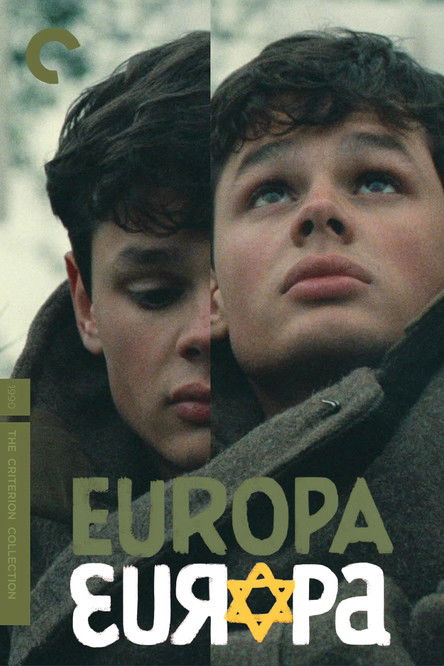
Story overview
Europa Europa is a historical drama set during World War II, based on the true story of a Jewish teenager who survives by concealing his identity. The film follows his journey through various dangerous situations as he navigates the complexities of war and persecution. It explores themes of survival, identity, and the moral dilemmas faced during extreme circumstances.
Parent Guide
Mature historical drama with intense themes of survival during wartime persecution.
Content breakdown
Contains wartime violence, persecution scenes, and life-threatening situations typical of Holocaust narratives.
Portrays disturbing historical events including persecution, discrimination, and survival under extreme conditions.
May include wartime language and expressions consistent with the historical setting.
Possible romantic elements or brief scenes consistent with coming-of-age stories in wartime settings.
May include social drinking or smoking typical of the historical period.
High emotional content dealing with survival, identity crisis, and wartime trauma.
Parent tips
This R-rated film deals with mature themes related to the Holocaust and World War II, including persecution, violence, and survival under extreme conditions. Parents should be aware that the content is emotionally intense and historically accurate in its portrayal of wartime atrocities. It's best suited for older teenagers who have some understanding of historical context and can process difficult subject matter.
Parent chat guide
Parent follow-up questions
- What did you notice about how people were treating each other in the movie?
- How did the main character feel when he had to hide who he was?
- What does it mean to be brave?
- Why do you think the main character had to pretend to be someone else?
- What are some ways people show courage in difficult situations?
- How do you think you would feel if you had to keep a big secret to stay safe?
- What does this film teach us about the importance of identity?
- How did the historical setting affect the characters' choices?
- What moral dilemmas did the main character face during his journey?
- How does the film explore the concept of survival versus integrity?
- What historical lessons can we learn from this personal story?
- How does the film portray the psychological impact of living under constant threat?
🎭 Story Kernel
At its core, 'Europa Europa' explores survival through performative identity in a world that demands absolute ideological purity. Solomon Perel's journey isn't just about hiding his Jewishness—it's about actively embodying the Nazi ideal so completely that he becomes their prized specimen. The film exposes how identity becomes both armor and prison when survival depends on convincing performances. What drives Solomon isn't heroism but a desperate, almost animalistic will to live that forces him to internalize the very ideology seeking to exterminate him. His survival requires him to become a perfect mirror reflecting back what each regime wants to see.
🎬 Visual Aesthetics
Agnieszka Holland employs a deceptively straightforward visual style that subtly mirrors Solomon's fractured identity. The camera often adopts his perspective—tight close-ups during moments of deception, wider shots when he's performing successfully. The color palette shifts with each identity: warmer tones in his Jewish home, stark military grays in the Hitler Youth, clinical whites in the Soviet school. Most powerful are the visual parallels—Solomon reciting Nazi doctrine with the same earnestness he once prayed as a Jew, his body becoming a canvas for competing ideologies. The cinematography never sensationalizes; it observes with a documentary-like detachment that makes the absurdity more devastating.
🔍 Details & Easter Eggs
💡 Behind the Scenes
The film is based on Solomon Perel's actual autobiography, and Perel served as consultant during filming. Actor Marco Hofschneider was relatively unknown when cast, which helped audiences see Solomon rather than a familiar face. Controversially, Germany initially refused to submit it for Best Foreign Language Oscar consideration despite critical acclaim, though it later won a Golden Globe. The production filmed in Poland, Germany, and Israel, with many locations approximating actual places from Perel's life. Director Agnieszka Holland, whose father was Jewish and died in the Warsaw Ghetto, brought personal understanding to the material's complexities.
Where to watch
Choose region:
- HBO Max
- HBO Max Amazon Channel
- Criterion Channel
Trailer
Trailer playback is unavailable in your region.