
EverAfter (1998)
Story overview
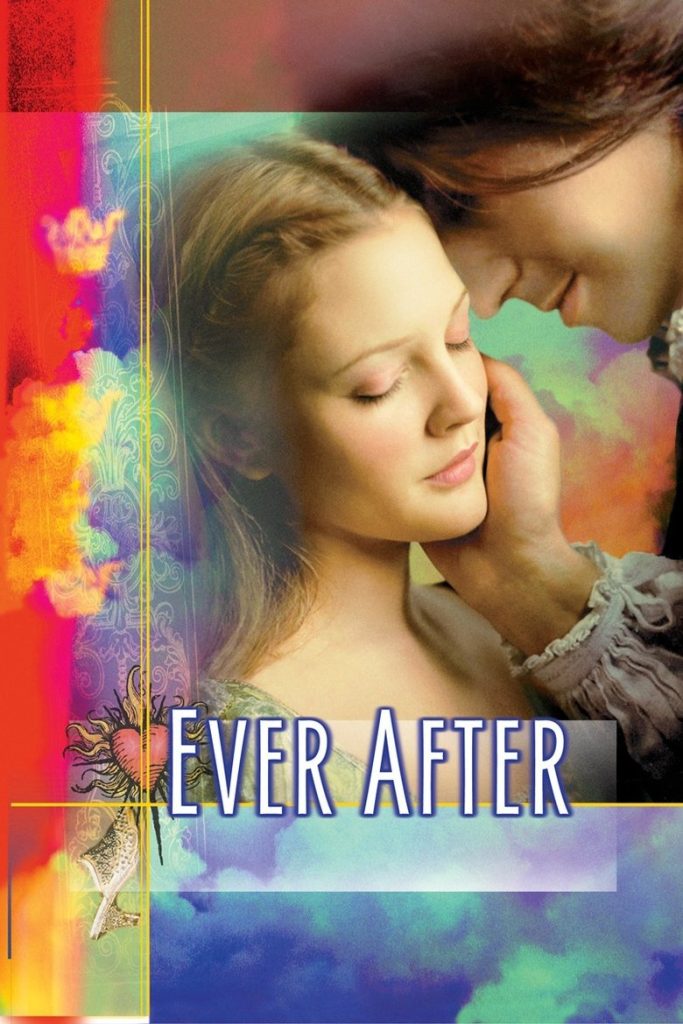
EverAfter is a 1998 romantic drama-comedy that reimagines the Cinderella story with a historical twist. Set in Renaissance France, it follows a strong-willed young woman named Danielle who faces mistreatment from her stepmother but maintains her dignity and intelligence. The film explores themes of independence, social class, and true love through a more realistic and empowering lens than traditional fairy tales.
Parent Guide
A thoughtful, feminist retelling of Cinderella with positive messages about intelligence and resilience.
Content breakdown
Some mild peril and confrontation, including verbal conflicts and brief physical struggles.
Emotional scenes of family conflict and mistreatment that might upset sensitive viewers.
No notable strong language.
Romantic themes and mild flirtation appropriate for the rating.
No substance use depicted.
Themes of loss, injustice, and family conflict create emotional moments throughout.
Parent tips
This PG-13 film is suitable for most tweens and teens, with mild thematic elements that parents may want to discuss. The story includes some emotional intensity around family conflict and social injustice, but presents positive messages about resilience, education, and self-worth. Younger children might find some scenes with stepfamily conflict upsetting, while older viewers will appreciate the feminist themes and historical setting.
Parent chat guide
Parent follow-up questions
- Did you like the pretty dresses in the movie?
- How did Danielle feel when her stepmother was mean?
- What was your favorite part of the story?
- What made Danielle different from other princess stories you know?
- How did she solve problems without magic?
- Why was it important that she could read and learn?
- How does this version of Cinderella challenge traditional gender roles?
- What does the film say about social class and fairness?
- How does Danielle's intelligence help her more than beauty?
- How does the historical setting affect the feminist themes?
- What commentary does the film make about arranged marriages and women's autonomy?
- How does this adaptation modernize fairy tale tropes while maintaining period authenticity?
🎭 Story Kernel
At its core, 'EverAfter' is less about romantic rescue and more about intellectual and moral partnership as the foundation for love. The film subverts the fairy tale by making Danielle's worth inherent in her education, wit, and ethical compass, not her beauty or station. Prince Henry's arc is one of awakening from privileged ennui to engaged responsibility, drawn to Danielle because she challenges his worldview. Their love story is the vehicle for a deeper argument: that true nobility is earned through character and action, not inherited through bloodline. The villainy of the stepmother stems not from cartoonish evil, but from a desperate, clawing adherence to the very social hierarchy Danielle transcends.
🎬 Visual Aesthetics
The film employs a painterly, sun-drenched realism, deliberately distancing itself from the gauzy fantasy of animated adaptations. Costumes are historically grounded textiles, not glittering gowns, emphasizing a world of tangible labor and social stratification. Key scenes use framing to highlight power dynamics: low angles on Danielle when she argues philosophy with the Prince, asserting her intellectual equality. The color palette evolves from the muted, oppressive tones of the chateau's servant quarters to the vibrant, earthy hues of the countryside and the warm golds of the final scenes, visually charting Danielle's journey from confinement to self-possession.
🔍 Details & Easter Eggs
💡 Behind the Scenes
Drew Barrymore, who also produced, was deeply involved in developing the film's feminist perspective. The chateau used for the principal filming is the real Château de Hautefort in Dordogne, France. Anjelica Huston based her portrayal of the stepmother, Rodmilla, on Wallis Simpson, the Duchess of Windsor, aiming for a portrayal of cruel elegance rather than a pantomime villain. The script was deliberately written to have Danielle save Henry (from the gypsies) as often as he saves her, reinforcing the theme of mutual partnership.
Where to watch
Choose region:
- Disney Plus
- Hulu
- Amazon Video
- Apple TV
- Google Play Movies
- YouTube
- Fandango At Home
Trailer
Trailer playback is unavailable in your region.