
Everything You Have Is Yours (2025)
Story overview
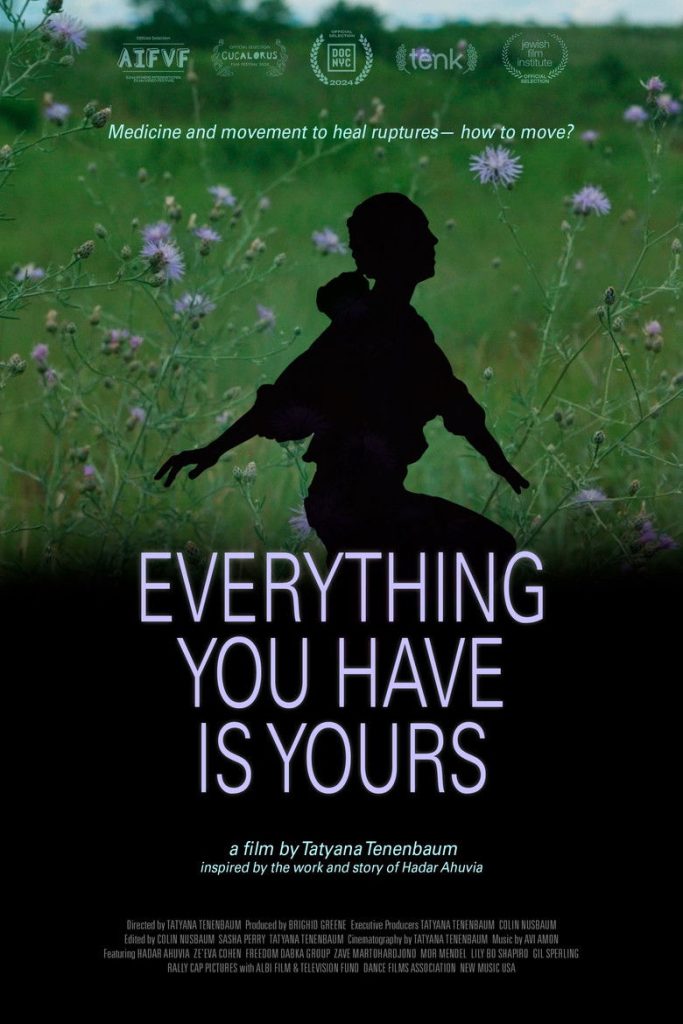
This thoughtful documentary follows choreographer Hadar Ahuvia as she investigates the history of Israeli folk dances she learned from her mother. The film explores her family's Zionist settler background in 1930s Palestine and examines how cultural traditions can involve appropriation. Through interviews with Jewish, Israeli, and Palestinian dancers in New York, the documentary presents a nuanced look at heritage, identity, and what cultural elements we choose to preserve or reconsider.
Parent Guide
A thoughtful documentary exploring cultural heritage, appropriation, and identity through the lens of Israeli folk dance. Suitable for mature children who can handle discussions of complex historical and political topics.
Content breakdown
No violence depicted. Historical discussions reference 1930s settlement in Palestine but without graphic descriptions.
Some children might find discussions of cultural conflict or family history revelations emotionally challenging. The documentary handles these topics with sensitivity.
No offensive language. Academic and artistic discussions about cultural topics.
No sexual content or nudity. Dancers wear appropriate performance attire.
No depiction of substance use.
Emotional intensity comes from personal revelations about family history, discussions of cultural appropriation, and exploration of Israeli-Palestinian dynamics. Handled thoughtfully but requires emotional maturity.
Parent tips
This documentary deals with complex themes of cultural appropriation, Israeli-Palestinian history, and identity. While there's no explicit content, the subject matter requires emotional maturity to understand. Consider watching with children 10+ to discuss the themes together. The film presents multiple perspectives respectfully, making it a good conversation starter about history, heritage, and cultural sensitivity.
Parent chat guide
Parent follow-up questions
- What dances did you like watching?
- What instruments did you hear in the music?
- What colors did you see in the costumes?
- Why do you think the dancer wanted to learn about her family's history?
- What do you think 'inherited' means when talking about dances?
- How do you think dancing makes people feel?
- What does 'cultural appropriation' mean in this documentary?
- Why might it be complicated to inherit traditions from ancestors?
- How do the different dancers in New York view the same dances differently?
- How does this documentary challenge romanticized family narratives?
- What responsibilities do we have when participating in cultural traditions with difficult histories?
- How does art help people process complex political and personal histories?
Where to watch
Streaming availability has not been announced yet.
Trailer
Trailer playback is unavailable in your region.