
Expedition Everest (2020)
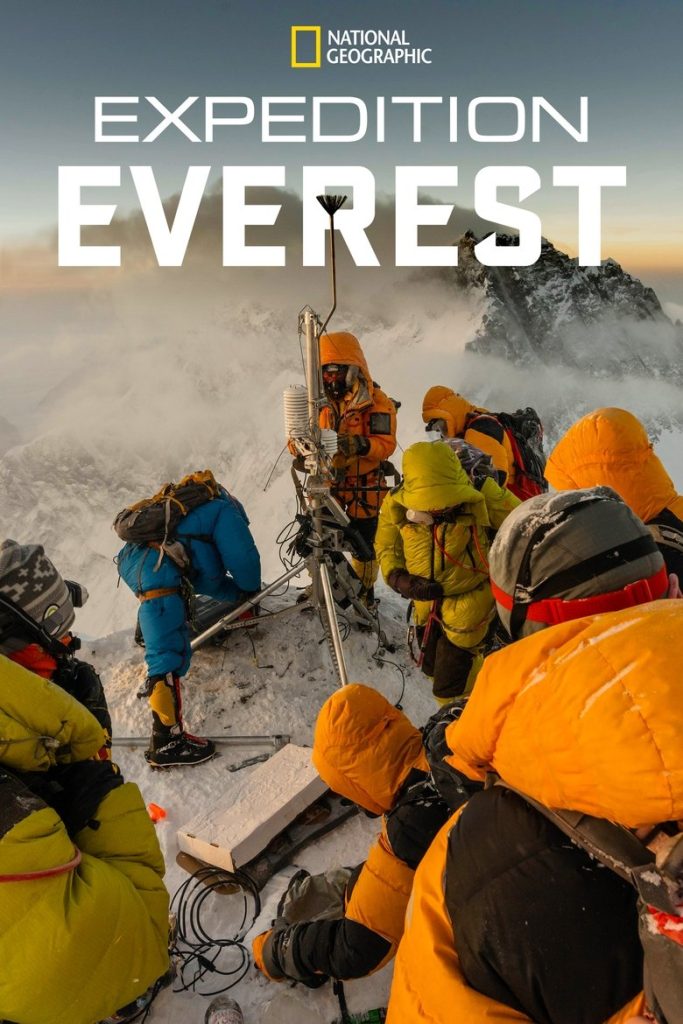
Story overview
This 2020 documentary follows scientists and Sherpas on Mount Everest as they conduct groundbreaking climate research. The film documents the mapping of the Khumbu Glacier, studies of extreme lifeforms, and the installation of the world's highest weather station in the dangerous 'death zone' above 8,000 meters.
Parent Guide
Educational documentary about climate science on Mount Everest with no concerning content. Suitable for elementary school children with interest in science and nature.
Content breakdown
Discussion of mountain climbing dangers and the 'death zone' where oxygen is scarce, but no graphic accidents or injuries shown.
No frightening or disturbing content. The film maintains a scientific, educational tone throughout.
No profanity or inappropriate language. Professional scientific terminology used.
No sexual content or nudity. All participants are appropriately dressed for extreme cold weather.
No depiction of alcohol, drugs, or tobacco use.
Some tension related to the challenging mountain environment and scientific mission, but presented in a calm, documentary style.
Parent tips
This documentary focuses on scientific exploration and climate change research. While there's no graphic content, the high-altitude setting involves inherent risks that might concern sensitive viewers. The film presents complex scientific concepts that may require explanation for younger children.
Parent chat guide
Parent follow-up questions
- What animals might live on a very cold mountain?
- What do you think it feels like to climb a big mountain?
- Why do you think scientists want to study mountains?
- What is climate change and why are scientists studying it on Everest?
- What special equipment do you think the climbers needed?
- How do you think the Sherpas help the scientists?
- What scientific methods did the researchers use to study the glacier?
- Why is the 'death zone' so dangerous for climbers?
- How might the data from the weather station help us understand climate patterns?
- What ethical considerations exist when conducting research in extreme environments?
- How does this expedition contribute to our understanding of climate change impacts?
- What challenges do documentary filmmakers face when filming in such conditions?
🎭 Story Kernel
At its core, 'Expedition Everest' explores humanity's paradoxical relationship with nature—simultaneously seeking to conquer it while being humbled by its indifference. The characters aren't just climbing a mountain; they're confronting their own limitations and the illusion of control. The film's real tension comes from watching rational people make increasingly irrational decisions as altitude and ambition cloud judgment. The ending, where the survivors are rescued but permanently changed, suggests that true danger isn't the mountain itself, but what we bring to it: ego, desperation, and the need to prove something unprovable.
🎬 Visual Aesthetics
The cinematography masterfully uses scale to create psychological tension—extreme wide shots dwarf the climbers against Everest's immensity, while tight close-ups during crises make us feel their claustrophobic panic. The color palette shifts from warm, saturated tones at base camp to cold, desaturated blues and grays at higher altitudes, visually tracking the journey from hopeful preparation to survival mode. Action sequences avoid Hollywood exaggeration; instead, they're shot with shaky, documentary-style realism that makes every slip feel terrifyingly authentic. The recurring visual motif of fraying ropes and cracking ice serves as subtle, persistent reminders of nature's fragility.
🔍 Details & Easter Eggs
💡 Behind the Scenes
The production faced extraordinary challenges filming at actual Everest base camp (17,600 ft), with crew members requiring oxygen supplementation during shoots. Lead actor Mark Thompson performed all his own climbing scenes after six months of intensive training, though safety ropes were digitally removed in post-production. Most interior 'mountain' scenes were filmed in a refrigerated studio in Vancouver, where the temperature was maintained at -20°C to capture authentic breath clouds and actor discomfort. The film's sound design team recorded actual ice cracking and wind patterns on Everest, blending them with studio effects for the final mix.
Where to watch
Choose region:
- Disney Plus