
Expedition Mars: Spirit & Opportunity (2016)
Story overview
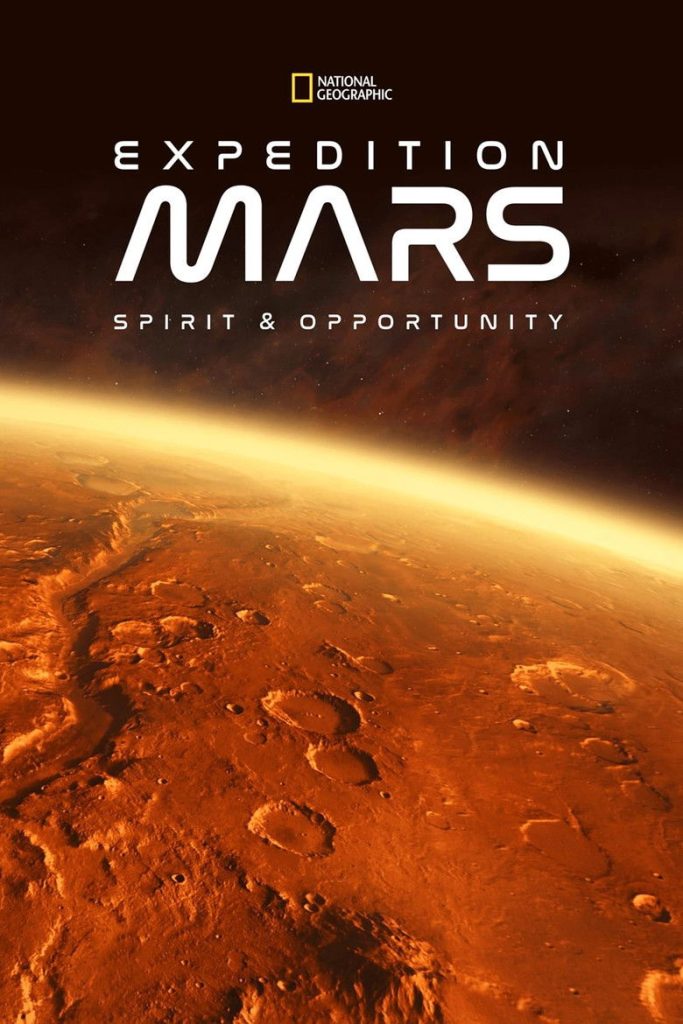
Expedition Mars: Spirit & Opportunity is a 2016 documentary that chronicles the remarkable journey of NASA's Mars rovers, Spirit and Opportunity. The film highlights how these robotic explorers revitalized NASA's Mars program after previous setbacks in the 1990s, showcasing their scientific discoveries, engineering challenges, and the human ingenuity behind their missions. It presents real footage, animations, and expert interviews to make space exploration accessible and engaging for viewers.
Parent Guide
This documentary is family-friendly and educational, with no content concerns. It's suitable for viewers of all ages, particularly those interested in science and space.
Content breakdown
No violence or peril is depicted. The film focuses on scientific exploration and engineering achievements, with no dangerous situations involving people or animals.
Nothing scary or disturbing. It uses factual narration and visuals of Mars and the rovers, which are not frightening. Some scenes of spacecraft launches or technical failures might be intense for very young children, but they are presented in a calm, informative manner.
No offensive or inappropriate language. The dialogue is professional and educational, typical of a documentary format.
No sexual content or nudity. The content is strictly focused on space science and technology.
No depiction of substance use. The film centers on NASA missions and scientific work.
Mild emotional intensity may arise from themes of perseverance, such as overcoming technical challenges or the rovers' eventual end of missions. These moments are handled sensitively and can inspire discussions about resilience and achievement.
Parent tips
This documentary is educational and inspiring, focusing on space exploration and scientific achievement. It contains no concerning content, making it suitable for all ages. Parents can use it to spark interest in science, technology, and perseverance. For younger viewers, you might explain basic concepts like robots, Mars, and space missions. The runtime of 88 minutes is manageable for most children, but consider breaks if needed. It's a great choice for family viewing, especially if your child enjoys science or space topics.
Parent chat guide
Parent follow-up questions
- What did the robots look like?
- What color is Mars?
- Can people live on Mars?
- What do robots do on Mars?
- Why did NASA send robots to Mars?
- What did Spirit and Opportunity find?
- How do the robots move on Mars?
- What is a rover?
- How did the rovers help NASA's Mars program?
- What were the biggest challenges for the missions?
- What scientific instruments did the rovers have?
- How long did the rovers last on Mars?
- What impact did Spirit and Opportunity have on space exploration?
- How does this documentary portray NASA's resilience?
- What are the ethical considerations of robotic vs. human missions?
- How might future Mars missions build on this work?
🎭 Story Kernel
At its heart, this documentary isn't about machines but about human ambition projected across 34 million miles. The real narrative driver is the emotional investment of the NASA team, whose hopes and anxieties are mirrored in the rovers' daily struggles. We witness not a mission but a relationship—between creators and their creations, between Earth and its mechanical emissaries. The film explores what happens when human tenacity is encoded in silicon and steel, asking profound questions about our need to explore and connect, even through proxies. The rovers' persistence against Martian adversity becomes a metaphor for scientific curiosity itself.
🎬 Visual Aesthetics
The film masterfully blends stark, high-resolution Martian landscapes with intimate control room footage, creating a visual dialogue between vast emptiness and human-scale tension. The color palette shifts dramatically—from the sterile whites and blues of JPL to Mars' haunting ochres and rust reds. Cinematography uses extreme close-ups of circuit boards and mechanical parts, then pulls back to reveal the incomprehensible scale of Martian terrain. Time-lapse sequences of dust devils and shifting shadows give Mars a breathing, living quality, while the rovers' slow, deliberate movements feel almost biological in their persistence against the alien environment.
🔍 Details & Easter Eggs
💡 Behind the Scenes
The filmmakers gained unprecedented access to NASA's Jet Propulsion Laboratory archives, including never-before-seen engineering camera footage. Many mission control sequences were actually recreated with original team members at their actual workstations for authenticity. The Martian terrain visuals combine actual rover imagery with carefully reconstructed CGI for continuity. Notably, several scientists interviewed became emotional during filming when describing specific rover 'achievements,' blurring the line between machine and teammate. The score incorporates actual radio signal data from the missions converted into musical motifs.
Where to watch
Choose region:
- Disney Plus