
Eyewitness: D-Day (2019)
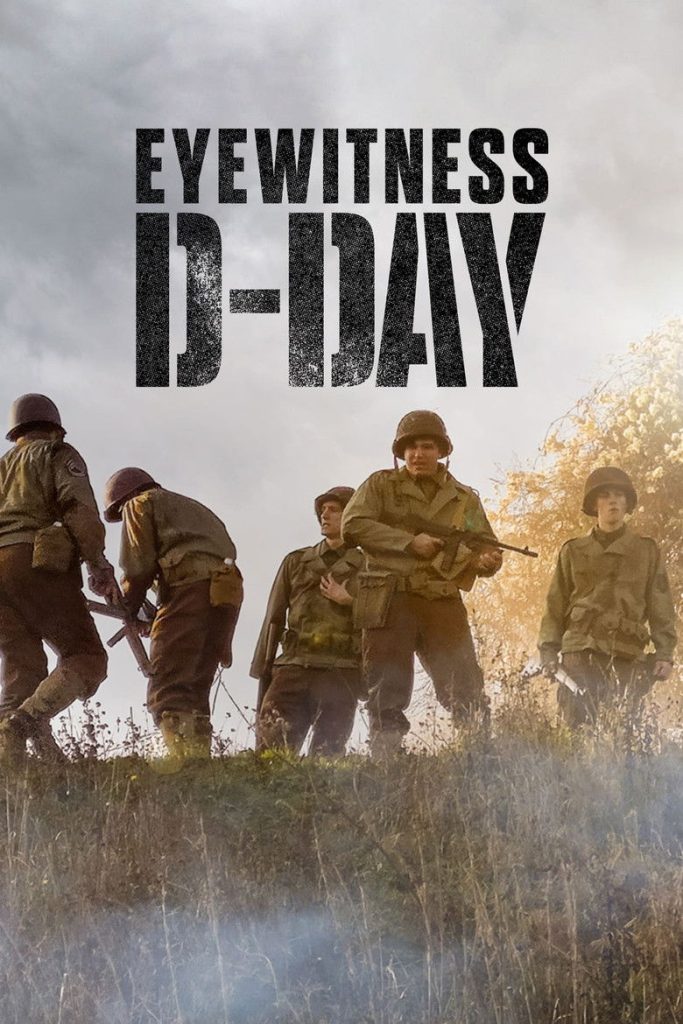
Story overview
Eyewitness: D-Day is a 2019 documentary about the pivotal World War II invasion of Normandy. It likely uses historical footage, interviews, and narration to recount the events of June 6, 1944. The film focuses on the military operation and its significance in the war, presenting factual accounts of the battle.
Parent Guide
A historical war documentary suitable for older children with parental guidance due to war themes.
Content breakdown
Contains war footage that may show combat, explosions, and military action typical of historical documentaries about WWII battles.
May include intense battle scenes, images of wartime destruction, and discussions of casualties that could be unsettling.
Documentary narration typically uses formal, educational language without profanity.
No sexual content or nudity expected in a historical war documentary.
No substance use depicted in this type of historical documentary.
Deals with serious historical events involving life-and-death situations, military strategy, and the gravity of war.
Parent tips
This documentary deals with real historical warfare, which may include depictions of combat, injuries, and the serious consequences of battle. Parents should be prepared to discuss the realities of war, including loss of life and the historical context, in an age-appropriate way. Consider watching together to provide context and answer questions as they arise.
Parent chat guide
Parent follow-up questions
- What did you see in the movie?
- What sounds did you hear?
- How did the people in the movie look like they were feeling?
- What colors did you notice most?
- Was there anything that surprised you?
- What was the main event this movie was about?
- Why do you think this day was important in history?
- What kinds of vehicles or equipment did you see?
- How do you think the soldiers felt during this event?
- What questions do you have about what you saw?
- What historical facts did you learn from this documentary?
- Why was D-Day such a significant military operation?
- How did the film help you understand what warfare was like during WWII?
- What aspects of the invasion seemed most challenging for the soldiers?
- How does learning about historical events like this help us today?
- How did this documentary present the strategic importance of D-Day?
- What perspectives on war did the film emphasize or omit?
- How did the use of historical footage affect your understanding of the events?
- What ethical questions about warfare does this historical event raise?
- How does learning about D-Day connect to current global conflicts or peace efforts?
🎭 Story Kernel
At its core, 'Eyewitness: D-Day' is less a traditional narrative and more a visceral mosaic of memory. The film expresses the profound chasm between the sanitized, strategic overview of history and the raw, sensory overload of individual survival. What drives the characters—real veterans recounting their experiences—is not plot momentum, but the urgent, often painful compulsion to testify. The movie grapples with the weight of carrying such memories for decades, exploring how trauma etches itself into identity. It's about the dissonance between the young soldier experiencing chaos and the elderly man trying to articulate it, revealing history as a collection of personal, fragmented truths rather than a single, coherent story.
🎬 Visual Aesthetics
The visual language is starkly dichotomous. Archival footage—grainy, chaotic, and washed in grim grays—is intercut with contemporary interviews in crisp, steady shots against neutral backgrounds. This contrast is the film's primary aesthetic device. The chaos of the past is literally framed and contained by the calm, ordered present of recollection. There's no romanticized color grading; the Omaha Beach sequences are almost monochromatic, emphasizing the bleakness and confusion. The camera in interviews holds tightly on faces, often in extreme close-ups on eyes and mouths, making the act of speaking—the formation of words to describe the indescribable—the central visual action. Symbolism emerges through juxtaposition: serene modern beaches against the hellscape of 1944.
🔍 Details & Easter Eggs
💡 Behind the Scenes
The production team faced significant challenges in locating and interviewing the D-Day veterans featured, as the film was produced decades after the event. Many interviews were conducted in the veterans' own homes to create a sense of comfort and intimacy. The archival footage is a meticulous compilation from multiple international sources, including rarely seen personal footage from soldiers. A key editorial choice was to forgo a traditional narrator, allowing the veterans' voices to stand alone, which required painstaking audio restoration of some older recordings. The film's director reportedly insisted on minimal musical scoring, using silence and ambient sound to heighten the impact of the testimonies.
Where to watch
Choose region:
- Disney Plus
- fuboTV
- Fandango At Home