
Face/Off (1997)
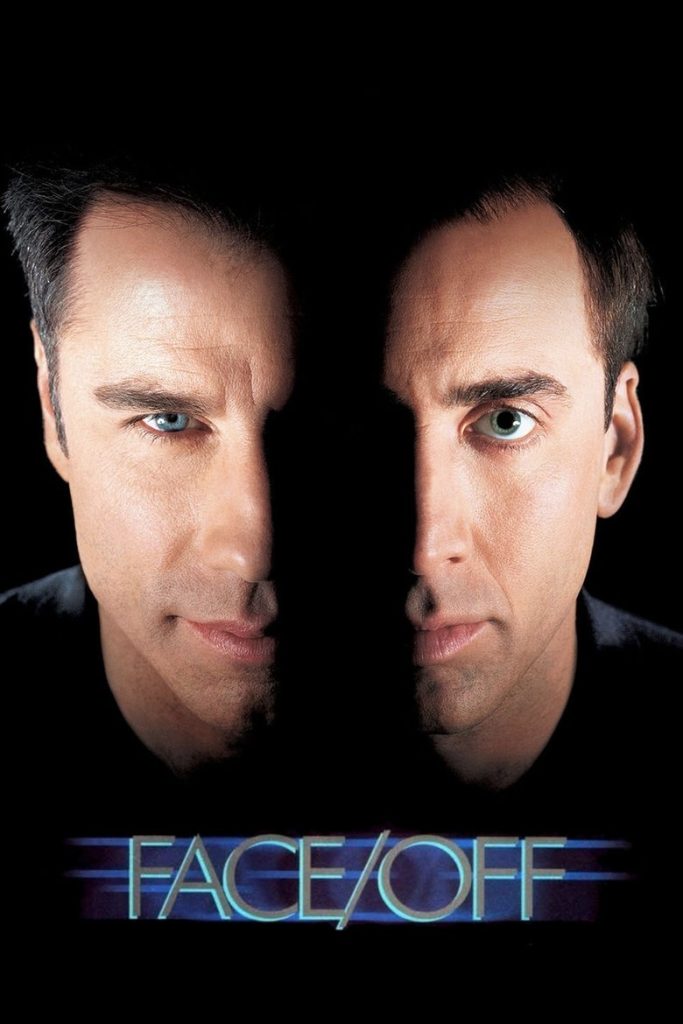
Story overview
Face/Off is a 1997 action thriller where an FBI agent and a terrorist undergo an experimental face-swapping procedure, leading to a dangerous identity swap. The agent must infiltrate the criminal's life while the terrorist assumes his identity, creating a high-stakes cat-and-mouse game. The film explores themes of identity, justice, and sacrifice through intense action sequences and dramatic confrontations.
Parent Guide
R-rated action film with strong violence, intense peril, and mature themes. Recommended for mature teens only with parental guidance.
Content breakdown
Frequent intense action sequences including gunfights, explosions, hand-to-hand combat, and high-speed chases. Characters are shot, stabbed, and placed in life-threatening situations. Some violence is graphic but stylized.
Psychological tension from identity theft and body modification concepts. Characters in perilous situations, moral dilemmas, and scenes of manipulation. The premise itself may be unsettling for some viewers.
Some strong language and profanity typical of R-rated action films. Includes threats and aggressive dialogue in tense situations.
Minimal sexual content. Some suggestive dialogue and brief romantic moments. No explicit nudity or sexual scenes.
Occasional social drinking in background scenes. No prominent drug use or substance abuse depicted.
High-stakes scenarios, family endangerment, moral conflicts, and intense personal drama. Characters experience grief, anger, and desperation throughout.
Parent tips
This R-rated film contains strong violence, intense peril, and mature themes that make it unsuitable for younger viewers. Parents should be aware of frequent gunfights, explosions, hand-to-hand combat, and scenes of psychological manipulation. The central premise of identity theft and body modification may be disturbing or confusing for some audiences.
Consider the emotional maturity of your teen before viewing, as the film includes morally complex situations and characters facing extreme personal dilemmas. The action is stylized but graphic, with consequences shown realistically. Discuss the difference between movie violence and real-world consequences afterward.
For families with older teens, this could be an opportunity to talk about identity, ethics in science, and the nature of good versus evil. The film's exaggerated premise allows for discussions about what makes us who we are beyond physical appearance.
Parent chat guide
Help younger teens process the intense scenes by asking about their reactions during key moments. Validate their feelings while explaining that movies often exaggerate situations for dramatic effect. For older teens, you can explore the film's themes more deeply: 'What does this movie say about identity and family?' or 'How does the film portray the consequences of violence?'
Remember that different family members may have varying comfort levels with the content. Create a safe space for everyone to share their thoughts without judgment. If anyone found particular scenes upsetting, discuss why those moments were powerful and what we can learn from them.
Parent follow-up questions
- What was your favorite part of the movie?
- How did the music make you feel during the exciting scenes?
- Which character did you like best and why?
- What colors did you notice most in the movie?
- Did any parts make you feel scared or happy?
- What would you do if you could look like someone else for a day?
- How did the characters show they cared about their families?
- What made the good guy different from the bad guy in the story?
- How did the characters solve their problems?
- What lesson could someone learn from this movie?
- How does changing someone's appearance affect who they are inside?
- What responsibilities come with having someone else's identity?
- How did the characters' choices create consequences for others?
- What makes someone truly 'good' or 'evil' in this story?
- How does technology in the movie help or hurt people?
- How does the film explore the theme of identity versus appearance?
- What ethical questions does the face-swapping technology raise?
- How do the characters' motivations change throughout the story?
- What commentary does the film make about justice and revenge?
- How does the director use action scenes to develop character relationships?
🎭 Story Kernel
Face/Off explores identity as performance, asking what remains when physical markers are stripped away. Sean Archer and Castor Troy don't just exchange faces—they inhabit each other's lives, families, and moral frameworks. The film's true conflict isn't about stopping a bomb, but about whether identity is biological or performative. Archer must become more like Troy to survive, while Troy discovers unexpected paternal instincts in Archer's domestic life. Their mutual contamination suggests identity is fluid, shaped by circumstance and choice rather than fixed essence. The climax's mirror confrontation literalizes their internal duality—two men who've become each other's doppelgängers.
🎬 Visual Aesthetics
John Woo's signature balletic violence reaches operatic heights here—doves fly through slow-motion gunfights, dual-wielding pistols create symmetrical compositions, and church settings frame violence as sacred ritual. The color palette shifts with identity: cool blues dominate Archer's world, while Troy inhabits warmer, more saturated tones. The face-swap surgery scenes use clinical whites and sterile environments to contrast with the messy emotional consequences. Woo's circular camera movements during confrontations visually reinforce the characters' mirrored identities. The final showdown's hall of mirrors isn't just set dressing—it's the film's visual thesis made literal.
🔍 Details & Easter Eggs
💡 Behind the Scenes
John Travolta and Nicolas Cage studied each other's mannerisms extensively—Travolta watched Cage's films to mimic his physicality when playing Troy-in-Archer's-body, while Cage did the reverse. The face-swap prosthetic application took 4-6 hours daily. Originally, the script had Archer keeping Troy's face permanently, but test audiences rejected this darker ending. The iconic speedboat chase was filmed in Baltimore's harbor despite being set in Los Angeles. Travolta suggested the film's title after remembering the theatrical term 'face-off' describing two actors confronting each other.
Where to watch
Choose region:
- Netflix
- AMC Plus Apple TV Channel
- AMC+ Amazon Channel
- AMC+ Roku Premium Channel
- AMC+
- Philo
- BBC America
- Netflix Standard with Ads
- Amazon Video
- Google Play Movies
- YouTube
- Fandango At Home
- Spectrum On Demand
- Apple TV
Trailer
Trailer playback is unavailable in your region.