
Fanny and Alexander (1982)
Story overview
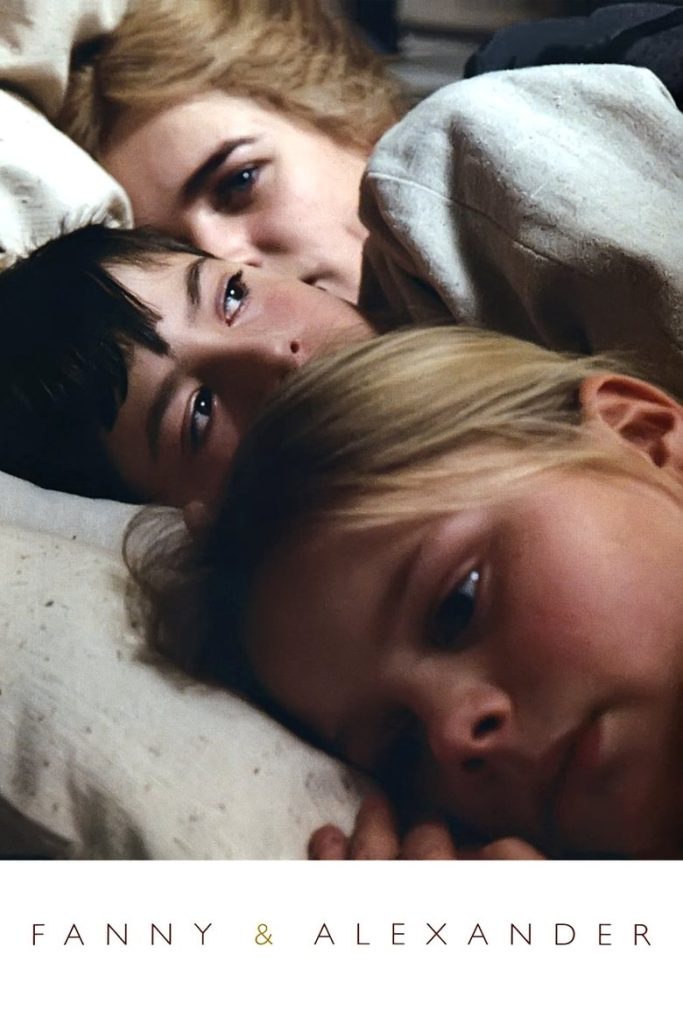
Fanny and Alexander is a 1982 Swedish fantasy drama directed by Ingmar Bergman. The film follows two young siblings, Fanny and Alexander, who live happily with their theater-owning parents until their father's sudden death. Their mother remarries a strict bishop, plunging the children into a joyless, oppressive household. As the bishop's control tightens, the siblings' extended family works to rescue them from this bleak situation, blending magical realism with deep emotional drama.
Parent Guide
A complex, artistic film with mature themes of grief, oppressive authority, and family resilience. Contains brief nudity, psychological intensity, and some disturbing scenes. Requires emotional maturity and attention span for its 3-hour runtime.
Content breakdown
Some scenes of psychological control and manipulation. A character is briefly shown dead. Tense situations where children feel threatened by authority figures. No graphic physical violence.
Oppressive atmosphere in the bishop's household. Themes of grief and loss. Some supernatural elements that might be unsettling. Psychological tension throughout. Scenes of emotional distress.
Occasional mild language. Some tense dialogue. Primarily Swedish with subtitles available.
Brief female nudity in artistic/contextual scenes. Some sexual references and discussions. Romantic relationships depicted without explicit content.
Social drinking in family gatherings. Period-appropriate alcohol consumption in adult settings.
Intense exploration of grief, loss, and family dynamics. Psychological oppression and control themes. Emotional manipulation scenes. Requires maturity to process complex family relationships and historical context.
Parent tips
This R-rated film contains mature themes including grief, oppressive religious control, and psychological tension. It features brief nudity, mild violence, and intense emotional scenes. The 3-hour runtime and complex narrative may challenge younger viewers. Best suited for mature teens and adults who can appreciate its artistic depth and historical context.
Parent chat guide
Parent follow-up questions
—
—
- How did Fanny and Alexander's life change after their father died?
- Why was the bishop so strict with the children?
- What magical things happened in the story?
- How does the film portray grief and family dynamics?
- What commentary does Bergman make about religion and authority?
- How do the fantasy elements contrast with the realistic drama?
- What historical context is important for understanding this film?
🎭 Story Kernel
The film explores the fundamental human conflict between the life-affirming, chaotic, artistic world of the Ekdahls and the life-denying, rigid, ascetic world of Bishop Vergérus. It's not merely a story about a family's trials but an allegory for the choice between embracing life's messy, sensual, creative abundance and submitting to a cold, repressive order that seeks to extinguish imagination and joy. The children, Fanny and Alexander, become vessels for this conflict, their spirits nearly crushed by the Bishop's tyranny before being rescued by the very magic and theatricality their new stepfather despises. The driving force is the eternal wrestling match between Dionysian celebration and Apollonian control.
🎬 Visual Aesthetics
Bergman masterfully employs a stark visual dichotomy. The Ekdahl household is a warm, painterly tableau of deep reds, golds, and cluttered, vibrant life, often shot with a fluid, embracing camera. The Bishop's palace is its photographic negative: a cold, ascetic space of oppressive whites, grays, and harsh, angular compositions, with static, imprisoning framings. The camera itself becomes a character—intimate and curious in the warmth of the family, distant and judgmental in the Bishop's domain. The shift from the lush, detailed 1907 setting to the sparse, nightmarish rectory is a visual expression of the thematic clash at the film's heart.
🔍 Details & Easter Eggs
💡 Behind the Scenes
The film was conceived by Ingmar Bergman as his final theatrical work, a sprawling summation of his artistic themes. Many characters are deeply autobiographical; the Ekdahl household is based on Bergman's own grandmother's home. The Bishop's palace set was so authentically cold that condensation from the actors' breath is visible on film. Gunn Wållgren, who plays the magnificent grandmother Helena, was seriously ill during filming, adding a layer of poignant reality to her character's wisdom and mortality. The five-hour television version is considered Bergman's definitive cut, with the theatrical release being a shortened edit.
Where to watch
Choose region:
- HBO Max
- HBO Max Amazon Channel
- Criterion Channel
- Shout! Factory TV
- Tubi TV
- Amazon Video
- Apple TV Store
- Fandango At Home
Trailer
Trailer playback is unavailable in your region.