
Fantasia (1940)
Story overview
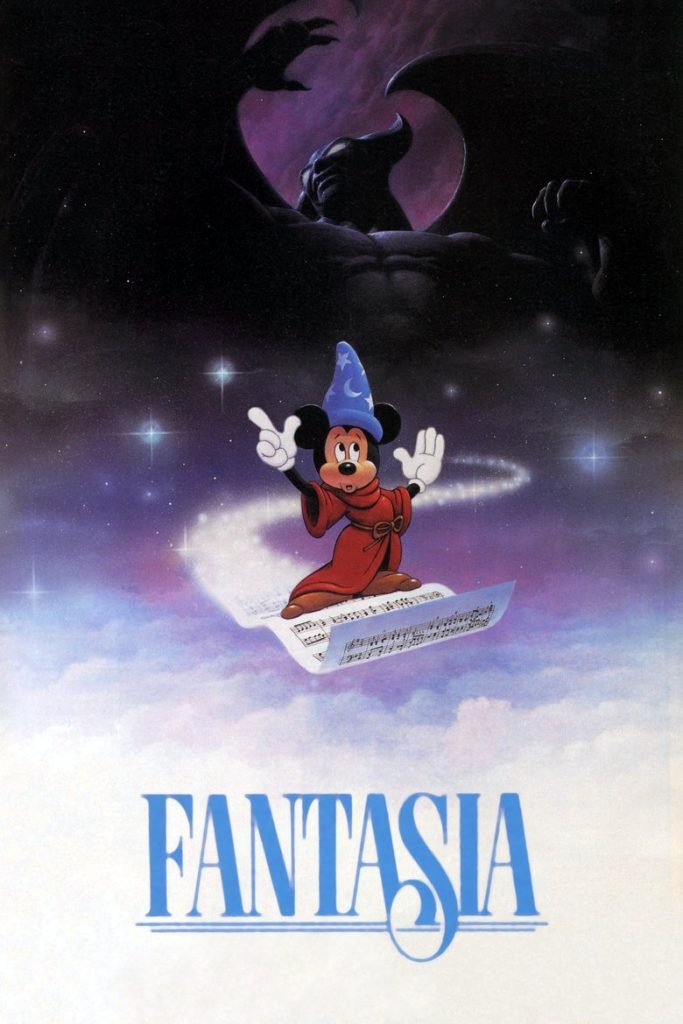
Fantasia is a groundbreaking animated film from 1940 that pairs classical music with imaginative visual sequences. Through eight distinct segments, it brings orchestral compositions to life with dancing mushrooms, mythological creatures, abstract patterns, and seasonal transformations. The film serves as both entertainment and an introduction to classical music, creating a unique sensory experience without traditional dialogue or plot. Its innovative blend of animation and music remains influential decades after its release.
Parent Guide
A classic animated film that pairs classical music with imaginative visuals, suitable for most children but with some intense segments that may frighten very young viewers.
Content breakdown
The 'Rite of Spring' segment depicts dinosaurs fighting and dying during extinction events. Some mythological creatures appear threatening in 'Night on Bald Mountain.'
'Night on Bald Mountain' features dark imagery with demons, spirits, and a sinister winged creature. The dinosaur extinction sequence may be emotionally intense. Some abstract segments use surreal imagery that could confuse or unsettle young children.
No dialogue except for introductory narration. All communication is through music and visuals.
No sexual content. Some mythological figures like centaurs and cupids appear in classical artistic styles.
No depiction of substance use.
The film ranges from joyful ballet sequences to dark mythological scenes and dramatic dinosaur extinction. The abstract nature and lack of traditional narrative may create confusion or restlessness in some children.
Parent tips
Fantasia is rated G and contains no objectionable content, but some segments may be intense for very young children. The 'Night on Bald Mountain' sequence features dark imagery with demons and spirits that could be frightening, while 'The Rite of Spring' depicts dinosaur violence and extinction. The film's abstract nature and lack of traditional storytelling may challenge younger viewers' attention spans during its two-hour runtime.
Consider watching in shorter segments rather than all at once, especially with children under 6. The film provides excellent opportunities to discuss music appreciation, artistic interpretation, and how animation can visualize abstract concepts. Be prepared for questions about mythological creatures, dinosaurs, and the relationship between sound and image.
Parent chat guide
Encourage children to express what they found beautiful, surprising, or confusing about the film. Discuss how different artists might interpret the same music differently. For older children, explore the historical context of the film's creation and its innovative techniques for 1940.
Parent follow-up questions
- Which dancing animal did you like best?
- Did the music make you want to move your body?
- What colors did you see in the flower dance?
- Was there anything that surprised you?
- Which part made you happy?
- How did the animation help you understand the music?
- Which segment told the clearest story without words?
- What differences did you notice between the cheerful and scary parts?
- How do you think animators decided what to draw for each piece?
- If you could add music to one segment, what would it sound like?
- How does Fantasia compare to modern animated films?
- What emotions did different musical pieces evoke for you?
- Why do you think certain visual styles were chosen for specific compositions?
- How does the film introduce classical music to new audiences?
- What creative choices seemed most innovative for 1940?
- How does Fantasia use animation as an interpretive art form?
- What cultural or historical influences appear in different segments?
- How does the film balance entertainment with music education?
- In what ways was Fantasia groundbreaking for its time?
- How do the abstract segments challenge traditional storytelling conventions?
🎭 Story Kernel
Fantasia isn't driven by conventional narrative but by the emotional and philosophical dialogue between music and image. The film expresses humanity's relationship with nature, myth, and the cosmos through abstract storytelling. The Sorcerer's Apprentice segment explores hubris and unintended consequences, while The Rite of Spring visualizes the brutal, magnificent violence of creation and extinction. Night on Bald Mountain/Ave Maria presents the eternal struggle between chaos and order, darkness and light. Characters are driven not by personal goals but by archetypal forces—Mickey by curiosity and ambition, Chernabog by pure malevolent will, the dinosaurs by primal instinct. The film's core is about experiencing art as a transformative, sometimes terrifying, emotional journey.
🎬 Visual Aesthetics
Fantasia's visual language is revolutionary, with each segment creating a distinct aesthetic universe. The Pastoral Symphony uses soft, rounded Art Nouveau lines and candy-colored skies for mythological whimsy. The Rite of Spring employs stark, jagged landscapes and meticulous dinosaur anatomy to create scientific grandeur. Dance of the Hours contrasts elegant, balletic hippos with comically awkward alligators in a visual joke about grace versus clumsiness. The abstract sequences for Bach's Toccata and Fugue use pure color, shape, and light as emotional equivalents to music. Most striking is Night on Bald Mountain's chiaroscuro horror—Chernabog's demonic silhouette against fiery orange, with writhing ghosts rendered in translucent, nightmarish detail that pushes 1940s animation to its technical limits.
🔍 Details & Easter Eggs
💡 Behind the Scenes
Fantasia was Walt Disney's most ambitious and expensive film to date, costing $2.28 million in 1940 (about $43 million today). Leopold Stokowski conducted the Philadelphia Orchestra for the soundtrack, famously waiving his fee for a percentage of profits—which proved minimal as the film initially lost money. The original roadshow release included 'Fantasound,' an early surround sound system requiring special theater equipment. Deems Taylor's narration was entirely re-recorded in post-production because his live recordings contained paper rustling sounds. The film was edited and re-released multiple times, most notably removing the racially stereotyped Sunflower character from Pastoral Symphony in later versions.
Where to watch
Choose region:
- Disney Plus
- Apple TV
- Amazon Video
- Google Play Movies
- YouTube
- Fandango At Home
Trailer
Trailer playback is unavailable in your region.